

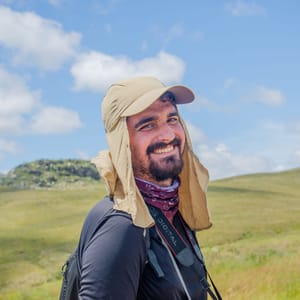
Life cannot be understood without thinking about the environment surrounding it. In the end, living organisms depend on their habitats to harvest all other resources they need. However, when conditions become adverse, organisms need to respond somehow to secure their survival. The answer seems quite simple in the case of most animals, as they are able to just move to another place. However, for sessile organisms, such as plants and fungi, the answer is more about looking for ways to try to endure such conditions rather than running away; and plants seem to be quite good at dealing with different environmental conditions, as they have been able to colonise almost every ecosystem in our planet.
These issues around the interaction of organisms with their environment have been in Dr. Johana Villagra’s mind since her undergraduate studies at Universidad Austral de Chile, where she focused on epiphytic lichens. Lichens are extraordinary organisms formed by the association of algae and fungi, where the former produces carbon compounds through photosynthesis, and the latter builds the body of the lichen that hosts and protects the algae. One characteristic that makes lichens great subjects to study the interaction between organisms and their environment is that they are poikilohydric, meaning they cannot control their internal water content, becoming hydrated only when they are in high-humidity environments but dry otherwise.
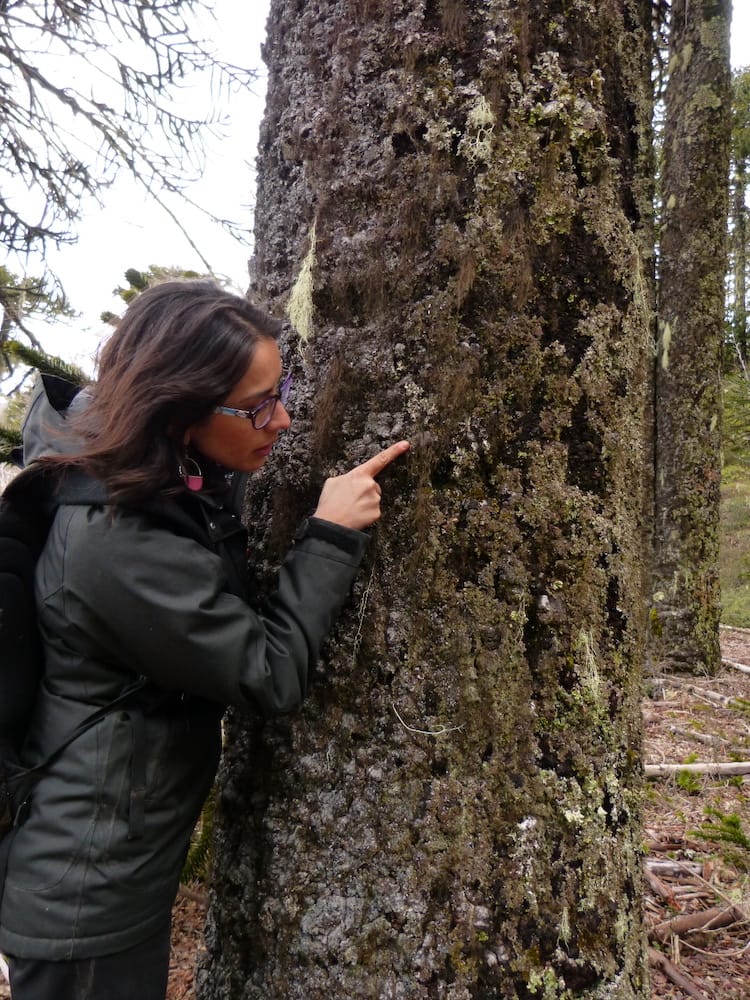
Villagra’s interest in these organisms led her to a PhD at Universidad Complutense de Madrid (Spain) under the supervision of Dr. Leo G. Sancho and Dr. José Raggio-Quílez. During her thesis, she explored the ecophysiology of lichens in the Valdivian rainforest, a temperate forest in southern South America found in Chile and Argentina. Now, as a postdoctoral researcher from the Universidad Católica de Temuco (Chile), she has returned to study the epiphytic lichens of the Araucaria araucana forest in the Araucanía region, which owes its name to this emblematic tree. This lush ecosystem is under threat due to human activities, such as replacing native trees with agricultural crops or non-native tree plantations. As global temperatures rise and rainfall patterns shift, these lichens could face increased desiccation and exposure to sunlight, potentially leading to their decline.
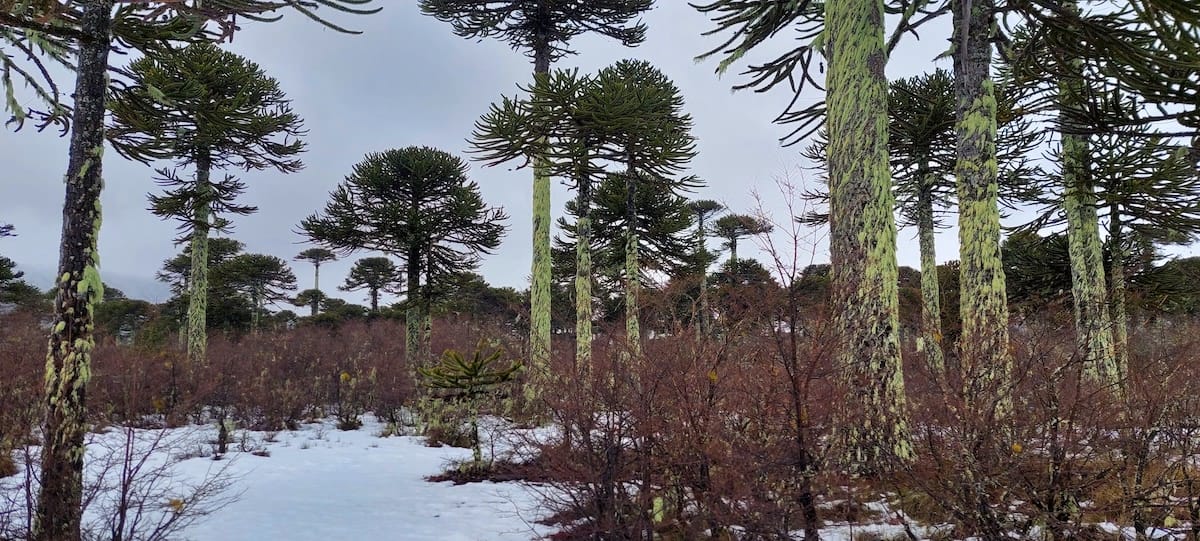
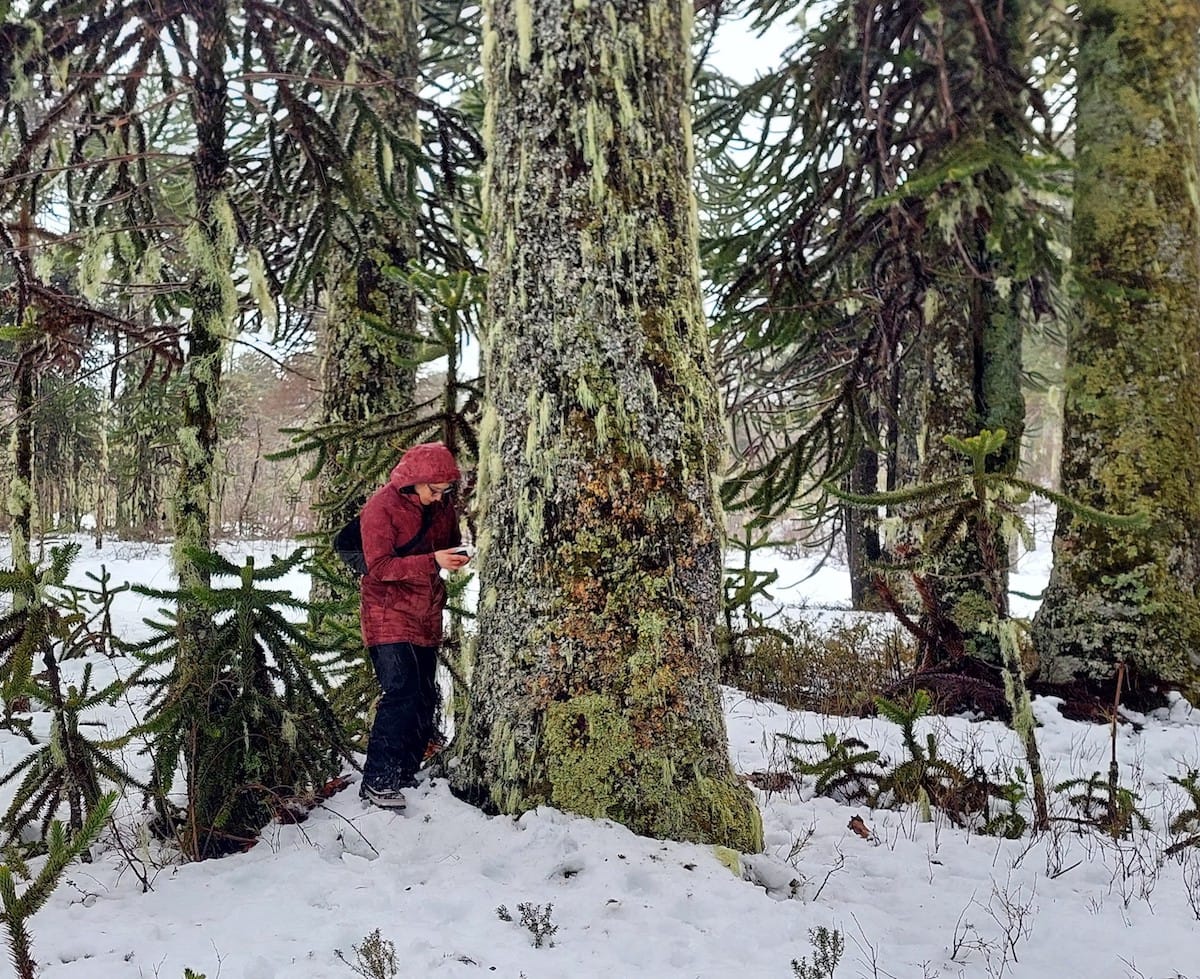
In the first study in the region, Villagra and her team characterised the lichen communities living on the trunks of the most dominant tree species in the area, Araucaria araucana and Nothofagus antarctica, finding more than 30 species. Notably, nearly a third of the species were found exclusively on Araucaria trees, while another third grew only on Nothofagus. As these tree species have different architectures and characteristics –with Araucaria araucana showing a rough bark and an open canopy and Nothofagus antarctica having a smoother bark and a denser canopy– this research provided evidence indicating that lichen communities respond differently to environmental variations, even at such small scale.
Looking to explore the physiological mechanisms that allow lichens to colonise and persist in one habitat or the other, Villagra and her team aimed to evaluate how the photosynthetic capacity of lichens responded to changes in humidity and light, two variables that are expected to change with ongoing climate change and shifts in the forest structure. To that purpose, they conducted a new study in the Alerce Costero National Park (Southern Chile) in a forest dominated by three tree species –Nothofagus nitida, Saxegothaea conspicua, and Drimys winteri– where they surveyed the lichens growing at different heights on the trunks of these trees.
The researchers also placed sensors on the trees to record temperature and humidity to have a better idea of the microclimate created by each tree species. From the 13 species of lichens identified by the researchers, eight were used in the physiological analyses. Villagra and her team took samples to the laboratory and evaluated how photosynthesis was affected as lichens dried out or were exposed to increasing light levels.
The researchers found that, while all lichen’s photosynthetic capacity decreased as they dried out, some species had higher tolerance. For example, cyanolichens (i.e., those where the accompanying algae is a cyanobacterium) like Pseudocyphellaria coerulescens, showed a greater decline in photosynthetic efficiency than chlorolichens (i.e., lichens where the accompanying algae is a green algae), indicating they might be more sensitive to drying out, especially since they require liquid water to carry on photosynthesis. Still, some species, such as Pseudocyphellaria divulsa and Sticta ainoae, were more resilient, maintaining their photosynthetic activity longer under dry conditions. When it comes to their responses to different light levels, several species, such as Pseudocyphellaria divulsa, had their photosynthesis reduced even at moderate light levels, suggesting a high specificity to shady habitats.
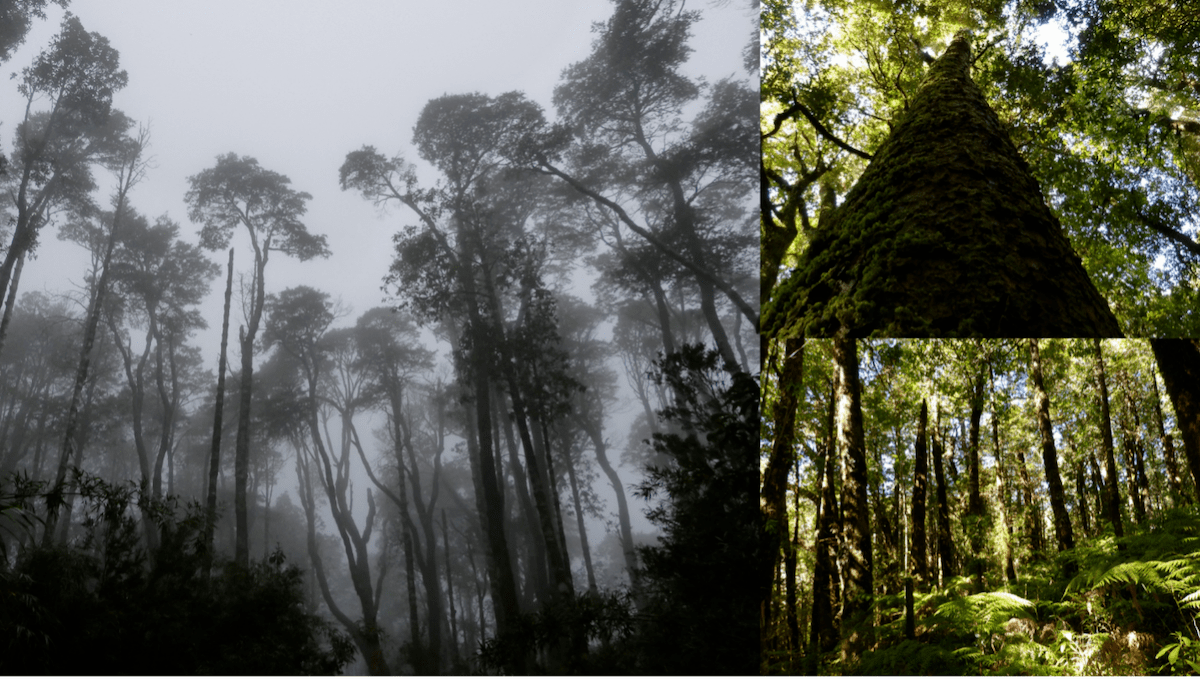
The combination of sensitivity to desiccation and low tolerance to increased radiation found by this research provides evidence of the high vulnerability of lichen communities to climate change and changes in the forest structure. This is especially true for species restricted to shady and humid environments, as they both particularly affected by drying and increasing radiation conditions, suggesting they are notably sensitive to the environmental changes expected by ongoing climate change. As one of the few studies to assess the physiological responses of epiphytic lichens in these ecosystems, Villagra’s research provides an excellent starting point for understanding the effects of climate change on these communities of organisms.
READ THE ARTICLE:
Villagra, J., Raggio, J., Alors, D., & Sancho, L. G. (2024). Desiccation Tolerance of Epiphytic Macrolichens in an Evergreen Temperate Rain Forest (Alerce Costero National Park, Chile). Plants, 13(11), 1519. https://doi.org/10.3390/plants13111519
Villagra’s postdoctoral project, “Ecophysiology and diversity of lichens in Araucaria araucana forests and their response mechanisms to global climate change”, is funded by the Fondo Nacional de Desarrollo Científico y Tecnológico de Chile (FONDECYT-Postdoctoral N°3210256).
Carlos A. Ordóñez-Parra
Carlos (he/him) is a Colombian seed ecologist currently doing his PhD at Universidade Federal de Minas Gerais (Belo Horizonte, Brazil) and working as a Science Editor at Botany One and Communications Officer at the International Society for Seed Science. You can follow him on Bluesky at @caordonezparra.
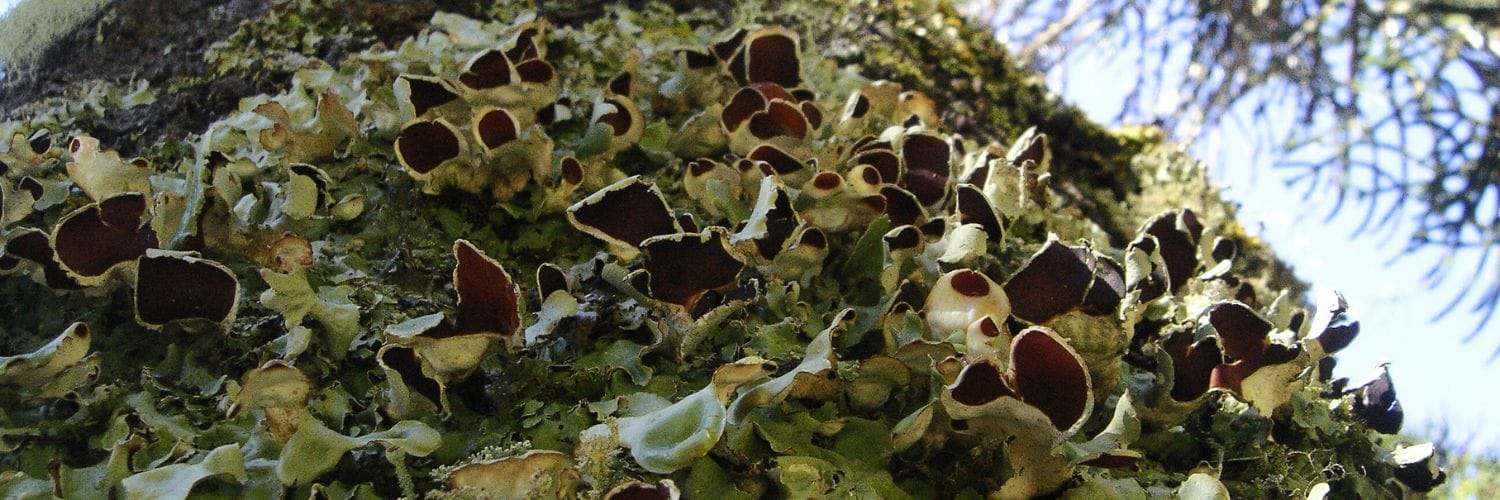
Cover picture: Nephroma antarcticum, a lichen from the Araucaria forests. Photo by Johana Villagra.