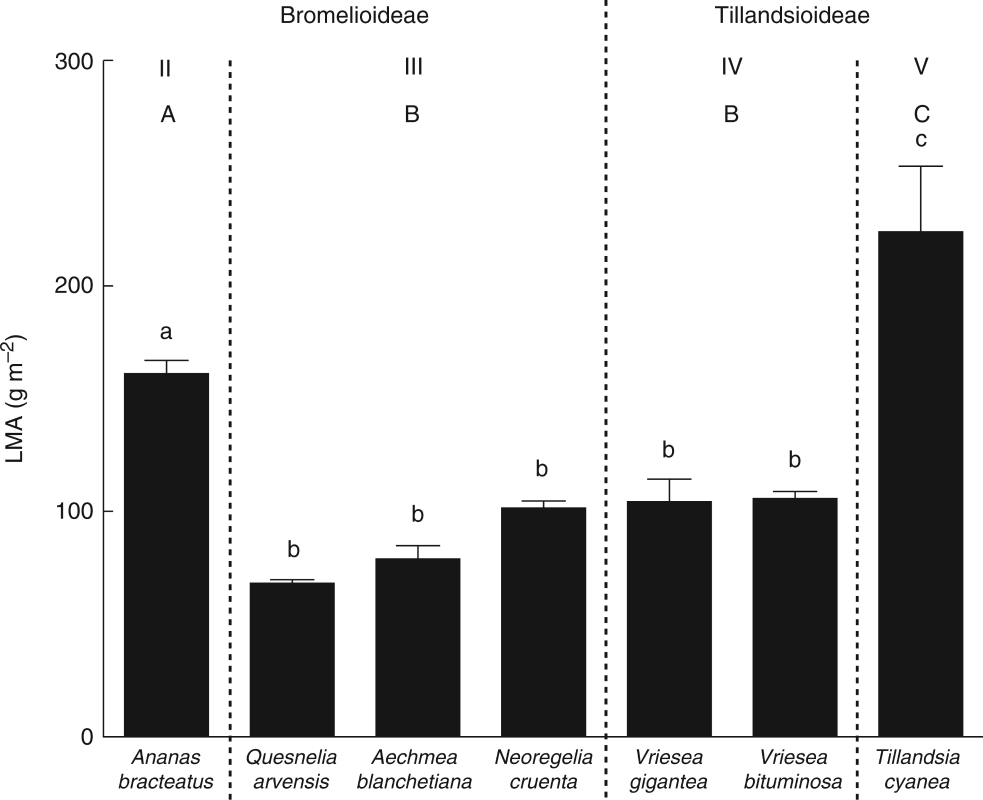


Bromeliads occur in many oligotrophic environments, due to the evolution of leaf trichomes, epiphytism, and CAM metabolism.

Among bromeliads, Tillandsioideae possess the most derived features related to these traits. Using isotopic and physiological methods, Gonçalves et al. evaluate the ways in which terrestrial predators contribute to the nutritional status and performance of distinct bromeliad subfamilies, species and ecophysiological types. Bromeliads show a trade-off between the strategy of storing nitrogen in amino acids possibly for use during nutritional stress, or using nitrogen for soluble protein production perhaps for fast growth.