Botany One
Read in
  • ZH
  • DE
  • EN
  • ES
  • FR
  • JA
  • PT
  • Home
  • Home
  • About Us
  • Archive
  • Hot Botany
  • Species Dashboard
  • Trading Card Generator
  • Manage email subscription

Tag

annals-of-botany

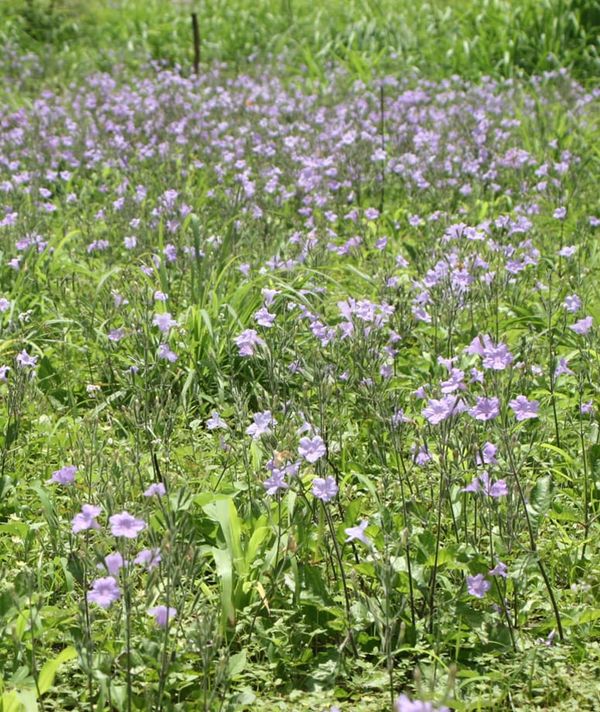
Phenology and resource allocation in Ruellia

annals-of-botany

Phenology and resource allocation in Ruellia

In plants that produce both closed, obligatory self-pollinated (cleistogamous) and open, potentially out-crossed (chasmogamous) flowers, suboptimal conditions typically favour production of cleistogamous flowers. Munguía-
botanyone · 22 Feb 2012

Diversity, mutation and fire strategies in Grevillea

annals-of-botany

Diversity, mutation and fire strategies in Grevillea

Grevillea rhizomatosa is a spreading shrub that exhibits multiple breeding strategies including self-compatibility, self-incompatibility and clonality (with and without sterility).Gross et al. compare

botanyone · 21 Feb 2012

Anagenetic speciation in Acer okamotoanum

annals-of-botany

Anagenetic speciation in Acer okamotoanum

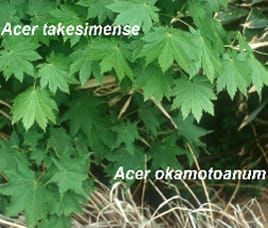
Anagenesis (also known as phyletic speciation), in which initial founder populations simply diverge through time without a branching event, is an important process of speciation in

botanyone · 20 Feb 2012

Hybrid proline-rich proteins and cell elongation

annals-of-botany

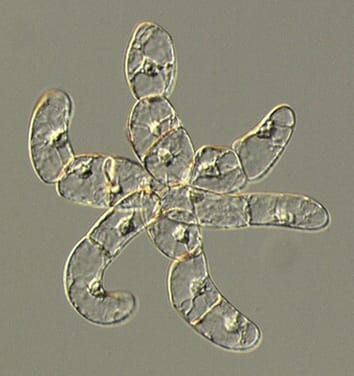
Hybrid proline-rich proteins and cell elongation

The growth of plant cells is generally related to loosening of the cell wall, which allows cell expansion driven by osmotic water uptake. Dvorakova et al.

botanyone · 19 Feb 2012

Genome size in Narcissus hybrids

annals-of-botany

Genome size in Narcissus hybrids

Although natural hybridization in the genus Narcissus (daffodils) is not infrequent, that between phylogenetically distant species differing in basic chromosome number involves significant genome changes. Using

botanyone · 18 Feb 2012

Occidental history of Cucumber

annals-of-botany

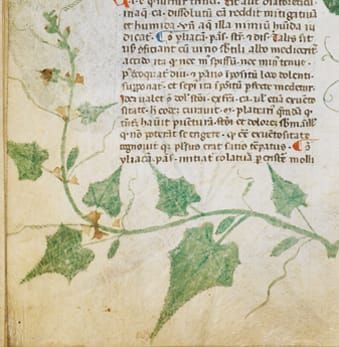
Occidental history of Cucumber

The cucumber, Cucumis sativus, is native to the Indian subcontinent. No evidence has been found for its presence in Europe during Roman times but cucumber does

botanyone · 17 Feb 2012

Polyploidy and plant invasions (Invited Review)

annals-of-botany

Polyploidy and plant invasions (Invited Review)

Biological invasions are a major ecological and socio-economic problem in many parts of the world. Te Beest et al. synthesize current knowledge on the importance

botanyone · 16 Feb 2012

Adaptive phenotypic plasticity in Acacia

annals-of-botany

Adaptive phenotypic plasticity in Acacia

Population differentiation in a variable environment is related to the selection pressures that plants experience. Ward et al. compare differences in growth- and defence-related traits

botanyone · 15 Feb 2012

ITS2 and phylogeny of green algal Chlorophyceae

annals-of-botany

ITS2 and phylogeny of green algal Chlorophyceae

Assessments of the phylogeny of the green algal class Chlorophyceae using standard, single markers, such as 18S rRNA and rbcL, have generally been unable to match

botanyone · 14 Feb 2012

Biogeography of subfamily Hyacinthoideae

annals-of-botany

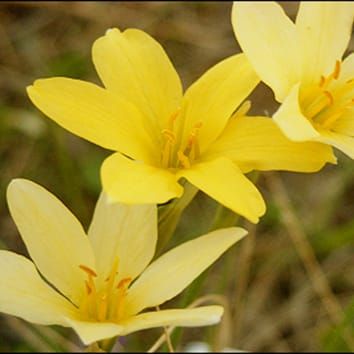
Biogeography of subfamily Hyacinthoideae

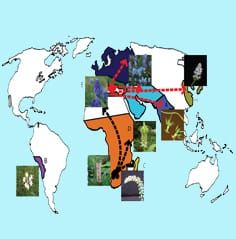
Subfamily Hyacinthoideae (Hyacinthaceae) comprises more than 400 species, which show distjunct distribution patterns. Ali et al. use dispersal-vicariance and Bayesian binary MCMC analyses to determine

botanyone · 13 Feb 2012

Reproduction costs when photosynthate is limited

annals-of-botany

Reproduction costs when photosynthate is limited

Reproduction imposes a cost as resources are diverted from other functions within the plant. Ida et al. use both defoliation and shading to reduce photosynthate supply

botanyone · 12 Feb 2012

Biased morph ratios and skewed mating success

annals-of-botany

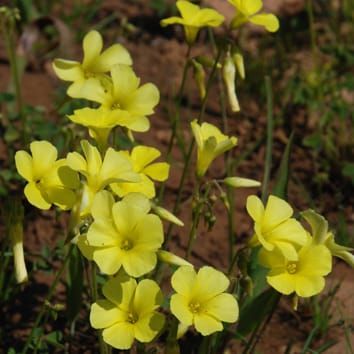
Biased morph ratios and skewed mating success

In distylous plant species, skewed morph ratios are not uncommon and may arise from a range of factors such as demographic stochasticity and leakage of the

botanyone · 11 Feb 2012

← Newer Page 112 of 130 Older →

The week's plant science, in your inbox on Monday.

One email a week, from the nonprofit Annals of Botany Company. Unsubscribe any time.

Read in
  • ZH
  • DE
  • EN
  • ES
  • FR
  • JA
  • PT
  • Sign up
© The Annals of Botany Company