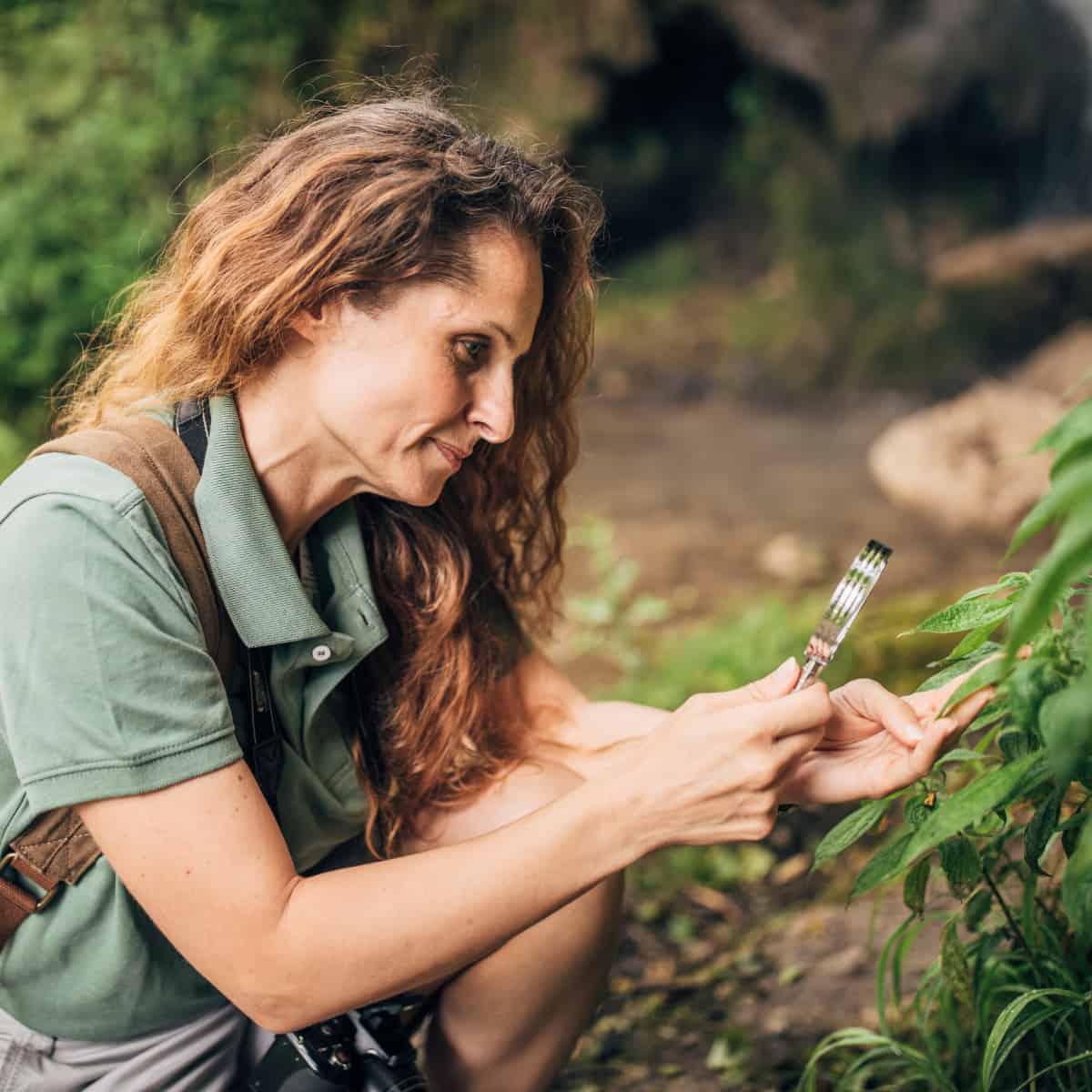

When you stop to admire a wildflower and snap a photo of a bee buzzing around it, you might not realise you’re contributing to one of the most important biodiversity databases in Europe. Thanks to a citizen science project called LIFE 4 Pollinators, thousands of such images are helping scientists understand and protect vital plant-pollinator interactions across the Mediterranean region. The results of this work have now been published in AoB PLANTS, offering new insights into how citizen-generated data can support conservation efforts.
Recent evidence suggests that animal-mediated pollination is essential for nearly 90 per cent of flowering plant species.* These ecological relationships maintain both wild biodiversity and agricultural productivity as the food on our plates depends on them.
The LIFE 4 Pollinators project, launched to address alarming declines in pollinator populations, has created a web platform where nature enthusiasts upload photographs of insects visiting flowers. Analysis of these images reveals surprising accuracy in citizen identifications and highlights worrying trends for some species.
With an accessible, anonymous data-entry format and comprehensive resources for plant and pollinator identification, the platform empowers citizen scientists to contribute observations on pollinator diversity across Mediterranean target areas and Natura 2000 sites while deepening their understanding of biodiversity in these focus regions.
The research team led by Fortunato Bitonto analysed 1,407 photo-records submitted between 2021 and 2024, finding that bees and beetles dominated the observations. Plants from the Asteraceae family (which includes daisies and sunflowers) and Cistaceae (rock roses) were most frequently recorded being visited by insect pollinators.
What surprised researchers was the accuracy of citizen scientists, who correctly identified 93.7 per cent of insect groups and 74.2 per cent of plant species, being something impressive for non-specialists lacking formal taxonomic training.
Our study shows that users can correctly identify pollinators and plants with a high degree of accuracy at a high taxonomic level (broad taxonomic aggregations for pollinators, families for plants), while the percentage of correct identification decreases at the genus and species levels.
The citizen science approach allowed researchers to cover far greater geographic territory than traditional scientific surveys could achieve. This broad-scale monitoring has helped identify population hotspots for both common and threatened species.
Among the most significant findings was photographic evidence of the endangered hoverfly Callicera spinolae, which has seen declining numbers across southern Europe. The project also documented the continuing spread of the invasive hornet Vespa velutina, a predator of honey bees that has been advancing through Europe since its accidental introduction from Asia.
Network analysis of the interactions revealed patterns supporting the “floral syndrome” concept: the idea that flowers with similar shapes attract similar pollinators. Flowers with “head” and “disk” morphologies (like dandelions and daisies) attracted the widest diversity of visitors, functioning as ecological hubs within plant-pollinator networks.
This project comes at a crucial moment, as world insect populations have declined dramatically in the last decades. A mix of threats like habitat loss, pesticide use, climate change and invasive species, are driving what’s called the ‘pollination crisis’.
The authors highlight the value of ʻCitizen Scienceʼ for local studies, especially in underrepresented regions, to fill data gaps, improve long-term pollinator evaluations and strengthen conservation strategies, showing how technology and public participation can help protect pollinators biodiversity.
READ THE ARTICLE
Bitonto F.F., Costantino R., Barberis M., Bogo G., Birtele D., Cangelmi G., Dal Cin M., Devalez J., Lenzi L., Magagnoli S., Minici A., Sánchez J.M., Zenga E.L., Bortolotti L., Navarro L., Petanidou T., Sgolastra F., Traveset A. and Galloni M. (2025) “LIFE4Pollinators’ Platform: How Citizen Science Can Help Monitoring Plants and Pollinators” AoB PLANTS. Available at: https://doi.org/10.1093/aobpla/plaf023
* Updated May 14 @2140 to include the word species, so that it’s not confused with number of individual plants.