


Scientists want to know what effect clearing forest for cattle farming is having on biodiversity in Colombia, so they’ve called on experts who know the various ecosystems intimately, birds. A dataset of 971 bird species across 13 regions helped them tell how ecosystems are changing.
Birds are indicators of forest health and survey for them can help ecologists cover greater areas than localised bioblitzes. When specialised forest birds disappear, they reveal the loss of complex plant communities in the forest, because if the plants were there, birds would have found them.
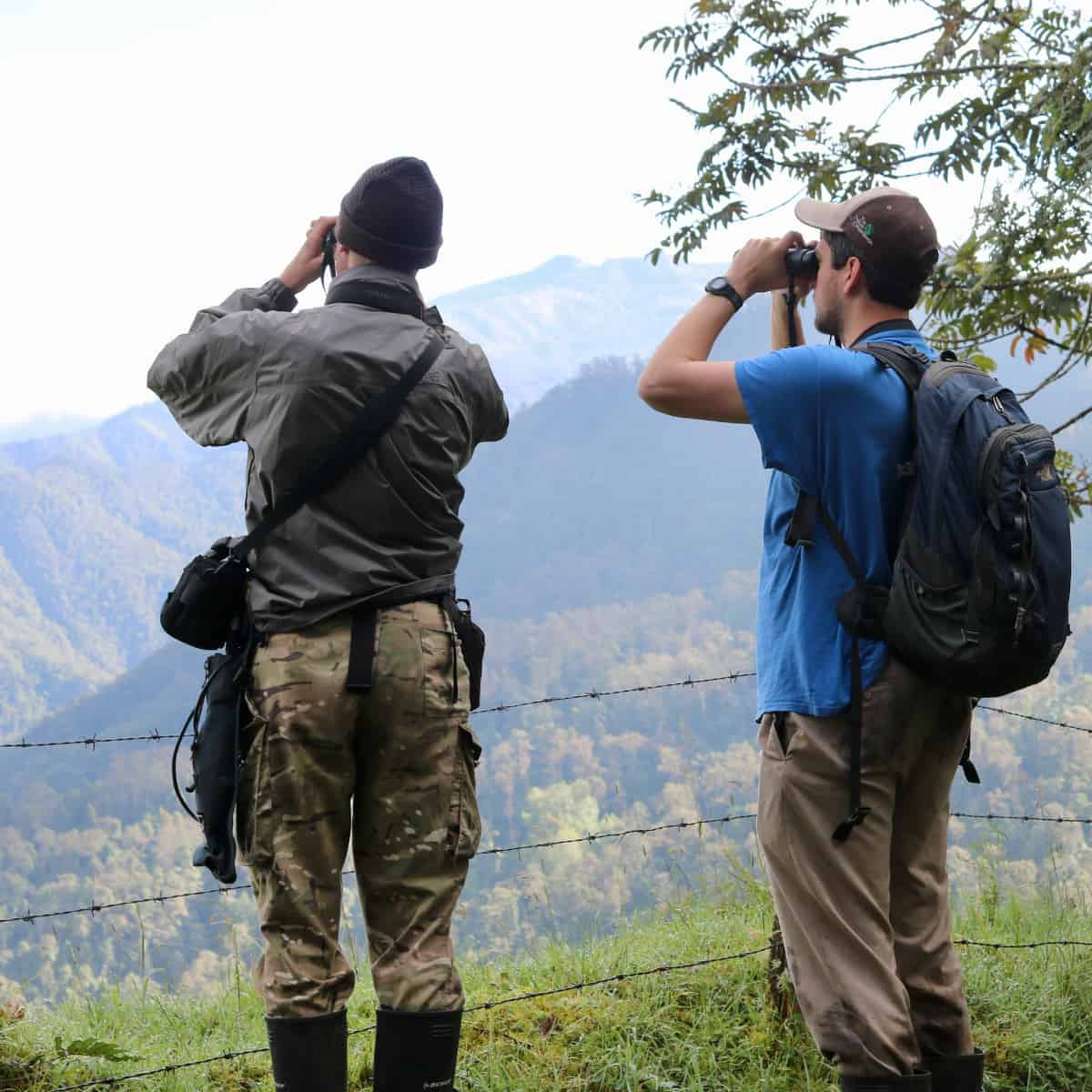
The study took six years tracking birds from the Amazon lowlands to Andean peaks, 4000 metres tall. Each elevation zone hosts unique plant communities that have evolved over millions of years. Tracking the birds over such varied landscape was difficult, so the team relied on more than eyes. 80% of the birds recorded as present were not seen in the survey. Instead they were identified from their birdsong. What the survey found was that Colombia still has incredible biodiversity; mountain forests ≠ lowland forests ≠ páramo grasslands. Each has entirely different species.
Example bird song of Cyanolyca pulchra. Recorded by David Edwards. Photo of Cyanolyca pulchra, Beautiful Jay in Colombia, for illustration, by monroyfotografo / iNaturalist. CC BY-NC
When cattle replace forests, the bird communities collapse, because the plants they rely on disappear. In their place are the same grass species. Differences like elevation, where you find different birds just a few hundred metres higher cease to matter, as pastures lack botanical diversity. After conversion to ranching, specialised communities that take thousands of years to develop can be erased. Orchids that only grow on specific trees, medicinal plants used for centuries, pollinators dependent on rare flowers, gone, taking everything that depends on them.
The scale of the survey means that biologists were able to get a much more accurate measure of how much damage to biodiversity was happening. Instead of doing local surveys and extrapolating, the team could understand how different regions each harboured their own diversity. This expanded survey gave striking results. Prof David Edwards said: “When we looked at the biodiversity impact of deforestation across thirteen different eco-regions in Colombia, we found a 62% greater biodiversity loss than local survey results would indicate.” Particularly biodiverse areas, including the Caqueta moist forests and the Napo moist forests, can have 500-600 different bird species within an area of ten square kilometres – but many of these species have very specific habitat requirements.
In the paper the authors state that the survey: “...highlights the value of preventing deforestation at any scale, as the conservation value even of small-scale protection increases when viewed through a regional lens as opposed to a local one.”
READ THE PAPER
Socolar, J.B., et al. (2025) “Tropical biodiversity loss from land-use change is severely underestimated by local-scale assessments,” Nature Ecology & Evolution. Available at: https://doi.org/10.1038/s41559-025-02779-4 (FREE)
Cross-posted to Bluesky & Mastodon.
Cover Image: Researchers in Colombia. Photo by Torbjorn Haugaasen.