

Plant responses to drought involve multiple interacting traits and processes, which complicates predictions about which plants will die and which will survive. Species are often characterized by species-specific strategies that enable them to cope with drought. However, great within-species variation exists due to dynamic individual-level adjustments made to maximize carbon gain and reduce water loss during drought.

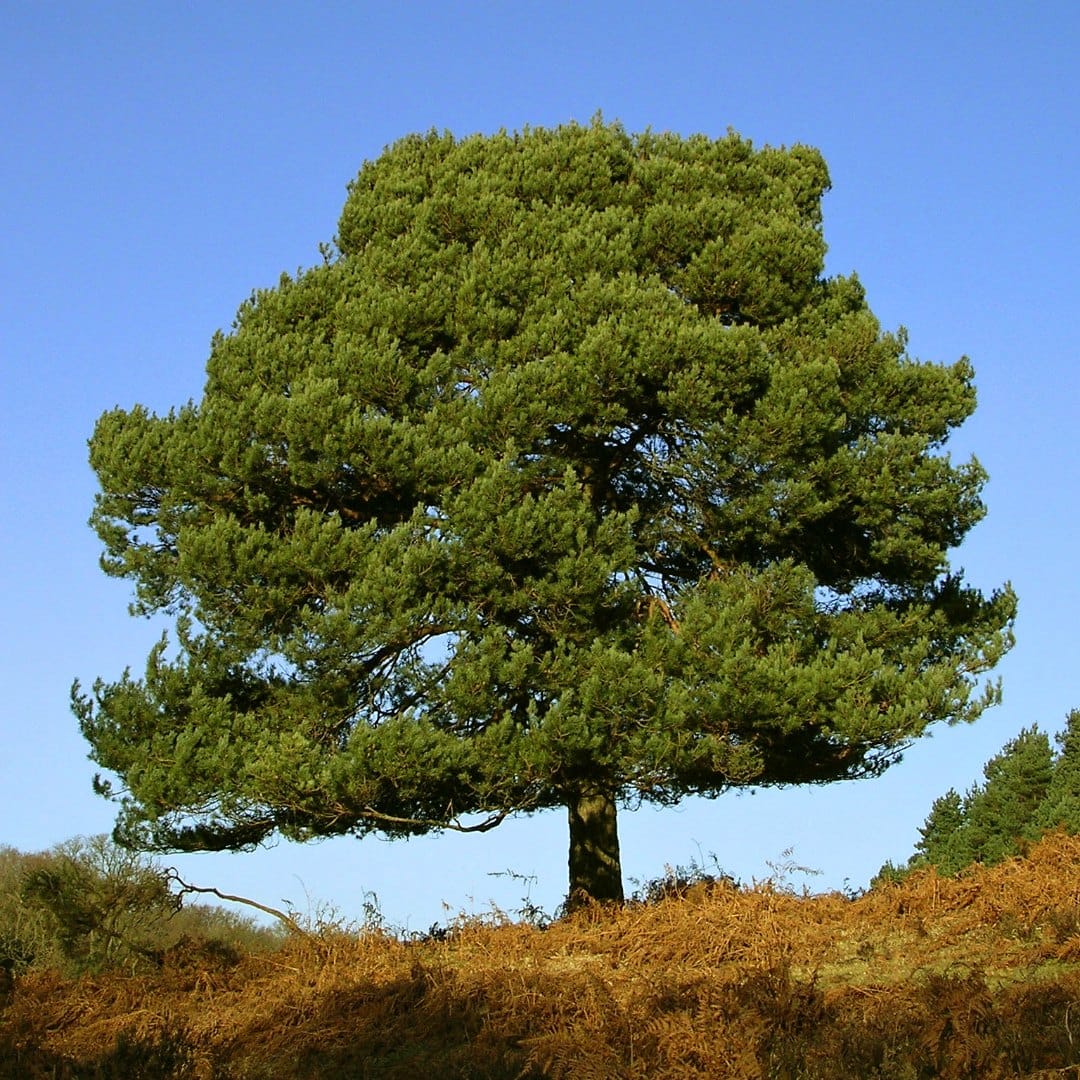
Garcia-Forner et al. (2016) investigated individual drought responses by exposing 5 year old Scots pine (Pinus sylvestris) saplings to extreme drought for 2.5 months in a greenhouse. They monitored morphological and ecophysiological variables before, during, and after the drought to compare characteristics of dead and surviving trees and determine why some individuals die and others survive.
The authors found that time to death varied by over 3 months despite growing individuals of the same species in the same environment. They found that surviving trees had greater access to water (greater below:above mass ratios) and greater C assimilation (greater photosynthesis) despite also greater water loss (greater stomatal conductance) before and during drought compared to trees that died. Trees that survived also had greater sugar (a type of non-structural carbohydrate, NSC) levels before and during drought relative to trees that died.
The results showed that maintaining open stomata for C gain despite the loss of water through stomata allowed surviving trees to invest more C to greater root growth necessary to maintain hydraulic function. The results also suggest that stored sugars and NSCs may enhance survival during drought. This study is particularly novel because it demonstrated that at the individual level, C availability may be as important as stomatal regulation of water loss for surviving extreme drought.