


How to play
Below is an image split into a grid of 9 (Quick), 16 (Challenging) or 25 (Formidable) tiles. One tile is missing, leaving a gap.
To win, move the tiles round using the gap, so they are re-ordered into the image. You can move a tile by clicking on it, or by using the arrow keys. Left arrow moves a tile left into the gap, up arrow moves a tile up into the gap and so on.
If you need help seeing what the final image should look like, and if you have tiles in the right place, you can peek at the completed image.
Good luck!
Click on the tiles move them into the gap. Rearrange the tiles to reveal the image.
Hold "Peek" to see the complete image
Puzzle Complete!
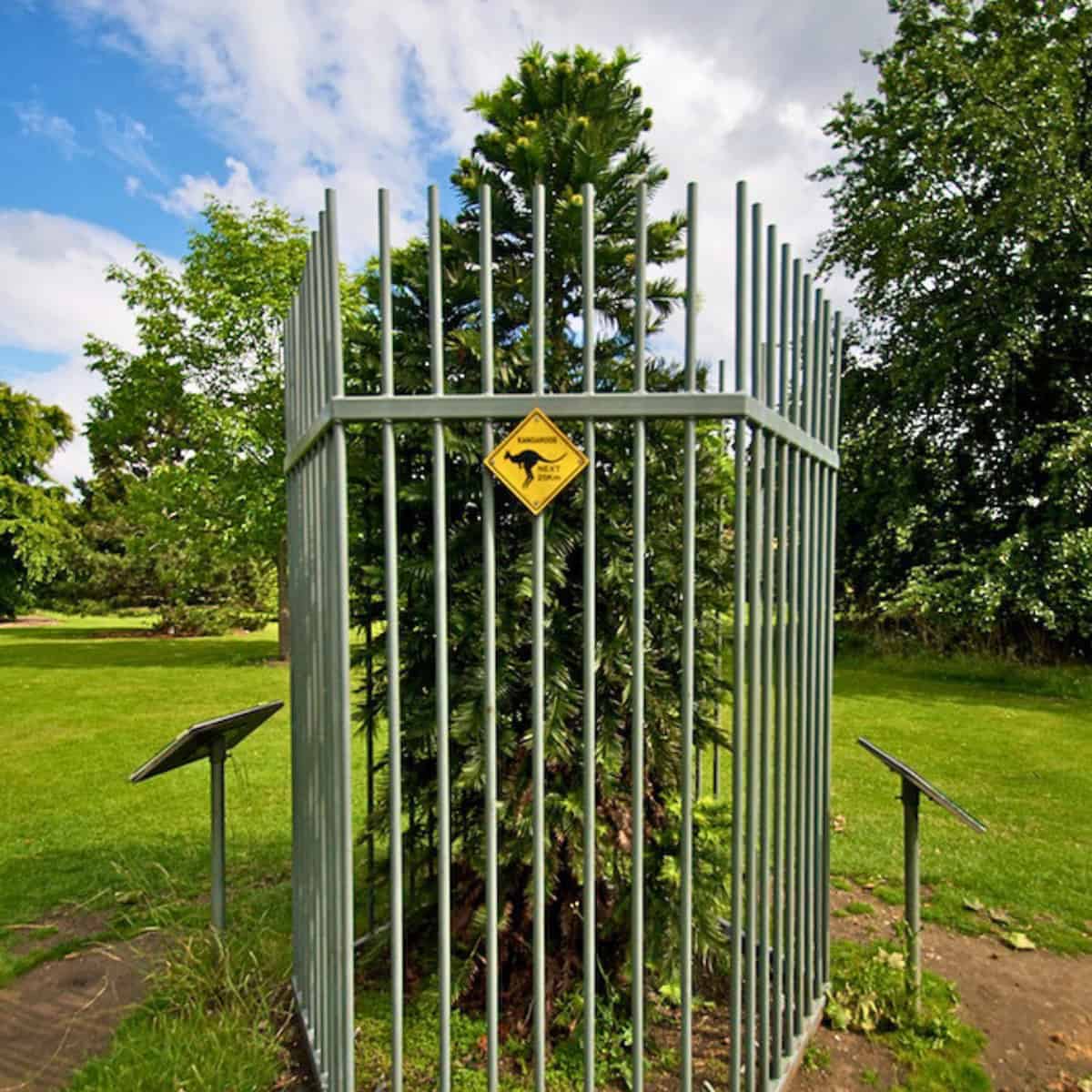
As an alternative to Plant Hunt we also have Rootle. I thought to test it with this image of a Wollemi Pine. This is a tree I first saw at Kew Gardens and it was a really clever display.
It was the only tree in the area that was in such a sturdy cage. This works straight away as highlighting that this is either something very rare that needs protecting from the public, or something very dangerous that the public needs protecting from. In this case, it's very rare. At the time I saw it, there were maybe 100 known in the wild.
What I also like about this as a display is not just what it shows you, but what it doesn't. This tree was in a cage, and you recognise it as the Wollemi Pine, because it is in a cage. What the display didn't say is that the gardens had other Wollemi Pines planted around the garden. Because they weren't in cages, they were free to grow anonymously, because all the attention was on this tree.
The tree was discovered in 1994. Until then the only similar trees were known from fossils. It is thought to have evolved maybe 200 million years ago and it was thought to have become extinct two million years ago. Jimmy Turner of the Dallas Arboretum said "It's like walking into your back yard and finding a T. rex eating from your dog's bowl." The dinosaur part of that has been picked up a lot, and it's often referred to as a dinosaur tree. However, what gets overlooked is the backyard part of that. The tree was discovered just 60 miles from Sydney, a city of millions.
While it's rare in the wild conservation is being funded by selling propagated specimens and plants grown from seed. So it may be rarer than a panda, but it's also a panda you could help conserve. The wide dispersal of plants means biologists are able to learn more about its tolerances and new techniques to help conserve it, as recently reported by Offord & Zimmer.