


Nature reserves are important for wildlife, but they can be small and compact. What effect can linear works, like dykes, have? They’re narrow, but can their long length help connectivity? Constant Swinkels and colleagues spent three years catching bees along them to find out.
Researchers surveyed 157 dyke locations across Dutch lowland rivers and delta areas. Several times a year during the bee flight season, the researchers went out onto the dykes with a butterfly net, along 150-metre routes, to count bees systematically. Teams sampled for 15 minutes of active searching per transect, visiting locations multiple times yearly to account for bee and plant phenology. “Sometimes we saw as many as 400 bees in 15 minutes, other times only three,” said Swinkels.
Researchers identified bees in the field when possible, but collected specimens for lab identification when needed. They also recorded local flower species richness within 5×5m quadrats. Weather data and landscape factors within 250m-1km radius were incorporated into models.
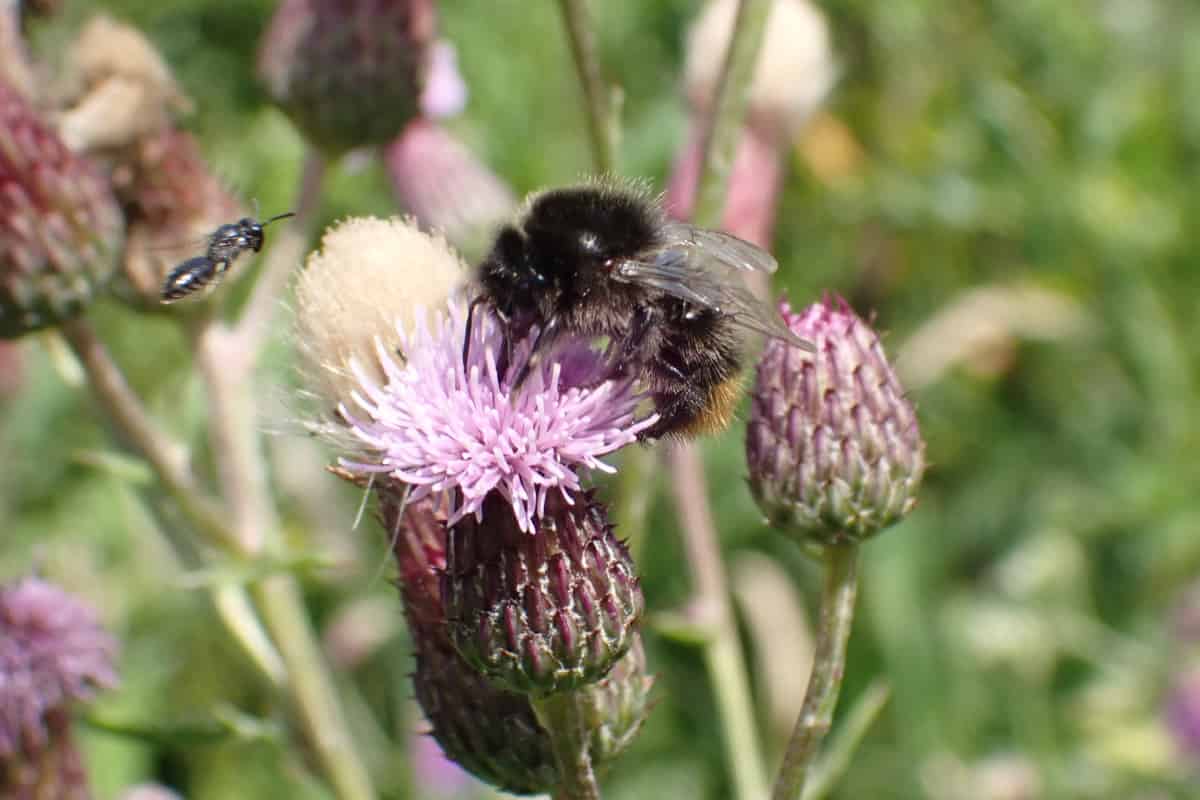
“Flower-rich dykes attract many more bees than, for example, flower strips in agricultural areas. And especially more endangered species. About ten percent of the bees we found are on the red list, such as the Knautia bee, the red cuckoo bumblebee, the meadow bee and the variegated wasp bee.” Dykes seem attractive to bees because the slope warms up in the sun, making it an ideal place to build a nest, and because all kinds of different plants can grow there. The wide presence of kleptoparasites like cuckoo bees, who lay their eggs in other bees’ nests, seems to support this.
Bee abundance & diversity increase rapidly with more flower species but plateaued around 8 flowering plant types. “This early saturation suggests that even modest conservation efforts could effectively alleviate floral resource limitation” the authors write in the paper. But there’s a twist. Red-listed species kept increasing even above 8 flower types, suggesting rare species need high local diversity. In fact these species don’t graze multiple flowers, they’re specialists. It’s about finding exactly the right flowers. The diversity improves their chances of finding that flower.
“Dykes are a kind of insect highway,” says Swinkels. “We have more than 17,000 kilometres of dykes in the Netherlands. Although there are some real flower-rich gems, the vast majority are still closely mowed and flower-poor, so there is still a huge area with great potential.”
Research Source: Proceedings of the Royal Society B, https://doi.org/pzns ($), July 30, 2025
Press Release: https://www.eurekalert.org/news-releases/1093024
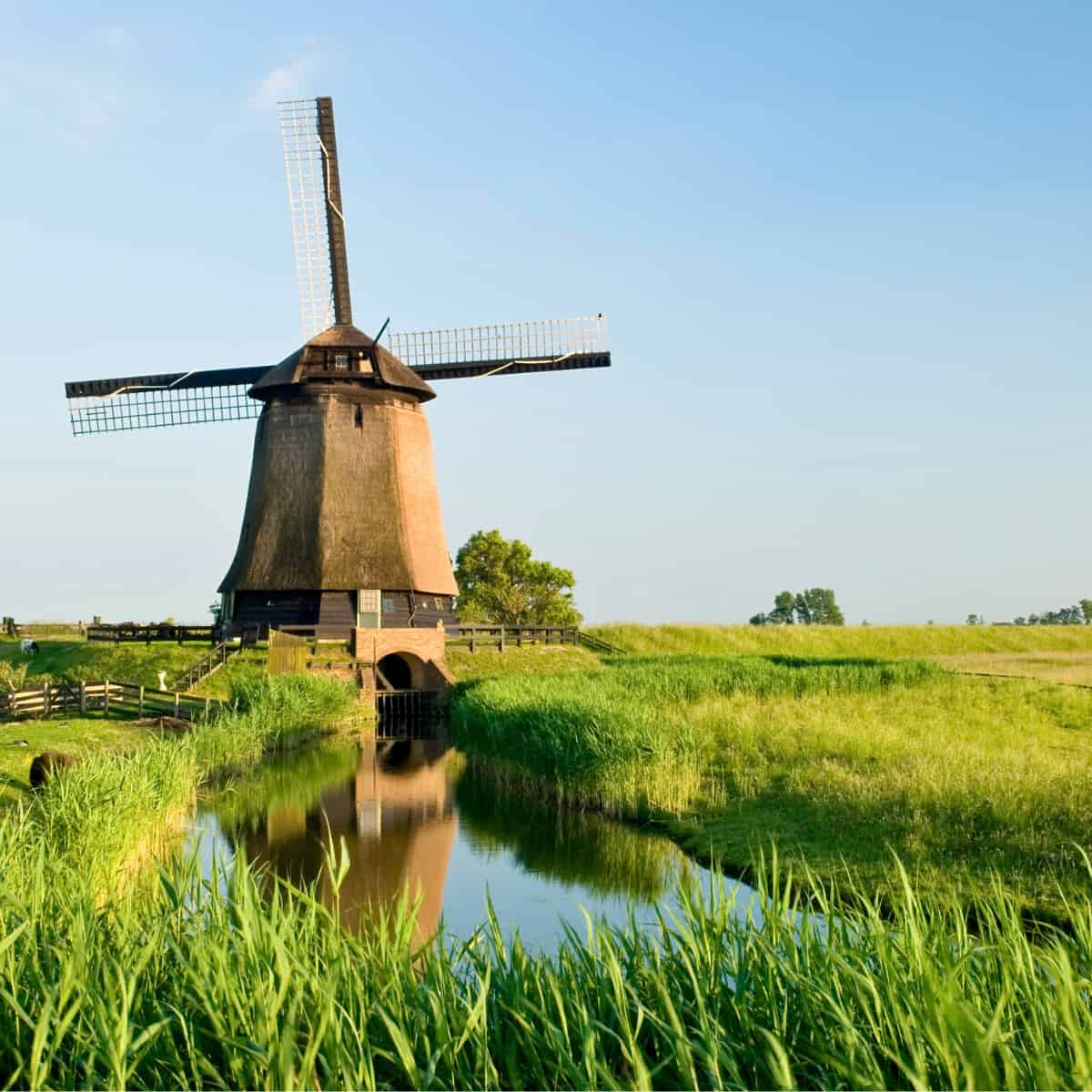
Cover Image: Windmill near Schermerhorn, Netherlands by JacobH / Getty Images / Canva with edits.