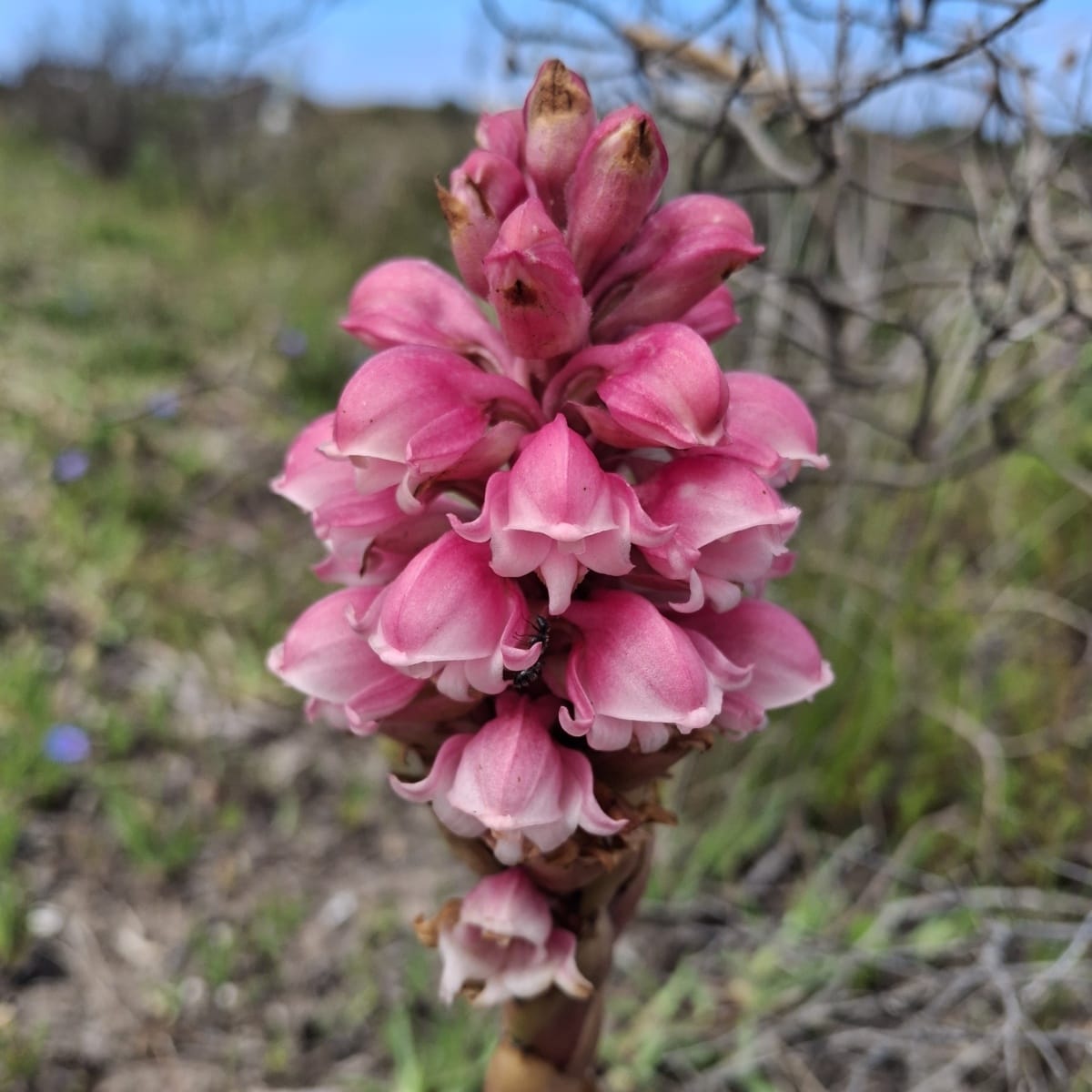



Fire is not always an enemy. In some ecosystems, fire is a natural and frequent part of the landscape, clearing space and releasing nutrients, and plants and animals have evolved to live with it. The problem is that human activity is changing how often fires happen, how hot they burn, and when they occur. These shifts can push ecosystems beyond what species are adapted to handle.
For plants, surviving fire is only part of the challenge, as they must also reproduce in these landscapes. Some species rely on seeds to regenerate after a fire, while others resprout and still need sexual reproduction to maintain genetic diversity. In many herbaceous plants, fire triggers spectacular waves of blooming, a strategy known as fire-stimulated flowering.
At the same time, fires also tend to reduce bird pollinator density, as fewer flowers are available for them to feed on. To cope with this uncertainty, some plants adopt flexible strategies. They may attract a wider range of pollinators, becoming less picky, or partially rely on self-pollination to ensure reproduction when visitors are scarce.
With this in mind, Asekho Mantintsilili and his team asked how fire-stimulated flowering species manage to reproduce when pollinators are scarce. For this, they selected three fire-stimulated flowering species from a recently burned nature reserve in South Africa and conducted experiments, measurements, and fieldwork.
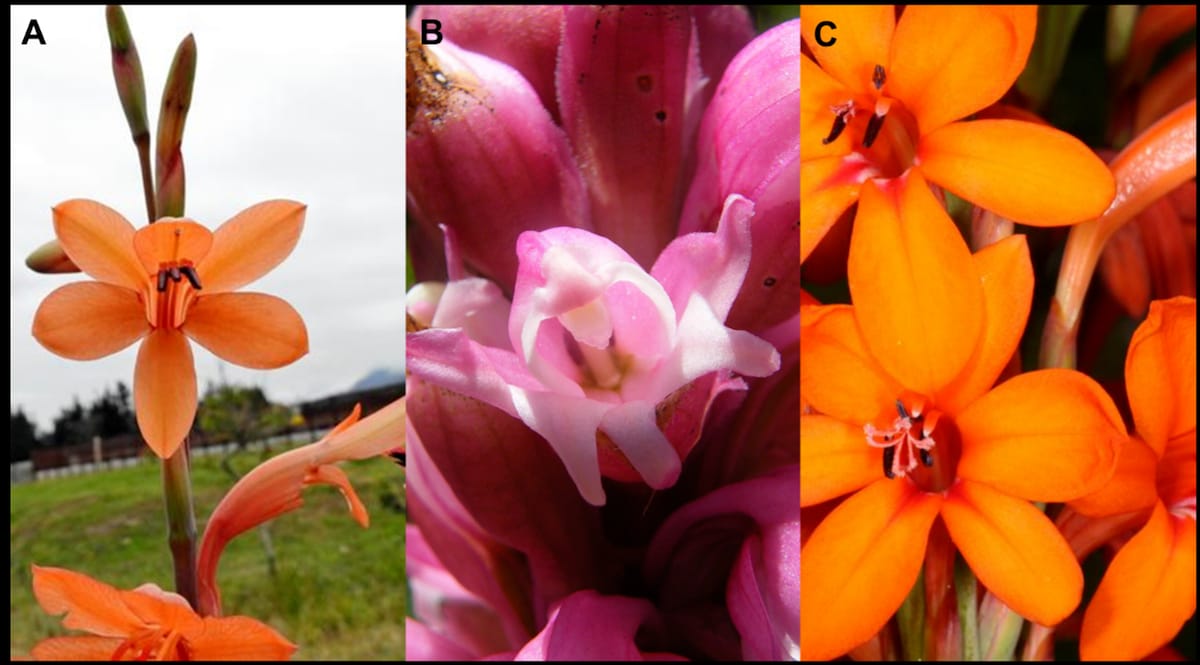
They found that all three plants have flowers with classic traits of bird pollination. Their bright colours, long tubular shapes, weak scent, and generous amounts of nectar are all features that make feeding easier for sunbirds. Nectar levels were highest in the morning, suggesting that animals were actively visiting the flowers and drinking the nectar as the day progressed, rather than the nectar simply evaporating in the heat.
Regarding floral visitors, sunbirds did most of the real work. Although several bird species were seen visiting the flowers, only a few actually touched the reproductive parts while feeding. When birds were excluded from the plants, fruit and seed production dropped sharply, in some cases by more than 80 percent. This makes it clear that birds are not just casual visitors, but essential partners in reproduction.
But insects were also present, especially honeybees, which were often seen visiting flowers. However, their visits rarely led to successful reproduction. In some cases, bees collected nectar without pollinating the flowers. This shows that being a frequent visitor does not necessarily make an animal an effective pollinator.
Plants were not completely helpless when birds were scarce. Two of the species could use their own pollen to produce a small number of fruits, showing a limited ability to self-pollinate. Even so, this strategy came at a cost. Self-pollinated flowers produced far fewer fruits and seeds than those visited naturally by birds, and none of the species could reproduce without an animal moving pollen between flowers.
Finally, one of the most surprising findings was that these plants were not short of pollen at all. Natural pollination worked just as well, or even better, than hand pollination by researchers. So, when sunbirds do arrive, they deliver plenty of high-quality pollen. By flowering in dense clusters after a fire, at a time when few other plants are in bloom, these species seem to capture the full attention of passing birds.
Overall, this study shows that these three fire-stimulated flowering plants remain strongly linked to bird pollinators, even in landscapes recently shaped by flames. Rather than revealing a fragile relationship, the research points to a resilient partnership that can survive disturbance. In a world where fire regimes are changing, this offers cautious optimism that some plant–pollinator relationships can continue to rise from the ashes, again and again. Still, this resilience depends on the protection of fire-adapted plants, their pollinators, and the habitats that support both.
READ THE ARTICLE:
Mantintsilili A, Seymour CL, Geerts S, Coetzee A. 2025. Pollinator‐dependence and specialization in three sunbird‐pollinated, fire‐stimulated flowering species. Plant Biology 28: 215-224. https://doi.org/10.1111/plb.70142
Portuguese translation by Victor H. D. Silva.
Cover picture: Satyrium carneum by Corné Rautenbach (iNaturalist).



.jpg?ref=botany.one#/media/File:Watsonia_pillansii_(5285635966).jpg)