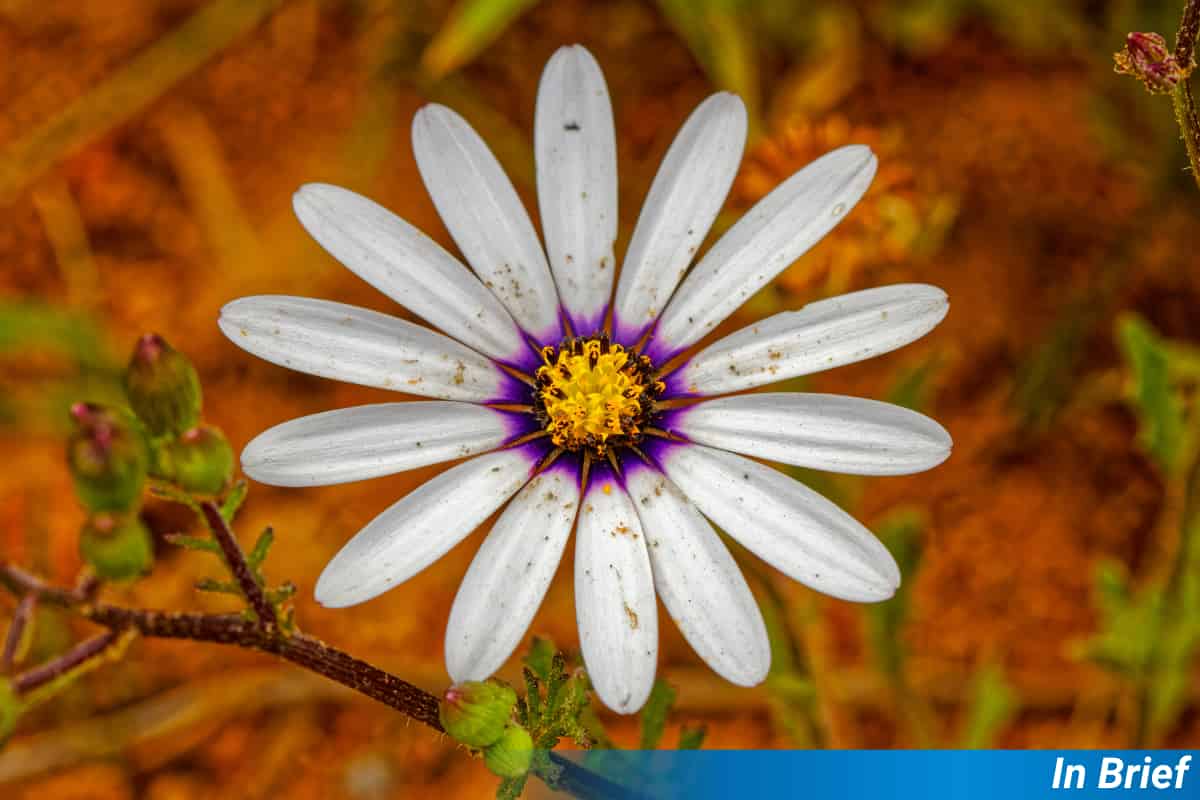



Fynbos gets a lot of attention in South Africa, but Curtis and colleagues have been studying another ecosystem in the same region, renosterveld. It’s a shrubland ecosystem dominated by small-leaved, evergreen shrubs, particularly from the daisy family (Asteraceae), and it burns. Curtis and colleagues wanted to know how resilient renosterveld is to burning.
The botanists found that renosterveld had very high plant diversity, with up to 80 species found in 100 square metre plots. However, they didn’t find the same 80 species at each site they studied. In fact around just 5% of the plants were found at all six sites, indicating that there’s a lot of diversity within renosterveld. They also found that fire affected the mix, with geophytes (bulbs) and annuals doing well after an area was burned.
The team studied the renosterveld by establishing 24 experimental plots across 6 renosterveld sites. They recorded the plant species they found, and then burned half of the plots. They then recorded what reappeared up to ten years later. This allowed them to analyse changes in species richness, diversity, and composition over time.
Renosterveld is a highly endangered vegetation type. It is thought that only 5% of it is remaining compared to pre-colonial times. It’s also had little respect, seen as a low diversity transitional scrubland rather than a vibrant ecosystem. Curtis and colleagues show this is not the case and it should be considered as important to conserve as fynbos.
Curtis, O.E., Bond, W.J. & Chimphango, S. 2024. Diversity and fire responses in Renosterveld, the forgotten relation of fynbos, in southernmost Africa. Journal of Arid Environments 225: 105261. https://doi.org/10.1016/j.jaridenv.2024.105261 (OA)