



Despite being an important crop, scientists haven’t known how potatoes evolved. Modern potatoes look nearly identical to Chilean Etuberosum plants, but those don’t make tubers. Genetically, potatoes are closer to tomatoes. To find out what happened a team analysed 450 genomes from cultivated potatoes and 56 of the wild potato species. “Wild potatoes are very difficult to sample, so this dataset represents the most comprehensive collection of wild potato genomic data ever analyzed,” says first author Zhiyang Zhang.
They found every potato species contained a stable mix of genetic material from both Etuberosum and tomato plants. The dating showed potatoes formed through hybridization ~8-9 million years ago, with divergence times from each parent being remarkably close (9.0 and 8.5 MYA respectively).
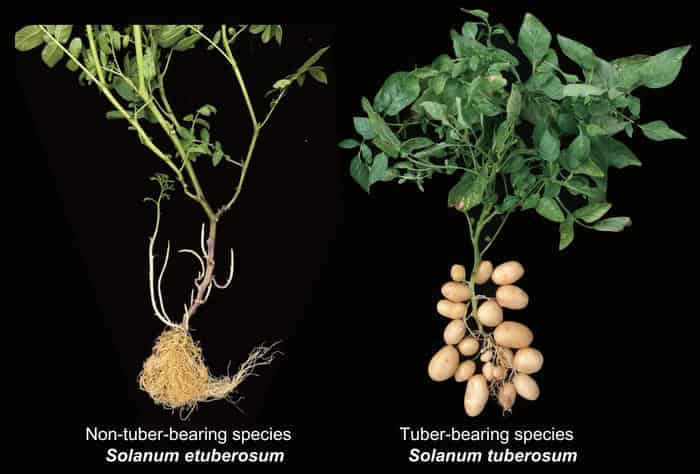
The tuber-forming superpower came from both parents working together. The SP6A gene (the “master switch” for tuber formation) came from tomatoes, while the IT1 gene (controlling underground stem growth) came from Etuberosum. Then the new plants faced a challenge: the Andes rose. The geological change created new challenges. With a tuber to store nutrients underground, early potatoes were able to quickly adapt to the changing environment, surviving harsh weather in the mountains.Tubers also allowed potato plants to reproduce without seeds or pollination.
“Evolving a tuber gave potatoes a huge advantage in harsh environments, fueling an explosion of new species and contributing to the rich diversity of potatoes we see and rely on today,” Huang said.
Discovery details: Cell, https://doi.org/g9vtc4
Press release: https://www.eurekalert.org/news-releases/1092263
Cover image: Always look to the bright side of life by Christian Benseler / Wikimedia Commons CC-BY




.jpg?ref=botany.one)