


Alexander Greene and colleagues have suggested a novel approach to recording botanical data with their latest publication in the Journal of Ethnobiology. Ethnobotany, a field dedicated to exploring the relationship between humans and plants, traditionally relies heavily on herbarium specimens – dried samples of plants which include stems, leaves, roots, flowers, fruits, and other parts that are characteristic of the species. These samples are crucial for accurate plant identification and comparability across diverse ecological, cultural, and linguistic contexts.
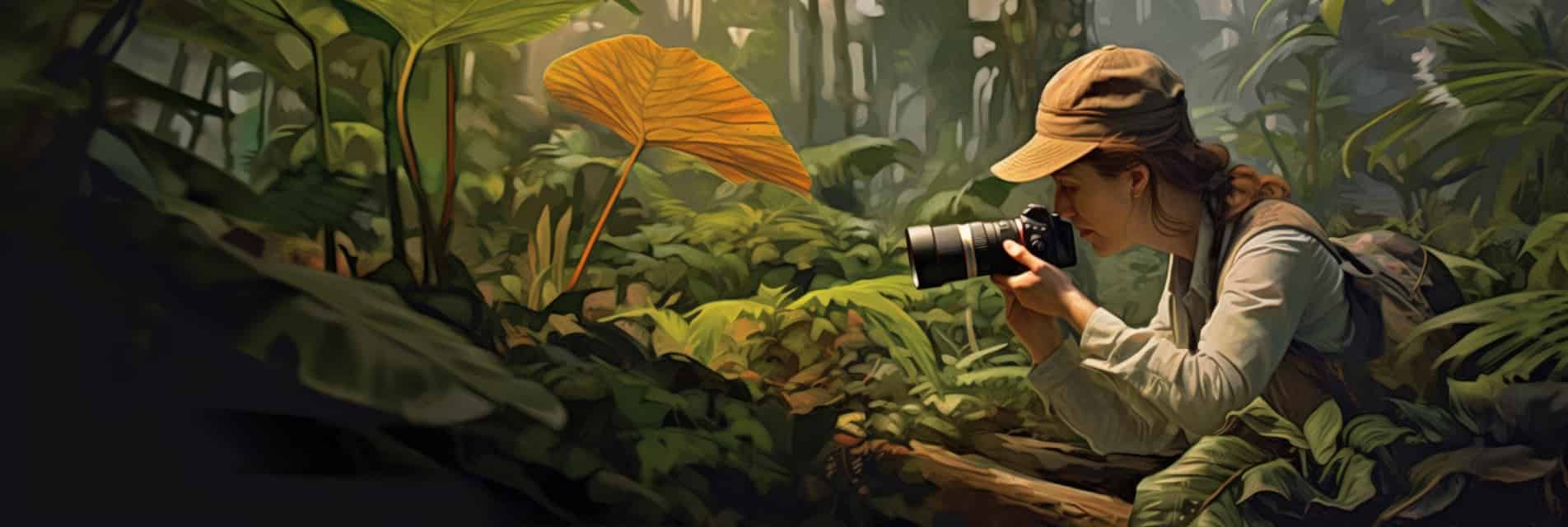
The authors highlight several challenges associated with the collection of herbarium specimens and propose the use of photographic vouchers as a complementary method. Photographic vouchers involve taking high-quality photographs of plants, which can be stored in digital repositories, an approach that has several key advantages:
- They can be collected when botanical specimens cannot, making them a flexible alternative.
- Photographic vouchers are efficient in terms of space, time, and effort and are easy to share, improving access to data.
- They can leverage machine learning and crowdsourcing techniques, streamlining and enriching botanical and ethnobotanical research.
The researchers also address an important question of access, which has historical and colonial implications. The traditional practice of collecting and depositing botanical specimens in herbariums has often resulted in data imbalances between the Global North and Global South. By employing photographic vouchers, the authors argue that the practice can help democratise ethnobotanical data and decolonise the field.
While the researchers note that traditional herbarium specimens remain an ideal method for plant identification, they believe that photo vouchers can significantly enhance the field of ethnobotany. By connecting local and academic knowledge, this new method could encourage further collaboration among researchers and experts and with the local community, thereby fostering a more inclusive and efficient approach to studying our relationship with the plant kingdom.
READ THE ARTICLE
Greene, A.M., Teixidor-Toneu, I. and Odonne, G. (2023) “To pick or not to pick: Photographic voucher specimens as an alternative method to botanical collecting in ethnobotany,” Journal of Ethnobiology, 43(1), pp. 44–56. Available at: https://doi.org/10.1177/02780771231162190.