
Some seeds are so well sealed that even water cannot get in. Seed scientists call this “physical dormancy”, and it is caused by water-repelling compounds in the cells that make up the seed coat. At first, this might sound like a problem. Don’t seeds need water to germinate? But for many plants, blocking water is a useful delay tactic. Environmental cues such as heat, fluctuating temperatures, fire or humidity can eventually disrupt this barrier. In this way, physical dormancy acts as a checkpoint, helping seeds avoid germinating until conditions are more favourable for young seedlings.
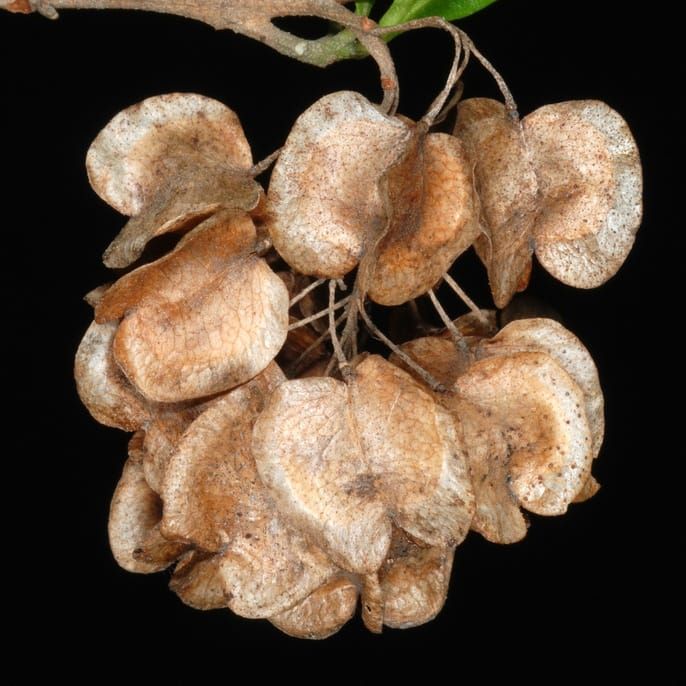
A recent study published in Seed Science Research by Xuemin Han and colleagues from the University of Shanghai for Science and Technology aimed to better understand physical dormancy in Dodonaea viscosa, a shrub or small tree commonly known as hopbush. The species is found across tropical and warm temperate regions, including parts of Africa, the Americas, southern Asia and Australasia.
The team collected seeds from several trees in Yunnan, China, and placed them on moist paper to test whether they could absorb water and germinate. The researchers then checked the seeds regularly for swelling, a sign that water had entered. Seeds that showed no signs of water uptake after a month, around half of the batch, were used in experiments designed to break dormancy.
Some seeds were dipped in boiling water for up to 30 seconds and then placed back on moist paper. In this treatment, sudden heat can expand, soften or shift parts of the seed coat, potentially opening a route for water. Another group of seeds was immersed in liquid nitrogen for 24 hours, rewarmed, and then either tested or returned for up to five freeze–thaw cycles. At around –196 °C, liquid nitrogen cools seeds extremely quickly. When they are rewarmed, different seed tissues may shrink and expand at different speeds, creating cracks in the seed coat. The seeds were also photographed and inspected under microscopes before and after treatment to see whether any openings appeared.
The team found that hot water, even when exposure lasted only 5 or 10 seconds, was enough to break dormancy and greatly improve germination. Longer hot-water exposure also worked, but more time was not necessarily better, as extended heat may begin to harm the seeds.
The microscope images revealed what was happening. Untreated impermeable seeds had a closed, intact hilum pad, with no obvious route for water to enter. Boiling water caused a tiny structure near the hilum, the region where the seed was once attached to the fruit, to open. Once this happened, water could enter and germination could begin. Scanning electron microscopy, a technique that reveals fine surface details, confirmed that this was the water gap: the tiny entry point that turns a sealed seed into one ready to absorb water.
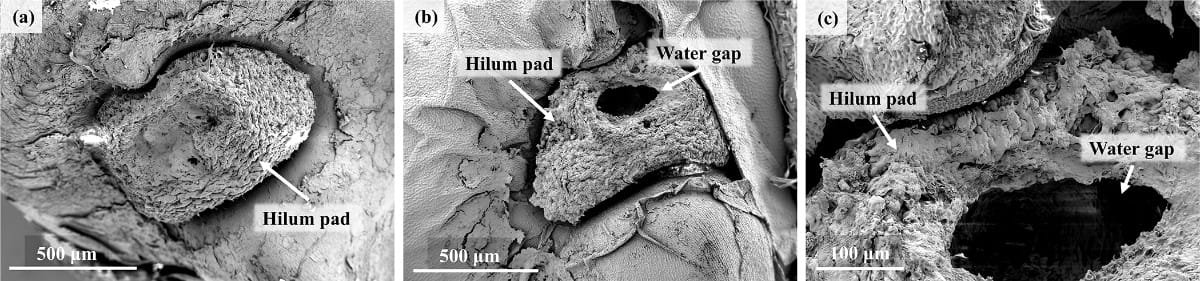
The strongest proof came from the blocking experiment. Hot-water-treated seeds almost doubled in mass within seven days as they absorbed water. But when the researchers sealed the region where the slit opened with petroleum jelly, water uptake was strongly reduced. That showed that the opening near the hilum was not just a visible crack, but the functional gateway for hydration.
Liquid nitrogen, however, harmed the seeds. Rather than gently opening the seed coat, freeze–thaw cycles caused severe fractures and damaged the embryo and cotyledons, the seed’s first food-storage leaves. In the end, only a few seeds germinated after this treatment.
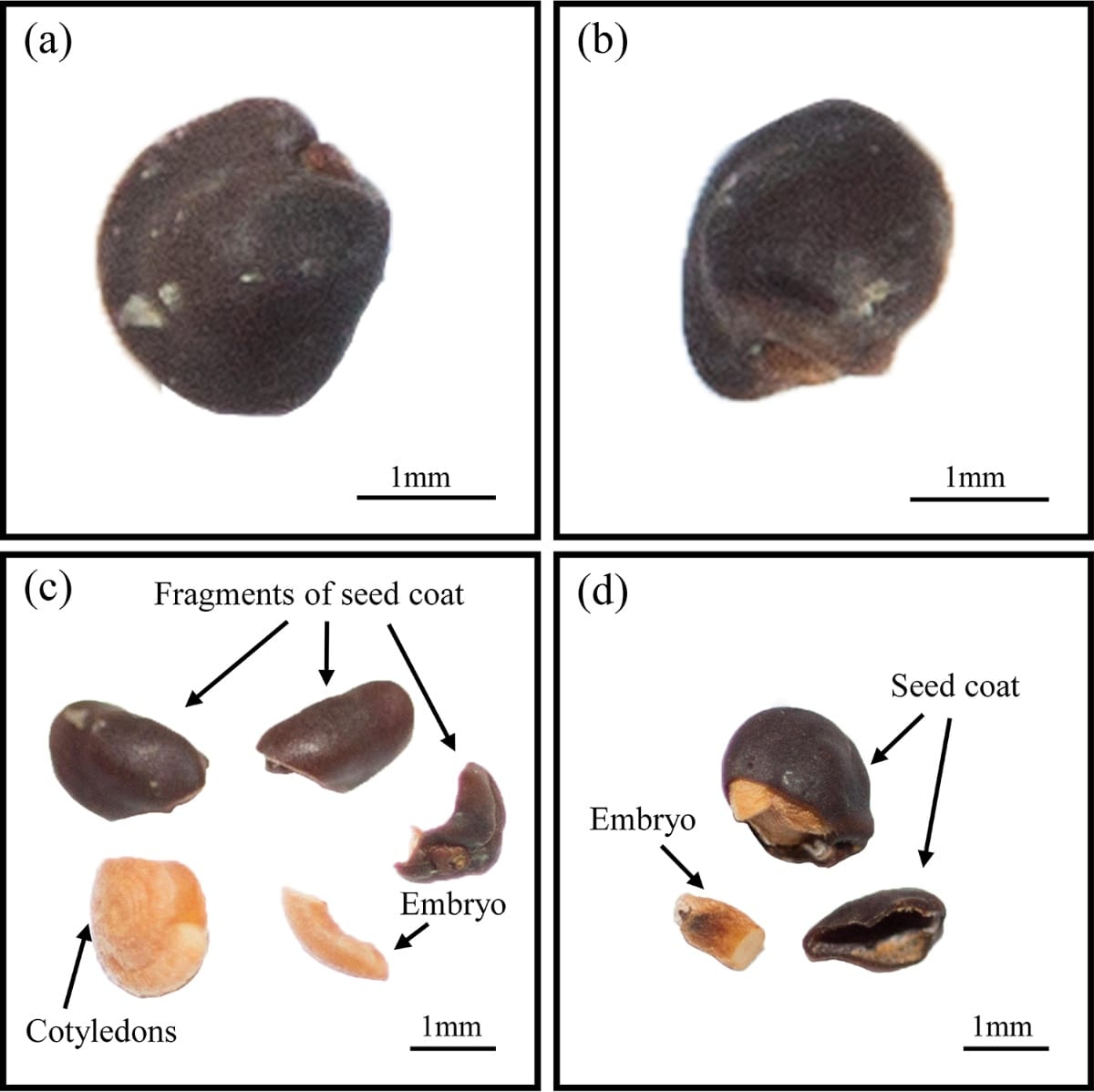
The wider message is practical as well as biological. For nurseries, restoration projects and seed banks, breaking dormancy is useful only if the seed survives the treatment. Dodonaea viscosa shows that even tough seeds can be surprisingly fragile when the wrong method is used. In this species, the lock has a precise position, and hot water opens that natural doorway without destroying the seed. Liquid nitrogen, by contrast, can crack the coat and damage the living tissues inside. Understanding these small anatomical differences could help researchers develop safer, species-specific methods for storing and germinating physically dormant seeds, one tiny doorway at a time.
READ THE ARTICLE:
Han X, Jaganathan G, Liu B. 2025. Water gap anatomy and dormancy-breaking treatments impact on seed coat integrity and germination in Dodonaea viscosa L. Jacq (Sapindaceae). Seed Science Research 35: 258-266. https://doi.org/10.1017/s0960258526100129
Cover picture by Douglas Goldman (iNaturalist).