

Herbaria contain samples of plants from around the globe that have been collected by scientists for centuries. These specimens tell the history of plant evolution, but they can also provide insight into the future of plants as well.
In a recent study, published in New Phytologist, scientists have shown that herbarium specimens can be used to measure woody plant growth in a non-destructive and virtual manner– and the results can be correlated with historical weather data to better predict future plant response to climate change.
“By using [specimens] to inform growth predictions, we can provide insight into which plant species may be the most vulnerable to changes in climate,” says Natalie Iwanycki Ahlstrand, lead project researcher and assistant professor at the Natural History Museum of Denmark, University of Copenhagen, “this can ensure that our resources are being focused towards the places where they are needed most.”
As temperatures continue to rise globally, scientists are concerned with how the growth of woody plants in the Arctic, such as willow, respond to changes in temperature and rainfall. Typically, these growth studies require researchers to cut apart the plant, to access and measure the growth rings inside the stem. Whilst accurate, this method is both destructive and only useful when scientists have direct access to the plants of interest through field studies.
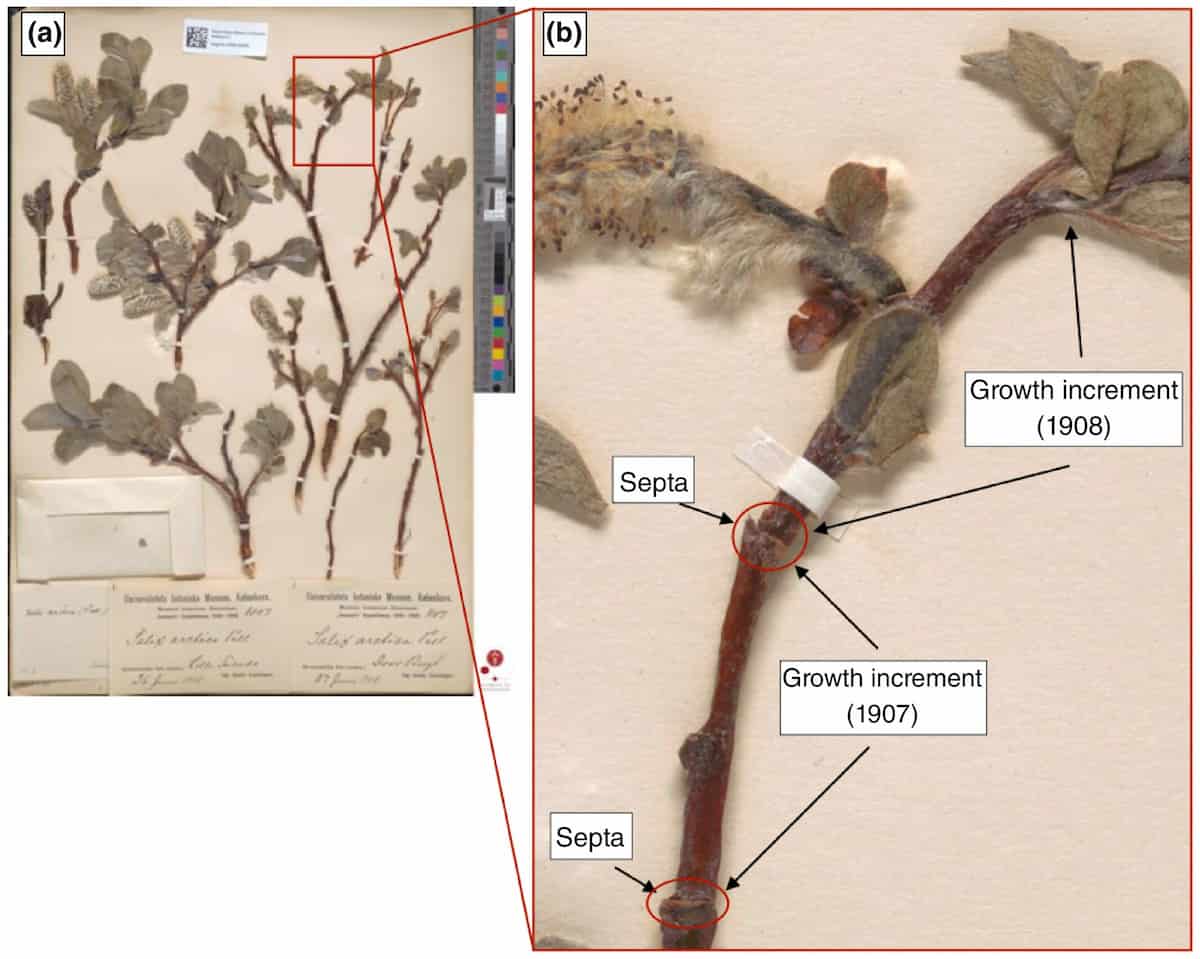
However, using only digital specimens collected from Arctic regions in Greenland, Ahlstrand and her colleagues were able to measure the incremental growth of stems of four different Salix, or willow, species and assess how the growth patterns of these shrubs change over time.
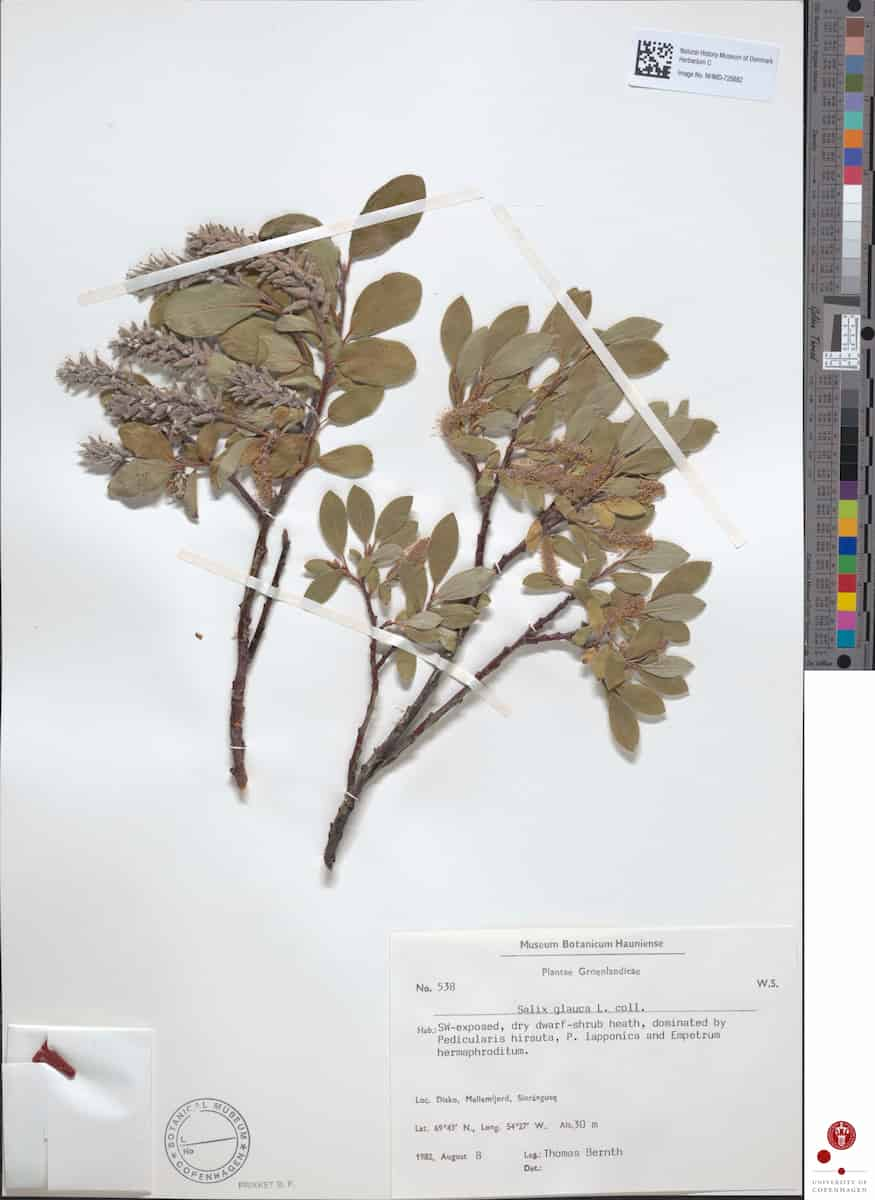
Ahlstrand and her team measured 482 Salix herbarium specimens belonging to: S. arctica, S. glauca, S. herbacea, and S. arctophila, that were collected between 1833 and 1993. They choose this group because it is common across Arctic regions and growth is easily measured in digital herbarium specimens. Whilst the number of specimens varied between species, the team found between one and nine years of growth in a single specimen.
Using digital measuring tools, they found that although there was a difference in growth patterns across the species, in years that were historically warmer than others and those post-1950s, there was a significant variation in stem length across all four species. Warmer summer temperatures negatively affected all but one species, S. glauca. Ahlstrand notes that this coincides with field observations of S. glauca becoming more abundant as the Arctic greens.
“It’s exciting to see that this more accessible and non-destructive method correlates with climate data,” said Ahlstrand, “I’m hoping to expand this research by looking at more Arctic species across different regions, so we can better understand these growth changes with a non-destructive method of measuring.”
This proof-of-concept study shows that such an expansion should be feasible. If scientists use digitized herbarium specimens, as was done in this willow experiment, then the whole world is available to study. Researchers can utilize online herbarium resources to measure the growth rate of a plant, which can then be compared to historical weather data and provide new insights into how different plant species respond. The results can then be used to make predictions about how those plants may respond in the future.
Most importantly, using herbarium measurements in this way is non-destructive and allows for a historical chronology of responses to be determined. The method is particularly useful in examining Arctic woody plant species because they are slow-growing and a single herbarium specimen contains multiple years of growth. Measurements can be taken along the specimen’s stem, either in-person at the herbarium or from any online digital library. As herbaria expand their digital collections, these types of non-destructive measurements will become more widely accessible and powerful as a tool to better understand the history of plant growth.
READ THE ARTICLE
Ahlstrand, N.I., Panchen, Z.A., Bjorkman, A.D. and Speed, J.D.M. (2025) “Herbarium specimens reveal drivers of Arctic shrub growth,” New Phytologist. Available at: https://doi.org/10.1111/nph.70285
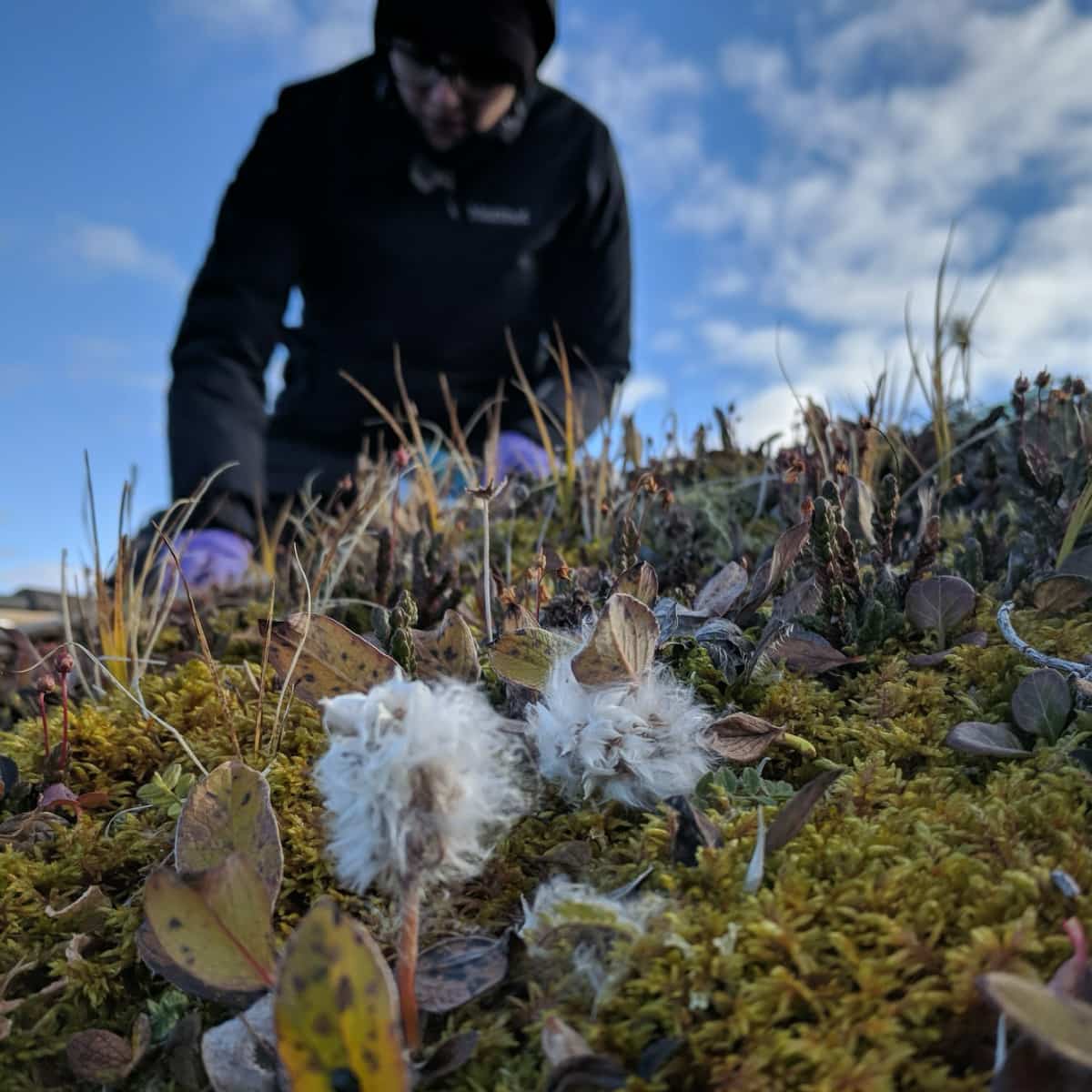
Cover image: Salix arctica in Canada. Photo by treeological / iNaturalist. CC-BY