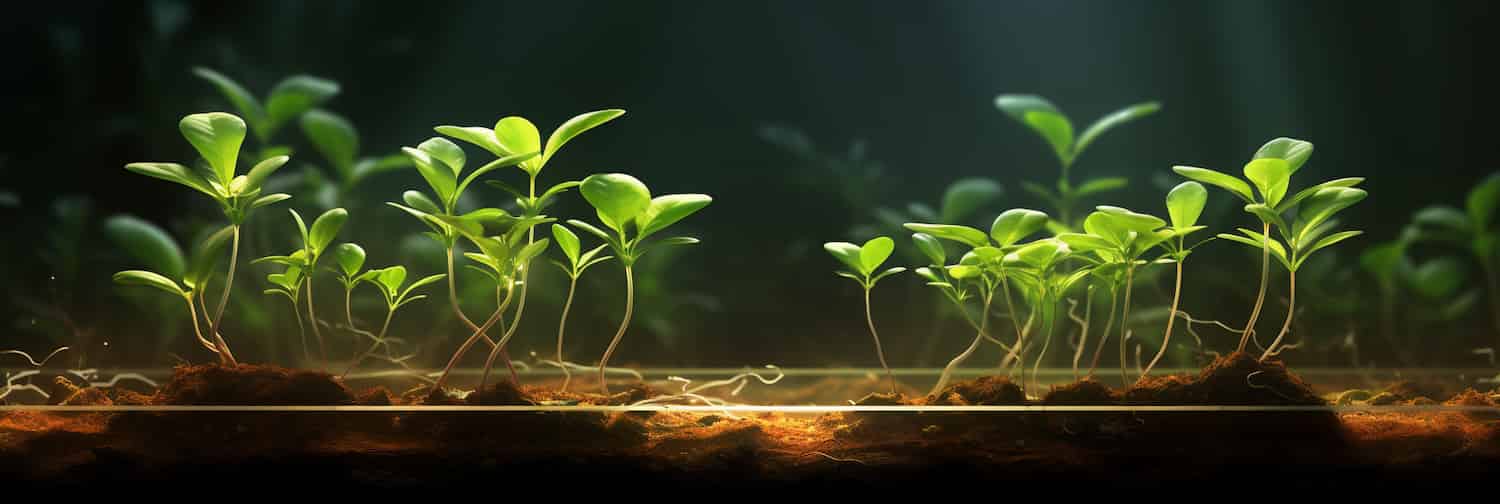



When it gets dry, what part of a plant feels thirsty? In the past, it was thought that when soil dried, roots sent signals to leaves to use less water. Now research by Rowe and colleagues, published in Nature Plants, reveals more details about how the plant hormone responsible, abscisic acid (ABA), works. Surprisingly, their results turn the messaging upside-down and suggest that abscisic acid moves from leaves exposed to dry air and down to roots to tell them to keep growing to search for water. This last factor is also a twist, as abscisic acid is usually a growth inhibitor rather than a growth promoter.
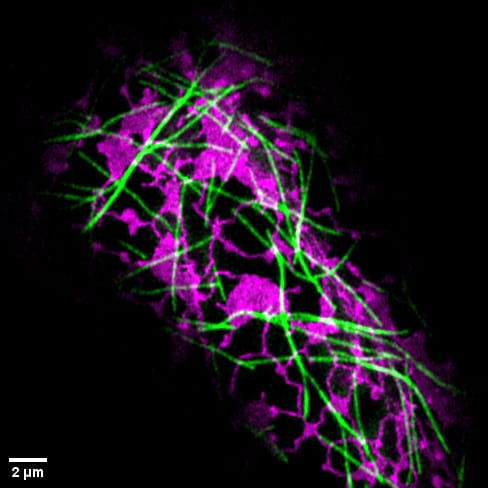
The breakthrough is due to the development of a new biosensor, ABACUS2. The botanists have modified a plant genome so that cells produce a protein that fluoresces differently when it comes into contact with abscisic acid. By watching the change in fluorescence, they can then track how the abscisic acid moves through the plant. ABACUS2 is an improvement over ABACUS1, as it is more sensitive to abscisic acid, allowing its movement to be tracked at a cellular level. This granular level of detail opened up a new understanding of how abscisic acid operates in situ to modulate root growth in response to environmental stress.
The results revealed intriguing details about the workings of abscisic acid. When foliar humidity dropped, the plant’s roots responded by accumulating abscisic acid in the elongation zone, thus maintaining root growth despite the less-than-optimal conditions. This shows that abscisic acid is critical in enabling the plant to explore deeper soil layers for water uptake under stress, emphasising its importance in plant survival under water-limited conditions.
“We’ve known for several years that, at low humidity, plants prioritise root growth. In many species, when the humidity decreases, even though photosynthesis and shoot growth is reduced, the root growth is maintained or even increased,” said Dr James Rowe, first author of the study, in a press release.
“The molecular mechanisms behind this phenomenon have been a mystery until ABACUS2 allowed us to measure ABA concentrations at the cellular level in Arabidopsis thaliana seedlings. We saw that when the leaves experience low humidity stress that ABA accumulates in the root tips. The leaves are reacting to the dry air and telling the roots to continue growing, enabling plants to maintain foraging of deeper soil for water.”
“Even some plant scientists are surprised to discover that ABA can promote root growth,” Rowe said, “but it’s actually really important so that plants can keep searching for water under the ground during water stress.”
Understanding how abscisic acid moves through the plant reveals how decision-making works. Unlike humans, a plant has no central system for processing signals. A plant has to concurrently manage a multitude of responses to diverse conditions in its environment. Abscisic acid concentration levels are key – just the right amount of abscisic acid maintains root growth, but too much abscisic acid and the roots will stop growing.
Research group head Dr Alexander Jones says this sensitivity to abscisic acid concentration means the plant does not overreact: "The root ABA comes from the phloem, which transports sugars and hormones from the shoot and is unloaded in the root tip. ABA signalling can fine-tune root growth as humidity varies," Jones said.
"Low humidity at the leaves regulates ABA accumulation in the roots, and vice-versa, low soil moisture at the roots regulates ABA in the leaves. This indicates that the root and shoot can each systemically regulate each other's responses to stresses that may only be experienced locally, thus providing a robust system to overcome water stress."
"This is useful fundamental information to help in understanding the physiological changes happening to crops grown under irrigation where the air may be dry, but the roots are growing in wet soil – an increasingly prevalent condition with climate change."
READ THE ARTICLE
Rowe, J., Grangé-Guermente, M., Exposito-Rodriguez, M., Wimalasekera, R., Lenz, M., Shetty, K., Cutler, S.R. and Jones, A.M. (2022) "Next-generation ABACUS biosensors reveal cellular ABA dynamics driving root growth at low aerial humidity," Nature Plants. Available at: https://doi.org/10.1038/s41477-023-01447-4.