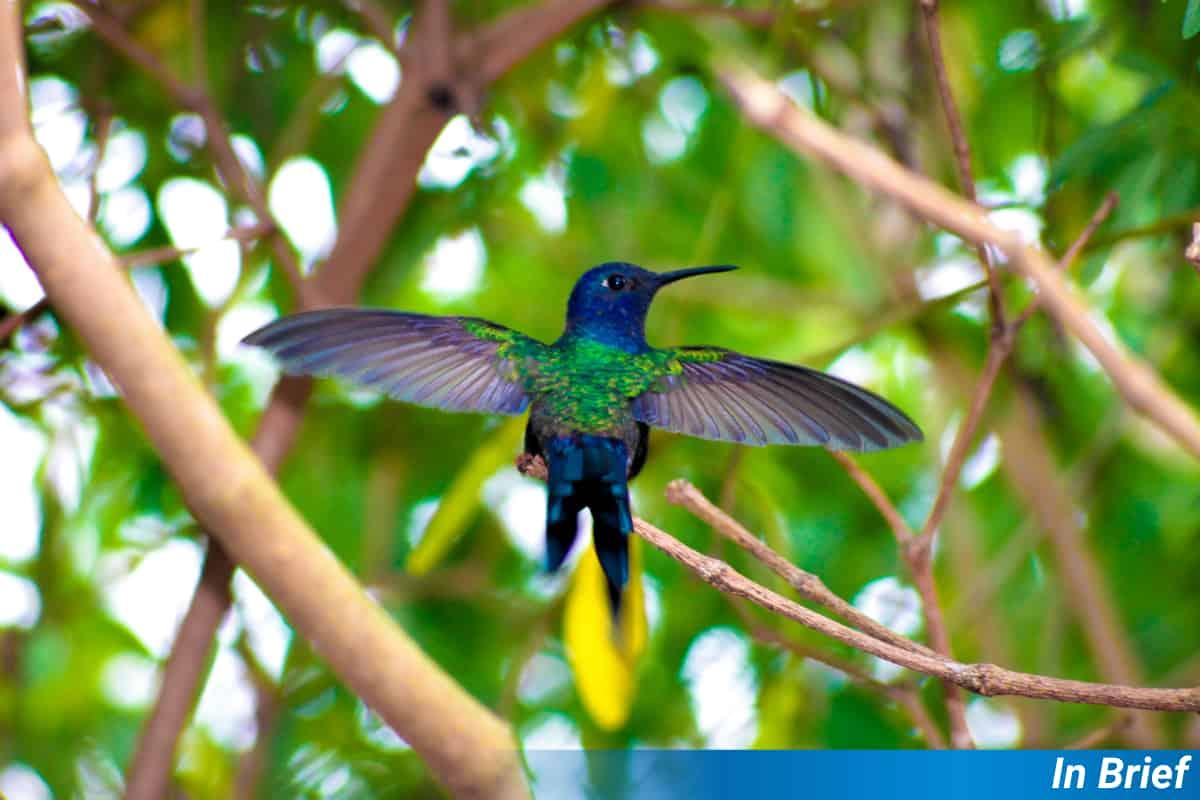


Bosenbecker and colleagues studied hummingbird-plant interactions across urban areas in Brazil. They found that while cities can support these interactions, they are generally less specialized than in natural habitats. This research provides promising insights into how to better design urban green spaces for wildlife.
Researchers observed hummingbird visits to flowers in different areas of Belo Horizonte, one of the largest Brazilian cities. They recorded which plants the birds visited and how often, then analysed these interactions to understand how urbanization affects hummingbird-plant interactions.
The study revealed that increasing the number of native plant species in urban areas led to more specialized interactions between hummingbirds and plants. This suggests that including a variety of native plants in city gardens could benefit hummingbird conservation.
Previous studies have shown that urban areas often support more generalized ecological interactions. This new research confirms this trend for hummingbirds and plants, but also highlights the important role that native plants play in maintaining some specialized interactions in cities.
Bosenbecker, C., Anselmo, P. A., Fonseca, T. M., Pena, J. C., Oliveira, P. E., & Maruyama, P. K. (2024). Consistent generalization of plant-hummingbird networks despite increasing vegetation cover across a tropical urban landscape. Urban Forestry & Urban Greening, 128498. https://doi.org/10.1016/j.ufug.2024.128498 ($)