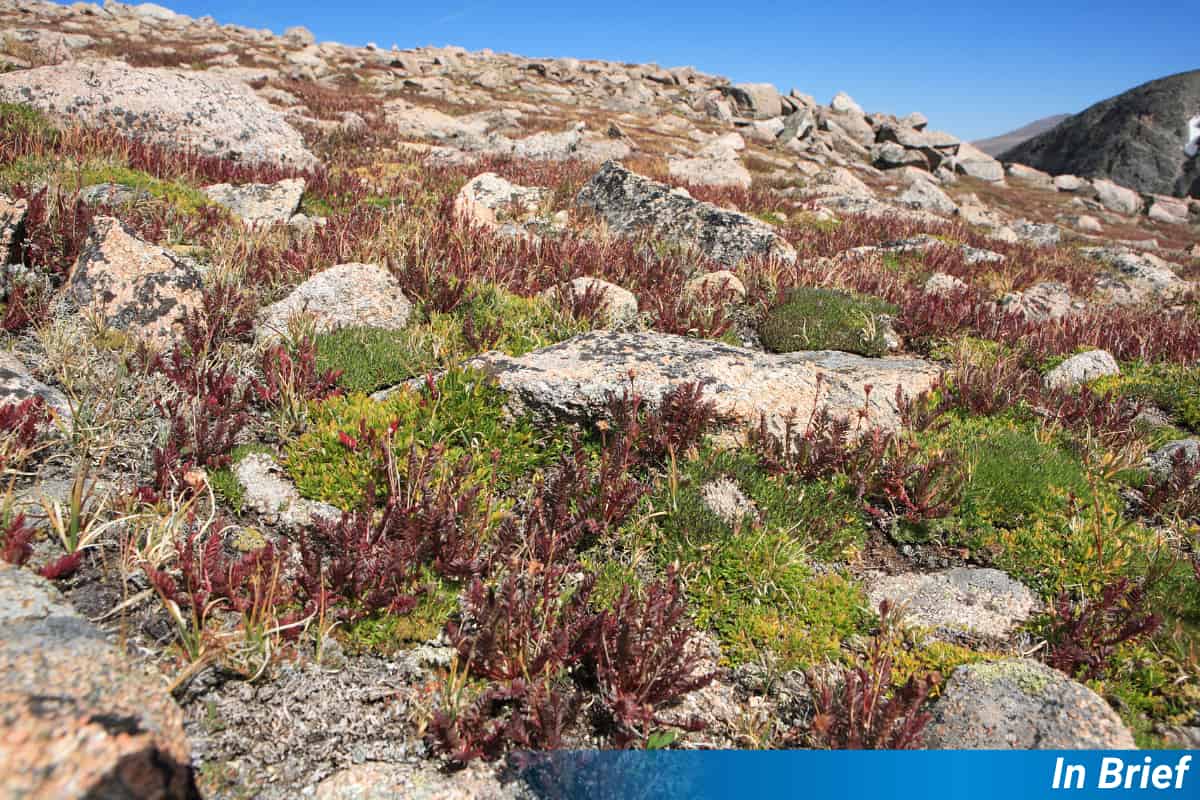



Plants don’t just partner with pollinators. Ramakrishnan and colleagues, the research team examined 50 different mountain plants to study the microbial communities living on plants’ leaves and flowers. They found leaves host more diverse communities than flowers do, with millions of microbes adapting to different conditions as altitude increases. Microbes don’t just attack plants, many can help plants adapt to stress, so understanding these invisible companions could help protect their hosts in changing conditions.
The research revealed patterns in how microbes make their homes on different parts of plants. Leaves consistently turned out to be bustling neighbourhoods compared to flowers, hosting a greater variety of both bacteria and fungi regardless of where the plant grew or what species it was. Just like animals in a forest, different microbes have their preferred habitats – some bacteria thrive on the flower’s surface while others are specially adapted to life on leaves. Perhaps most surprisingly, the scientists discovered that plants growing at higher altitudes hosted more diverse communities of fungi on both their leaves and flowers, suggesting these microscopic helpers might be especially important for plants facing the harsh conditions of life high in the mountains.
To discover these hidden communities, the research team went on a botanical expedition across the Austrian Alps in summer 2021. They visited seven different mountain locations, carefully collecting both flowers and leaves from 50 different wild plants. Back in their laboratory, they used powerful DNA analysis tools to identify exactly which types of microbes were present and count how many of each type lived on the plant surfaces. This detailed approach allowed them to build up a clear picture of which microbes prefer to live where.
Most previous studies of plant microbes have focused on crops and garden plants, rather than exploring what lives on plants in their natural mountain habitats. They also often looked just at bacteria, missing half the story by not including fungi. By studying both types of microbes on wild plants in the Austrian Alps, the scientists have revealed how these microscopic communities have evolved to help plants survive in challenging conditions. As climate change makes mountain living even more challenging for plants, these microbial partnerships could become even more important.
Ramakrishnan, D.K., Jauernegger, F., Hoefle, D., Berg, C., Berg, G. & Abdelfattah, A. 2024. Unravelling the microbiome of wild flowering plants: a comparative study of leaves and flowers in alpine ecosystems. BMC Microbiology. https://doi.org/10.1186/s12866-024-03574-0