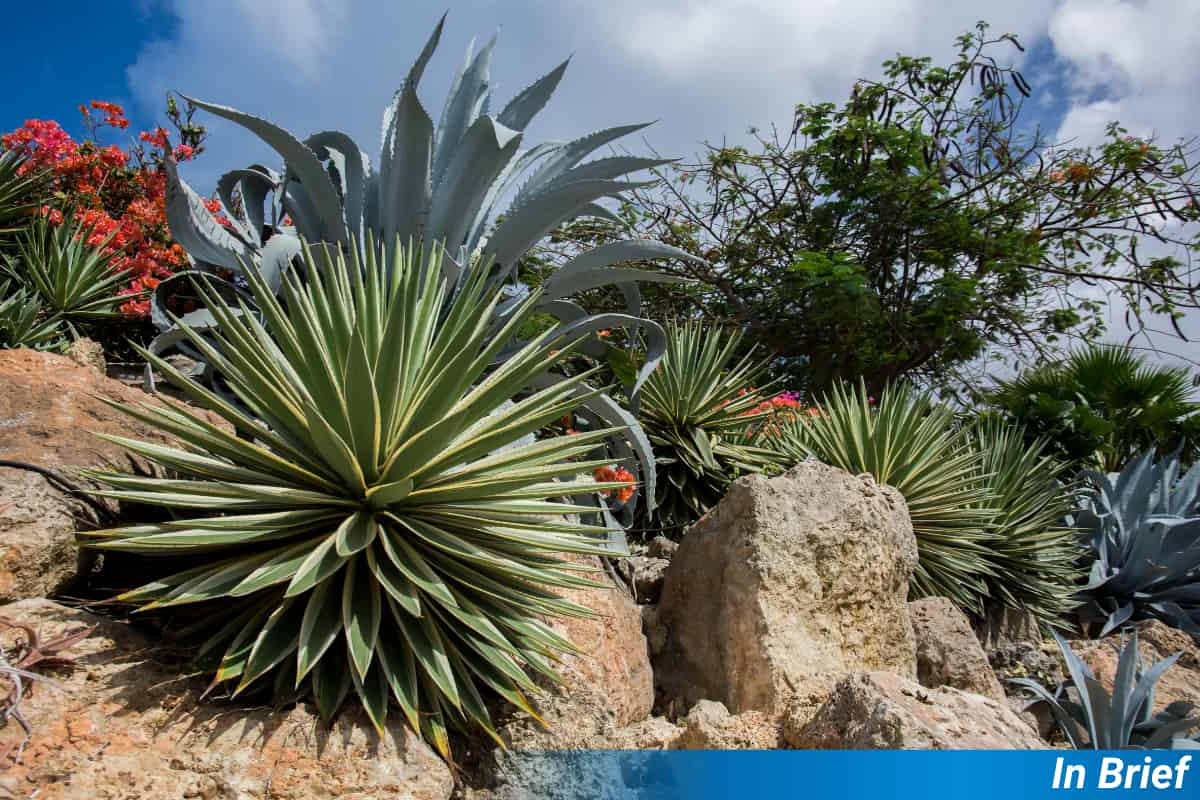



The safest places for plants might be found in some of the most precarious locations, according to a new review by Múgica and colleagues. They studied how well plants survive on vertical cliffs compared to those growing on flat ground, by analysing hundred of plant populations. They found that cliff plants have higher survival rates and more stable populations than ground plants. This, they argue, suggests cliff plants may be better equipped to handle climate variability and change.
Múgica and colleagues found that both seedlings and adult cliff plants had significantly higher survival rates than ground plants, with the cliff plant populations being more stable over time. This seems to be significant for survival, as higher survival rates of adult plants were linked to more stable populations for both cliff and ground plants.
The scientists examined the cliff-dwelling plants by compiling data on plant survival and population dynamics from two databases. They then compared survival rates of seedlings and older plants between cliff and ground species. Múgica and colleagues assessed population stability by looking at how close growth rates were to equilibrium and how much they fluctuated.
Previous studies have shown that harsh environments can select for traits that increase survival. However it might be that a cliff is not as harsh as it looks. Earlier research by one of the paper’s authors has shown that cliffs may provide more stable microclimates that buffer plants from extreme temperatures. If this is the case, then cliffs could act as refuges for plants as the climate changes.
Múgica, A., Miranda, H., & García, M.B. 2024. Survival patterns and population stability of cliff plants suggest high resistance to climatic variability. Basic and Applied Ecology. https://doi.org/10.1016/j.baae.2024.09.009