


High-tech commercial lettuce farming relies on a controlled environment. With just the right amount of light, water and nutrients – optimal growth and nutrition can be achieved. But what kind of light is best? Red and blue light, which are in the visible spectrum, are known to activate photosynthesis. However, other light wavelengths, like far-red light, might have an effect on plant growth too.
Now, researchers in Japan have found that by adding far-red light to lettuce production, they can significantly increase leaf size and improve photosynthesis. This can lead to improved protocols for lettuce production in controlled environment agriculture, an important auxiliary form of vegetable production.
Controlled environment agriculture, such as plant factories, can help ensure stable vegetable production regardless of weather or global supply disruptions. However, improving both yield and nutritional quality while keeping energy use efficient remains a major challenge – Dr. Wataru Yamori, corresponding author.
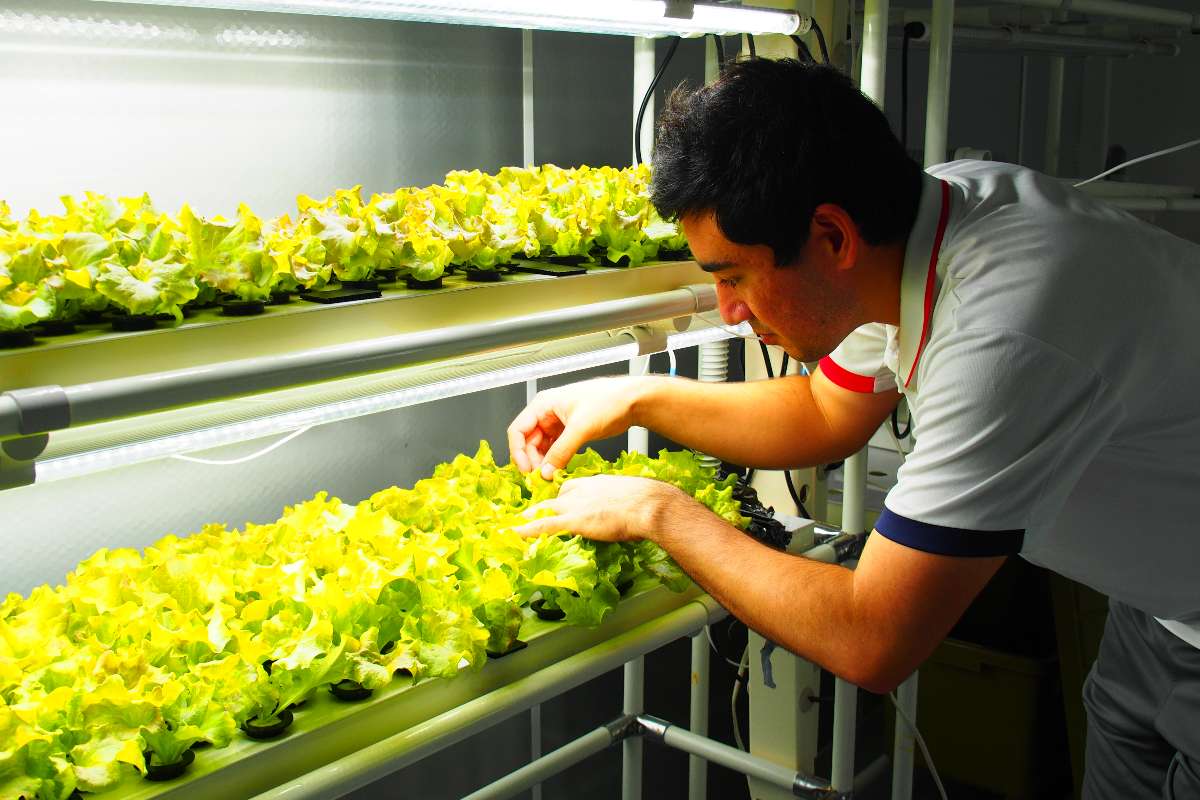
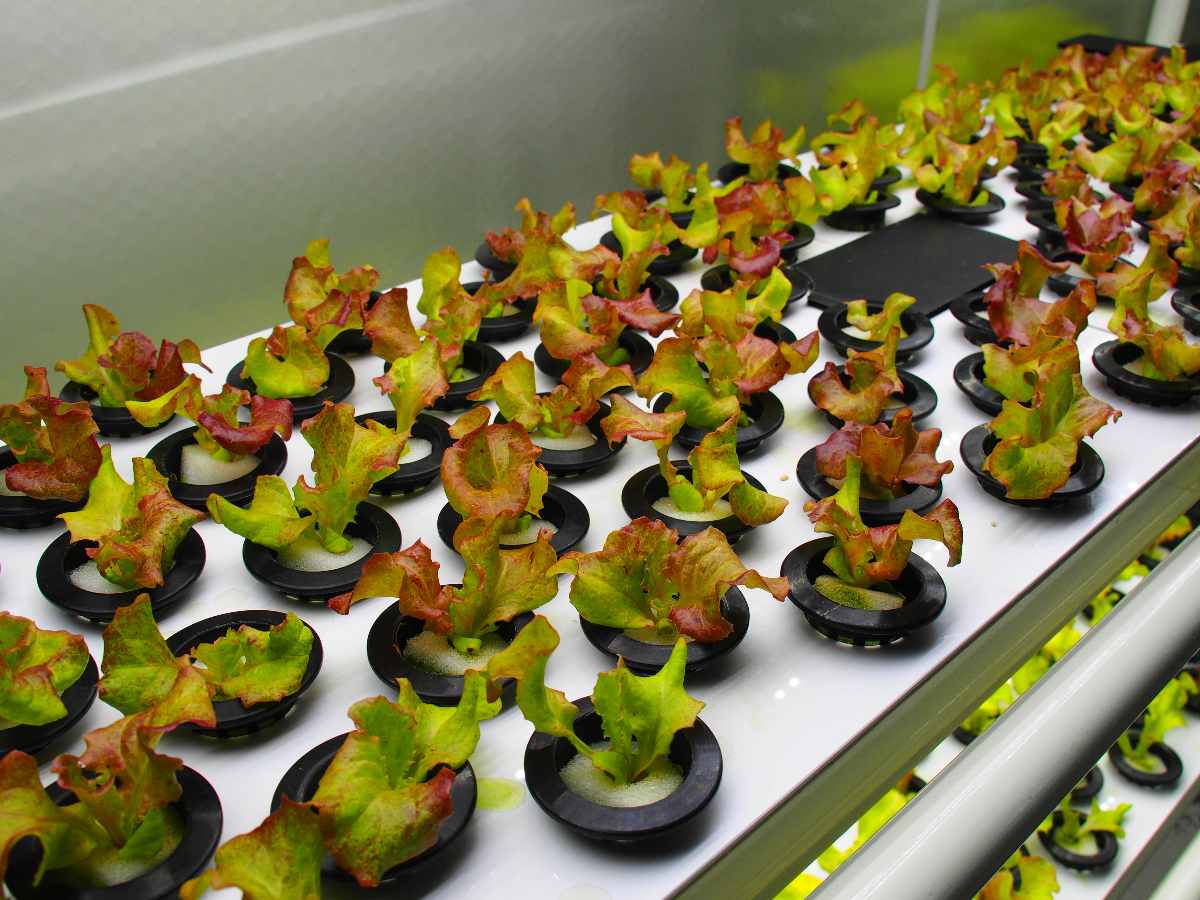
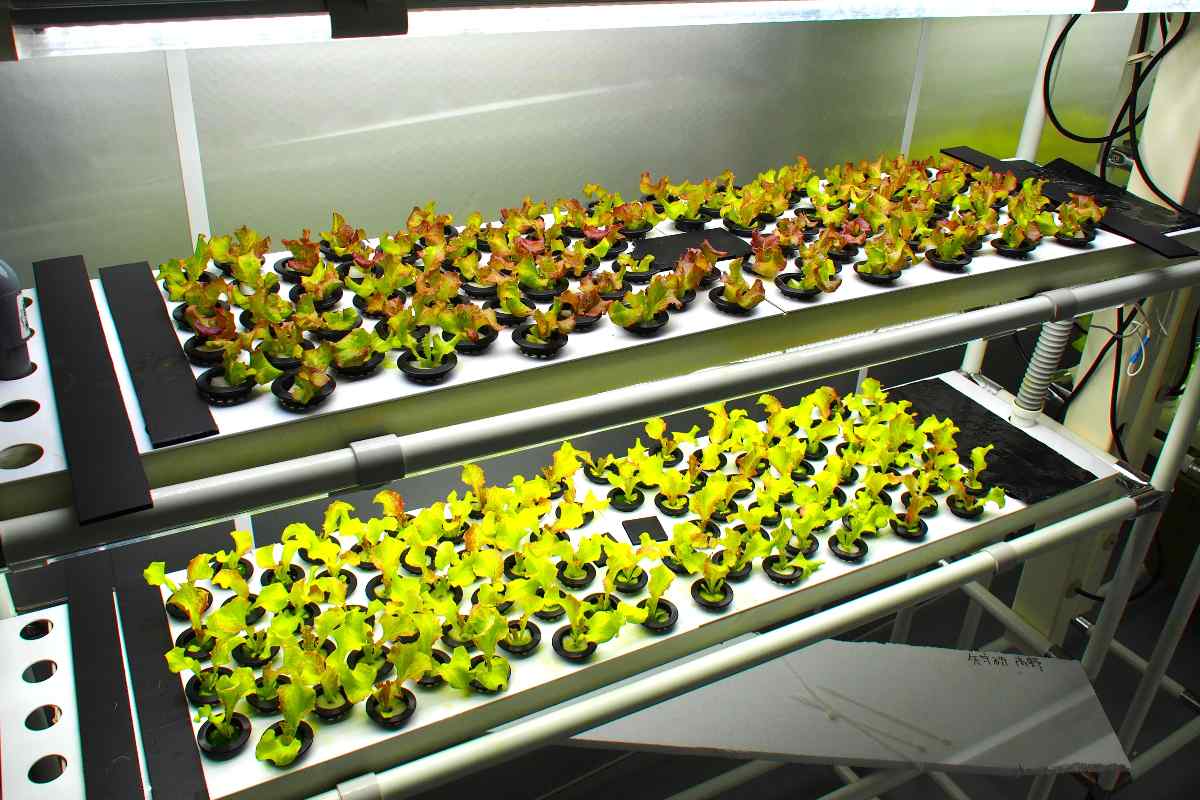
To study the effects of far-red light on lettuce growth, the researchers grew a variety of red leaf lettuce (Lactuca sativa cultivar ‘Red Fire’) in a plant factory under artificial light. They lit the plants with 5000K white LED lights and supplemented with far-red LED lights, using four different lighting treatments to find the best one. Light distribution was as homogenous as possible throughout the cultivation zone.
The lettuce plants were grown hydroponically. Plants were seeded in urethane cubes hydrated with water and hydroponic fertilizer. All other production parameters (e.g. temperature, humidity, transplanting) followed standard lettuce growth protocols so that the experiment's findings could be directly applied to factory production.
We discovered that far-red light can be used strategically during early growth stages to increase lettuce yield, while removing it before harvest helps maintain important quality traits such as anthocyanin accumulation. This provides a practical lighting “recipe” that balances productivity and quality – Dr. Wataru Yamori, corresponding author.
Interestingly, the far-red light enhanced plant growth in multiple ways – by improving lettuce size as well as photosynthesis – despite not being absorbed as efficiently as visible light.
Absorption in the visible light range (400–700 nm) was over 64% for red leaves and 53% for green leaves, but total far-red absorption was much lower, at 7.6% and 6.3%, respectively. Indeed, longer far-red wavelengths (715–750 nm) had even lower absorption values of 4% or below.
This makes the impact of strategically adding far-red light to young lettuce even more striking.
Our findings present a new concept for lighting management in plant factories, in which far-red light is used not as a constant light source, but as a light that is strategically applied depending on the growth stage– Dr. Wataru Yamori, corresponding author.
The researchers identified changes in lettuce leaf production by measuring fresh leaf mass, leaf area, dry weight and plant shape throughout the experiment. Changes in photosynthesis were monitored using standard lab protocols.
Additionally, the researchers measured how well the lettuces accumulated pigments and vitamin C in the different far-red light treatments. Pigments measured included chlorophyll (green), carotenoids (orange) and anthocyanin (red). And since red pigments are important to red leaf lettuce production, the genes involved in producing this colour were monitored for changes.
Yamori and colleagues found that vitamin C production, and therefore the nutritional quality of the lettuce, was negatively impacted by some far-red light treatment, but the impact varied with the timing of the far-red light application. This was also true of anthocyanins and chlorophyll. The researchers therefore suggested that getting the timing right for the far-red light application will be critical to balancing an optimized nutritional content with growth.
Our next step is to optimize this lighting strategy for different crops, cultivars, and planting densities, with the goal of developing more energy-efficient and high-value crop production systems in controlled environment agriculture – Dr. Wataru Yamori, corresponding author.
With these goals in mind, the findings can now be used to further optimize lettuce production for healthy plants and healthy people.
READ THE ARTICLE: Levine, C., Tanigawa, K., Wakabayashi, Y., Guo, W., Qu, Y., Terashima, I., and Yamori, W.(2026) Far-red light in early growth stages boosts lettuce biomass and preserves anthocyanins. Annals of Botany. Available at: https://doi.org/10.1093/aob/mcag031.
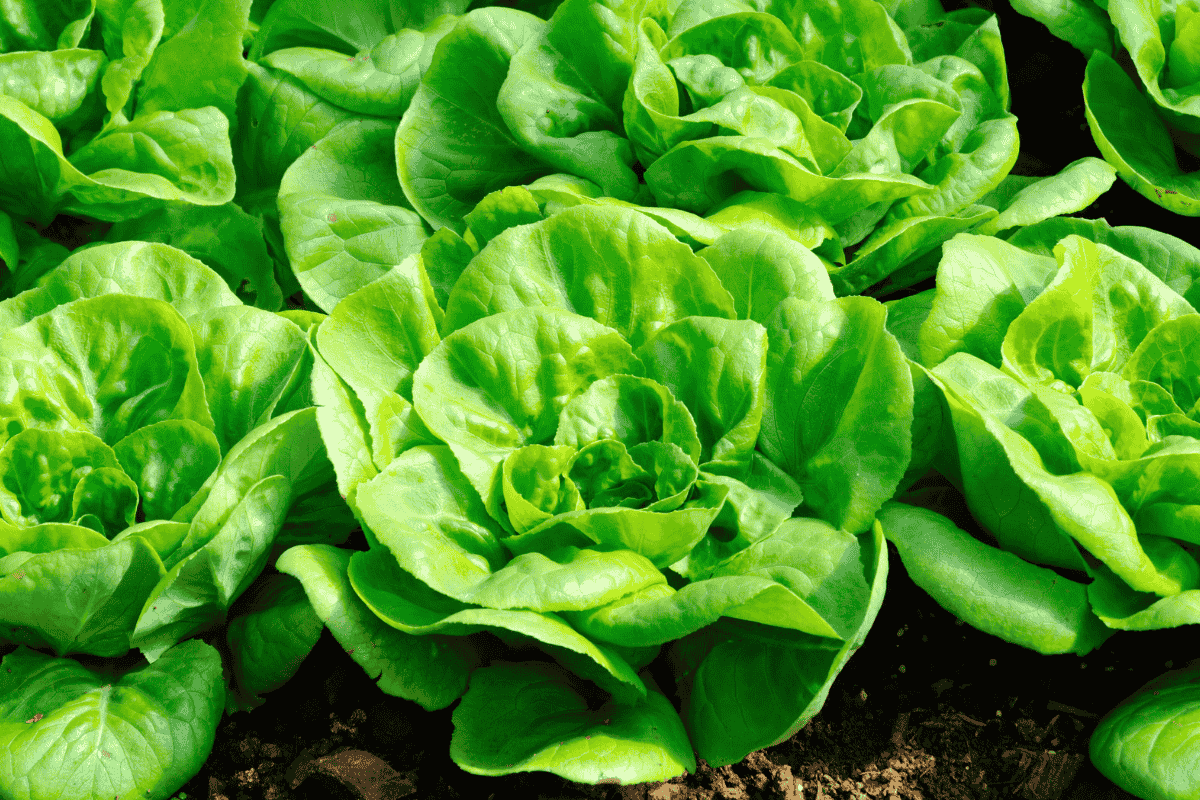
Cover image: Lettuce (Lactuca sativa) / Canva