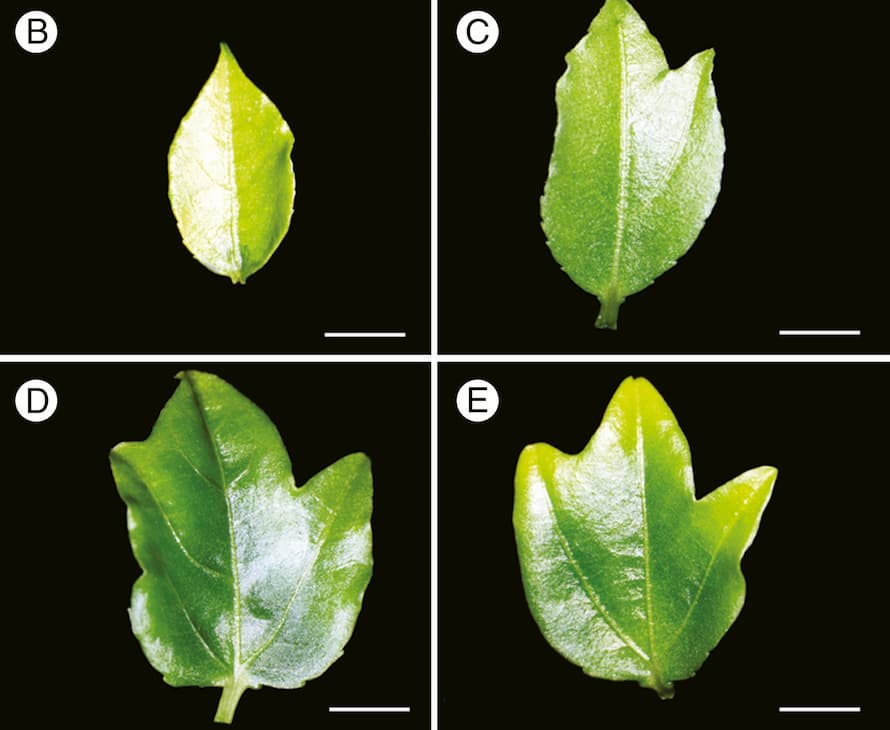


Juvenile-to-adult phase transition is marked by changes in leaf morphology, mostly due to the temporal development of the shoot apical meristem, a phenomenon known as heteroblasty. Sugars and microRNA-controlled modules are components of the heteroblastic process in Arabidopsis thaliana leaves. However, our understanding about their roles during phase-changing in other species, such as Passiflora edulis, remains limited. Unlike Arabidopsis, P. edulis (a semi-woody perennial climbing vine) undergoes remarkable changes in leaf morphology throughout juvenile-to-adult transition. Nonetheless, the underlying molecular mechanisms are unknown.

Silva et al. evaluated the molecular mechanisms underlying the heteroblastic process by analysing the temporal expression of microRNAs and targets in leaves as well as the leaf metabolome during P. edulis development.
Metabolic profiling revealed a unique composition of metabolites associated with leaf heteroblasty. Increasing levels of glucose and α-trehalose were observed during juvenile-to-adult phase transition. results suggest that specific sugars may act as co-regulators, along with two microRNAs, leading to leaf morphological modifications throughout juvenile-to-adult phase transition in P. edulis.