

Sieve tubes are essential for the distribution of photoassimilates in higher plants. These are networks of cells that pass carbohydrates from leaves to other parts of the plant. In some ways they do for sugars what xylem does for water, but there’s a difference. Xylem can transport water when it’s dead, sieve tubes must be alive to work. They are notoriously sensitive and hard to study. Kelps, large brown algae, evolved sieve tubes independently.

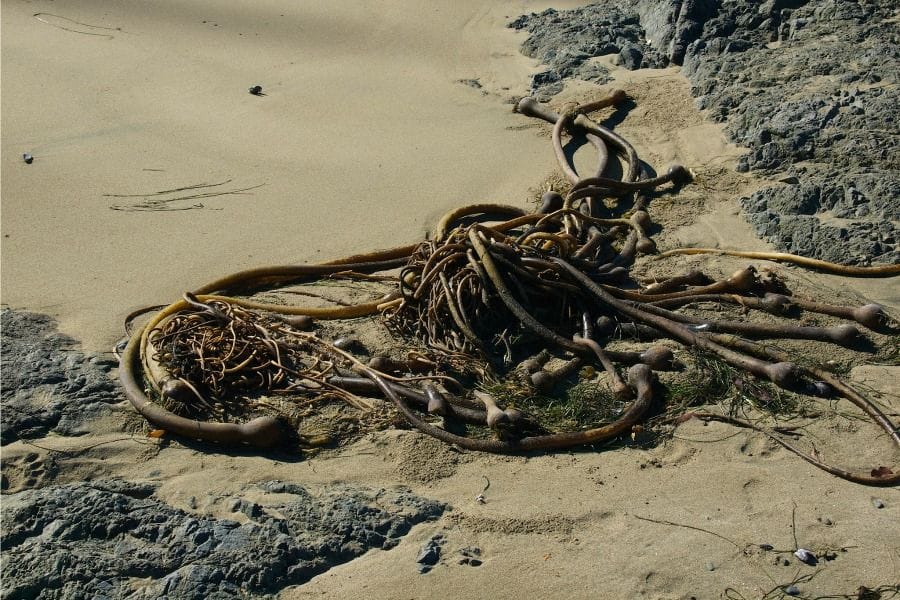
Since kelp sieve tubes are embedded in a thick, gelatinous matrix, Knoblauch et al. hoped that they could be more easily manipulated than their analogues in land plants. Using fluorescent dyes, they visualized transport in intact bull kelp (>10 m long). Dye injection into transporting tubes generated pressure waves that transiently reversed the flow across sieve plates, which directly demonstrated the openness of the plates for bulk flow. As similar tests proved impracticable in higher plants, kelps may be more cooperative partners in studying the physics of sieve tube translocation.