


As cities expand, green spaces are disappearing – gobbled up by new buildings and infrastructure. This leaves less and less habitat for urban wildlife. However, a new study shows that adding plants to existing rooftops can help bring nature back into the concrete jungle.
Katherine Berthon and colleagues recently monitored how insects and birds colonised a new “green roof” installed in the heart of the city. Green roofs are vegetated spaces created on top of existing buildings, essentially turning boring old rooftops into elevated parks. The researchers wanted to see how quickly animals would find and start using these manmade habitat islands in the sky. Would insect pollinators like bees pay a visit to the new floral resources? And would birds stop by to nest or feed?
By observing the brand-new green roof over time and comparing it to nearby sites, the study provides a unique look into the process of colonisation on an urban rooftop.
Observing Colonisation in Action
The researchers used a BACI (before-after-control-impact) study design to monitor the green roof over time.
First, they observed the rooftop before it was “greened” to get baseline data. Then, the green roof was installed, and the team tracked how biodiversity changed in the months after construction.
They also monitored two control roofs nearby, as well as a ground-level urban park. The park acted as a comparison to the rooftop habitats, while the control roofs provided insight into normal fluctuations in local wildlife.
By watching the green roof transition from barren to vegetated and comparing it to the controls, the researchers could pinpoint patterns in how insects and birds colonised and used the new space.
Rooftop Oases in the Melbourne CBD
The new green roof was installed atop an 8-story car park in central Melbourne as part of a community retrofit project. The impact site was designed as an edible oasis with a mix of flower gardens and vegetable plots.
As controls, the researchers picked two nearby 7-story rooftops - one already vegetated with a small residential garden and the other a bare concrete roof. At ground level, the team also made observations in a local urban park. Berthon and colleagues write:
We included two nearby roof-tops (<160 m distance, as the bird flies) as retrofit controls and to monitor the potential movement of invertebrates between rooftops: a residential green roof on an adjacent apartment complex (hereafter, 'green roof control'), and a bare rooftop on a commercial building (hereafter, 'bare roof control'). These rooftops were one story lower than the retrofit roof, on the 7th floor of their respective buildings. A nearby ground site, Docklands Park, was included as a ground reference site (~600 m from the impact roof).Berthon et al. 2023
The existing green roof and park offered clues about the local wildlife that could potentially colonise the new space. Meanwhile, the bare roof provided a baseline for normal insect and bird activity atop an ungreened city building. By selecting sites close together within the CBD, the study zeroed in on patterns of rooftop colonisation in a densely urban area.
Bees Waste No Time Finding New Green Roof
The results show that it took only a short time for some winged city-dwellers to start using the new green roof habitat. Amazingly, honeybees were already busy feeding on the new flowers just four days after planting.
Over the following months, the overall abundance and diversity of insects increased steadily on the green roof as the floral resources expanded. More flowering plants provided more food sources, attracting more insect species.
The researchers found a clear correlation - insect numbers spiked in concert with the blossoming of flowers on the previously barren rooftop. This suggests that planning green roofs with pollinator-friendly plants can help boost urban biodiversity.
Connectivity and Plantings Limit Colonization
While insects flocked to the new green roof, the study found some limitations in what species were able to colonise. This is a point raised by Andy McKay on ecoevo.social, who quotes from the original paper.
@botanyone "We find that colonisation for some taxa occurs rapidly, with honeybees (Apis mellifera) arriving four days after flowers had been planted. Other insect taxa, such as native bees, did not colonise the impact roof but were present on the green roof reference site, which was lower in height and planted with native plants."
This part is important. We need techniques that support indigenous biodiversity and ecosystem function, not exotic species.https://ecoevo.social/@KorimakoEcology/110957592194891337/
The native bees failed to colonise the new retrofit roof during the study period. These findings indicate that connectivity to other habitats and the vegetation planted may shape what wildlife can access and thrive on green roofs. However, what they might also need is a lot of time, as mentioned by SimonDHeyes on ecoevo.social.
@KorimakoEcology @botanyone just an anecdotal obs here but we set up a seed orchard many years ago and I noticed that certain species appeared early like honey bees and hoverflies in the first year. Took a full two years to start seeing other insects and seed production to started to ramp up as well.https://ecoevo.social/@SimonDHeyes/110958214755857127/
Flowering Plants Attract Nectar-Feeding Birds
Unlike insects, bird diversity was not higher on the new green roof compared to controls. The study found no clear increase in bird species associated with green roof installation.
However, nectar-feeding birds like honeyeaters only stopped by to feed when flowers were in bloom. Their presence depended on the available floral resources.
This points to an important symbiosis - birds can pollinate roof-top flowers, while the blossoms provide essential food for the urban avian residents. But it also shows green roofs alone may not be enough to boost bird numbers without planning for other habitat needs.
Diverse Native Plantings Attract More Pollinators
The methods reveal that the green roof reference site was planted entirely with 38 native Australian species. In contrast, the new retrofit roof contained a mix of 47 exotic and native species.
The results show that certain flowering plants like Chrysanthemum sp. attracted high insect activity on the new green roof. Native bees exclusively visited native species such as Dianella, Scaevola, and Micromyrtus on the reference roof.
This highlights the importance of native plants for supporting native pollinators. Bees rely on native species that are adapted to provide the pollen and nectar resources they need. Strategically incorporating native forbs like Scaevola and shrubs like Micromyrtus on green roofs could better attract diverse pollinator assemblages.
Further research into pollinator-friendly native plants suitable for challenging rooftop conditions is still needed. However, native plant diversity appears crucial for augmenting the biodiversity benefits of urban green roofs.
Strategic Green Roofs Can Enhance Urban Biodiversity
The Melbourne green roof was rapidly colonised by insect species, especially mobile pollinators like honeybees attracted to newly planted flowers. However, connectivity to ground habitats and diverse native vegetation may be needed for less mobile species to thrive. Berthon and colleagues write:
"While inclusion of native plants appears to be crucial for supporting some native pollinators, the landscape context of the placement of green roof retrofits, and roof height may inhibit the potential of these spaces to be colonised by low mobility groups."Berthon et al. 2023.
So, while green roofs provide new habitats, strategic design and placement are important so they are not just biological islands isolated in the sky. Connecting green roofs to parks and ground vegetation could allow for colonisation by a greater diversity of beneficial urban wildlife.
Vegetation choices also matter. Pollinators aren't always pollinating. Carefully selected native plants can provide vital food sources, but they also need places for nesting, and shelter. Planting a wide variety of plants, beyond sources of food helps support the biodiversity that underpins a healthy, functioning urban ecosystem.
The challenge is to help green roofs to fulfill their potential to resurrect nature in concrete jungles.
READ THE ARTICLE
Berthon, K., Thomas, F., Baumann, J., White, R., Bekessy, S. and Encinas-Viso, F. (2023) “Floral resources encourage colonisation and use of green roofs by invertebrates,” Urban Ecosystems. Available at: https://doi.org/10.1007/s11252-023-01392-2.
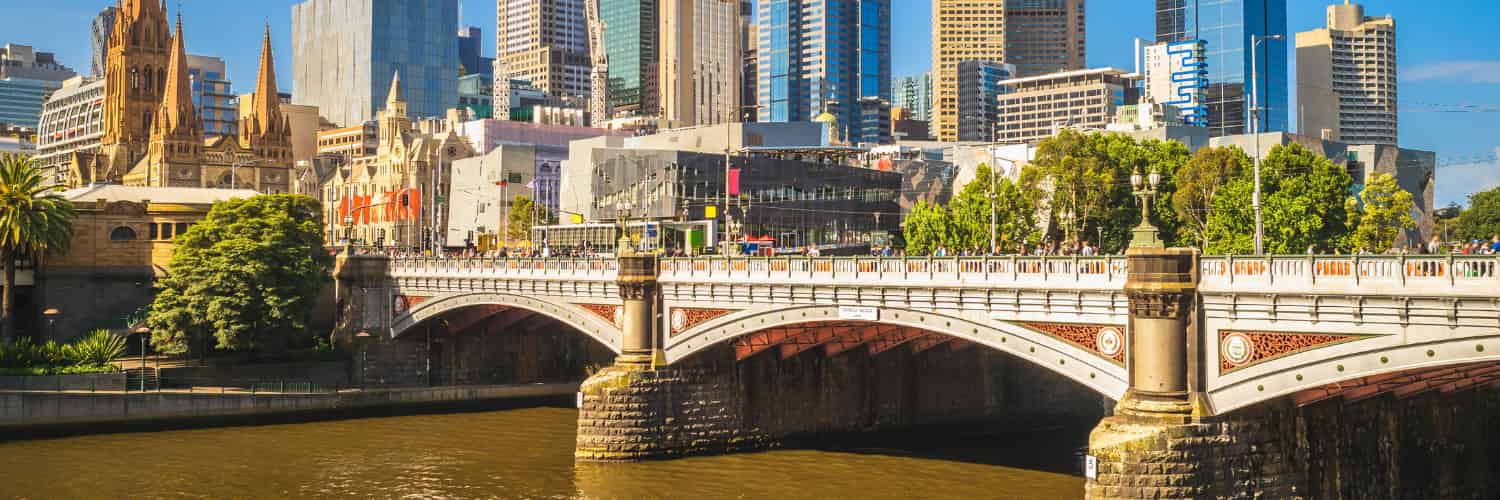
Cover: Bridge to the Melbourne CBD. Image: Canva.