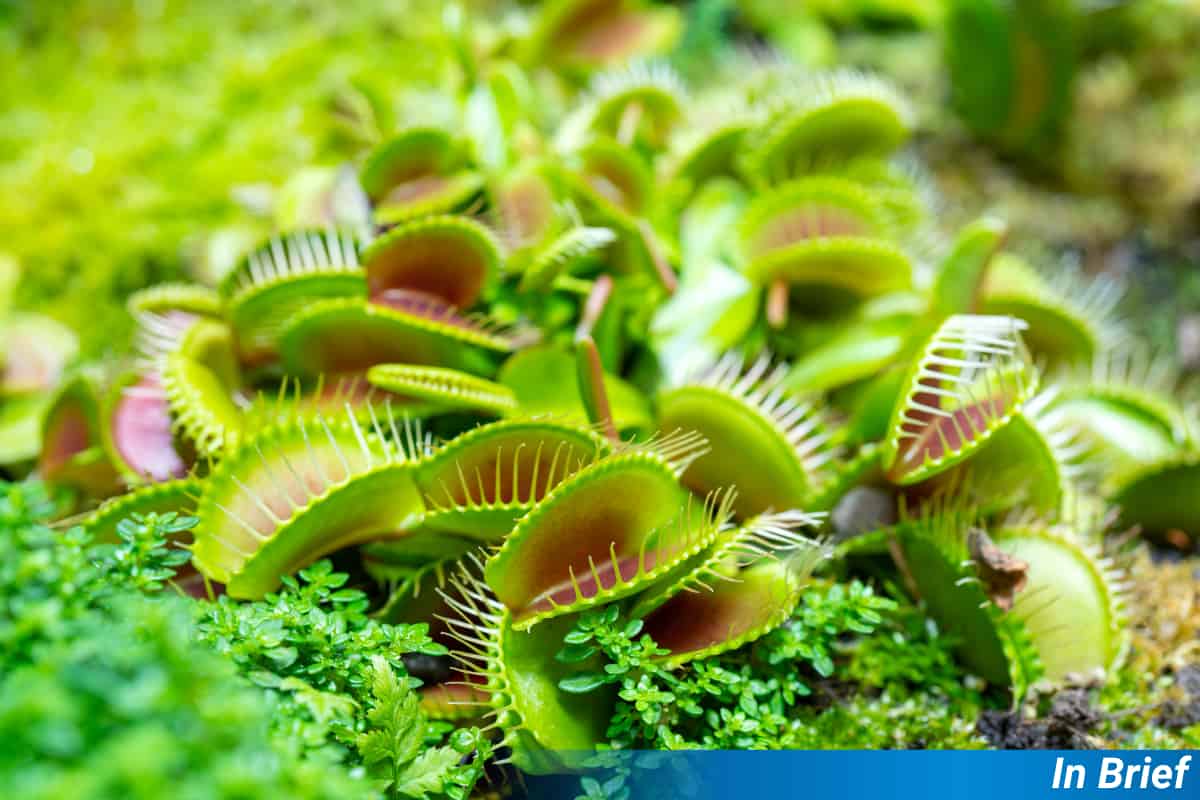



Venus flytraps, native to the Carolinas, are threatened by illegal collecting for the horticultural trade. Margulies and colleagues studied this issue, revealing a complex network of collectors, nurseries, and buyers. While habitat loss is the primary threat, illegal harvesting significantly impacts smaller populations. Various actors, from local opportunists to specialist collectors, drive this illicit market. Understanding this trade is crucial for protecting Venus flytraps and similar at-risk plant species.
The study identified three main types of Venus flytrap collectors: subsistence harvesters, opportunistic collectors, and specialist collectors. The illegal trade chain typically moves from collectors to nurseries to buyers. Experts noted that large-scale collectors may receive only $0.25-1.00 per plant, far less than retail prices. Collecting hotspots include areas near trails and roadsides. However, while illegal collecting remains a threat, habitat destruction and fire suppression pose greater risks to Venus flytrap populations.
To understand Venus flytrap poaching, researchers gathered plant experts for a workshop. They asked questions, held discussions, and used activities to map out how the illegal trade works. Participants included scientists, conservation workers, and government staff. They shared their knowledge about flytrap collecting and ranked different threats to the plants. The researchers then carefully studied the workshop conversations to find important patterns and issues in the illegal trade.
Venus flytraps are well-known carnivorous plants, but their illegal trade is not well understood. This study helps fill that knowledge gap. Despite laws and readily available cultivated plants, people still collect wild flytraps illegally.
Although this research was focused on a single species from a monotypic genus, these findings for one of the most globally recognizable and sought-after carnivorous plants provide important insights that can inform interventions related to similarly high-demand wildlife species, including other carnivorous plants, that are traded internationally.
Margulies, J. D., Trost, B., Hamon, L., Kerr, N. Z., Kunz, M., Randall, J. L., Shew, R. D., Shew, D. M., Starke, L., Suiter, D., & West, Z. (2024). Expert assessment of illegal collecting impacts on Venus flytraps and priorities for research on illegal trade. Conservation Biology, 38, e14320. https://doi.org/10.1111/cobi.14320 (OA)