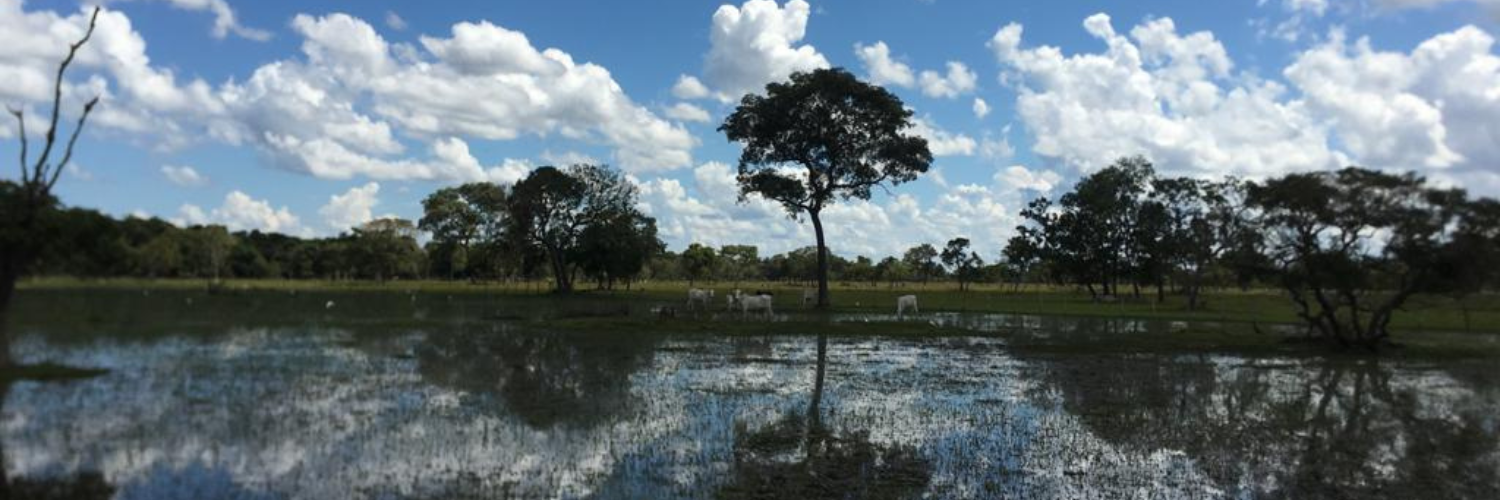



Fire has played a significant role in Earth’s history: it has been both beneficial, renewing vegetation and enriching soil, and problematic by threatening biodiversity through uncontrolled burns. Scientists suggest that landscapes with more varied fire patterns can create a wider range of habitats and resources, which in turn increase biodiversity. The idea is that burning small patches at different moments helps maintain diverse vegetation, including creating unburned areas that act as fire refugia.
These refugia are vital because they provide essential resources for animals in fire-prone ecosystems, such as food, and support many plant-pollinator interactions. After a fire, pollinators and seed dispersers from these refugia can return to burned areas and contribute to vegetation regeneration in these areas.
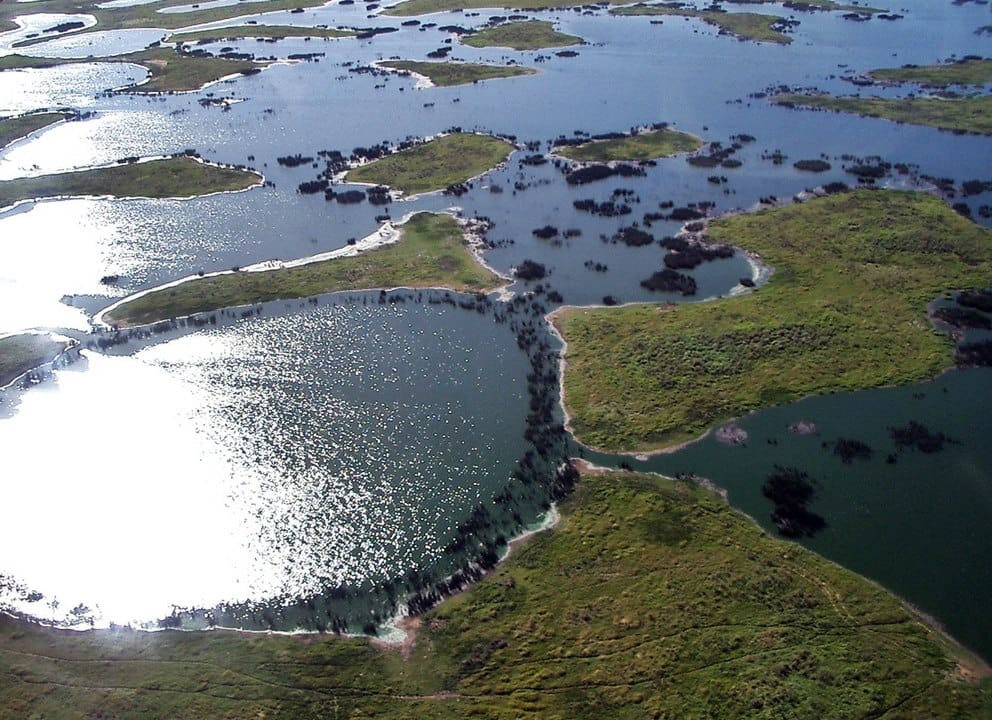
A good example is the Brazilian Pantanal, a biome characterized by alternating wet and flood-prone and dry and fire-prone seasons. These natural processes create a highly varied environment where only plants with specialized traits can thrive. However, decreasing rainfall and the rise of megafires now threaten this delicate balance. Consequently, urgent conservation and restoration actions are necessary to ensure the survival of threatened plant and animal species, as the Pantanal is one of the most important biodiversity refuges.
With this in mind, Bruno Henrique dos Santos Ferreira and his team studied how different fire frequencies and flooding patterns affect plant species and their flowers. Specifically, the authors aimed to understand how these variations influence the ability of plants to provide resources for pollinators and how plants and animals recover after fires. For this, they conducted field observations on tree and non-tree species across various fire- and flood-prone areas in the Kadiwéu Indigenous Territory, an area managed by indigenous firefighters who use traditional techniques to create a mosaic of burned and unburned patches, helping to maintain plant and animal biodiversity.
The study reveals that tree species in this territory exhibit remarkable resilience to varying fire frequencies and flood conditions, as shown by the similar diversity levels across all the studied areas. This stability suggests that trees in this ecosystem can endure and adapt to varying fire histories.
In contrast, non-tree species show a different pattern. In flood-prone areas, non-tree species diversity decreased with higher fire frequency. Conversely, the richness of non-tree species was higher in regions with lower or moderate fire frequencies. This suggests that non-tree species are more sensitive to fire frequency and may struggle to thrive in environments with frequent fires, especially where they are also subject to flooding.
Regarding the floral traits, they found that the characteristics of tree flowers varied significantly between floodable and non-floodable areas, depending on fire frequency. For instance, traits such as yellow flowers, brush-shaped flowers, and flowers tightly clustered together in an inflorescence were more common in floodable areas with high fire frequency. Conversely, non-tree species exhibited much less variation in their floral traits across different fire and flood conditions. As a result, frequent fires can directly influence floral characteristics in trees but not in non-tree species, suggesting that the floral traits of non-tree species are more stable and less affected by fire.
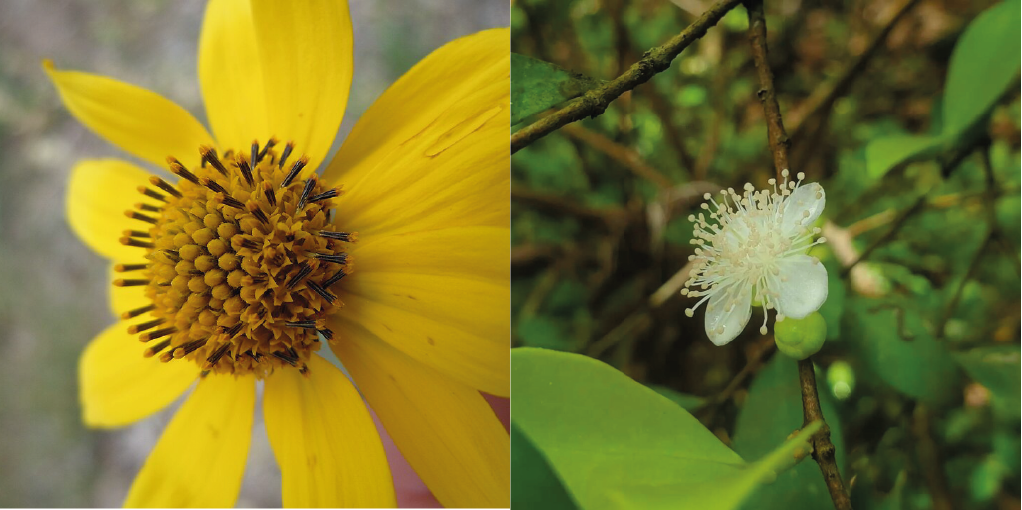
Moreover, the diversity of floral traits among trees supports a wide range of pollination systems. For example, specialized traits, like large flowers suited for specific pollinators such as bats and hawkmoths, contrast with more generalized traits that attract a broader range of insects. This variation in floral traits underscores how different fire patterns can enrich the diversity of pollination systems, benefiting a variety of pollinators. Essentially, more varied fire regimes contribute to a higher diversity of floral traits and, consequently, a broader array of pollination strategies.
Finally, the researchers identified that landscapes with greater “pyrodiversity”—meaning varied fire regimes—tend to have higher floral trait richness and, consequently, greater diversity in pollination systems. This finding highlights that well-managed fire regimes, such as controlled burns, can support biodiversity and enhance ecosystem services like pollination. Maintaining a mosaic of fire frequencies allows it to sustain diverse floral traits and the pollinators they attract, ultimately benefiting the overall health and resilience of fire-prone ecosystems.
These findings emphasize the critical influence of fire patterns on plant communities and the availability of floral resources for pollinators in fire-prone regions like the Kadiwéu Indigenous Territory. With climate change driving more frequent fires, understanding how fire and flooding regimes interact is essential for effective biodiversity conservation and ecosystem management. Ensuring a diverse balance of fire and flood cycles is key to sustaining pollinator interactions and preserving the resilience of these ecosystems.
READ THE ARTICLE
dos Santos Ferreira, B. H., da Rosa Oliveira, M., de Souza, E. B., Souza, C. S., Sigrist, M. R., Pott, A., … & Garcia, L. C. Spatial heterogeneity of fire and flooding patterns can support higher diversity of floral functional traits in an indigenous‐managed landscape. Plant Species Biology. https://doi.org/10.1111/1442-1984.12480

Victor H. D. Silva is a biologist passionate about the processes that shape interactions between plants and pollinators. He is currently focused on understanding how plant-pollinator interactions are influenced by urbanisation and how to make urban green areas more pollinator-friendly. For more information, follow him on ResearchGate as Victor H. D. Silva.
Portugese version by Victor H. D. Silva (In progress).
Cover photo by Milels (Wikicommons).



.jpg?ref=botany.one#/media/File:Viguiera_multiflora_(4941768417).jpg)

