


Canada is in a region where the effects of climate change will be strongest. Scientists need to track plant diversity across temperate forests, Arctic tundra, and prairie grasslands spanning from Pacific to Atlantic to Arctic oceans, but right now they only have scattered data points.
The problem is accessibility.
88% of Canada’s plant observations are within 1km of roads and 91% within 2km. And roads are mainly in the south. This means vast northern ecosystems, rare plant habitats, and Indigenous territories remain virtually unmonitored. This is a problem, as higher latitudes are expected to change rapidly with rising temperatures, but Gonzalez et al write: “We have low confidence in our knowledge of the pace, magnitude, and drivers of biodiversity change for most areas of the country’s land and waters.”
Without tracking plant community shifts, it’s hard to direct action where it’s needed. The authors say: “The spread of species northwards in response to climate change may create novel ecological communities, which in some regions will bring about the loss of traditional ecosystem services…”
The Canadian Biodiversity Observation Network aims to unite Indigenous knowledge holders, researchers, and new technology (eDNA, AI, remote sensing) to create a national plant monitoring system, making the data available for easy use for anyone who needs it.
Gonzalez and colleagues write: “Canada is at a critical juncture, presented with great opportunity now to invest in and build the BON to serve its biodiversity needs into the future. Now is the time for action.”
“Assembling a CAN BON would demonstrate the value of understanding how nature and nature’s contributions to people are changing in response to conservation action; this is an important step along the pathway to attaining an equitable and nature-positive society by 2050.”
Gonzalez, A. et al. (2025) “A Biodiversity Observation Network to support conservation action and mainstream knowledge in Canada,” Facets (Ottawa), 10, pp. 1–19. Available at: https://doi.org/pz3z.
Cross-posted to Bluesky & Mastodon.
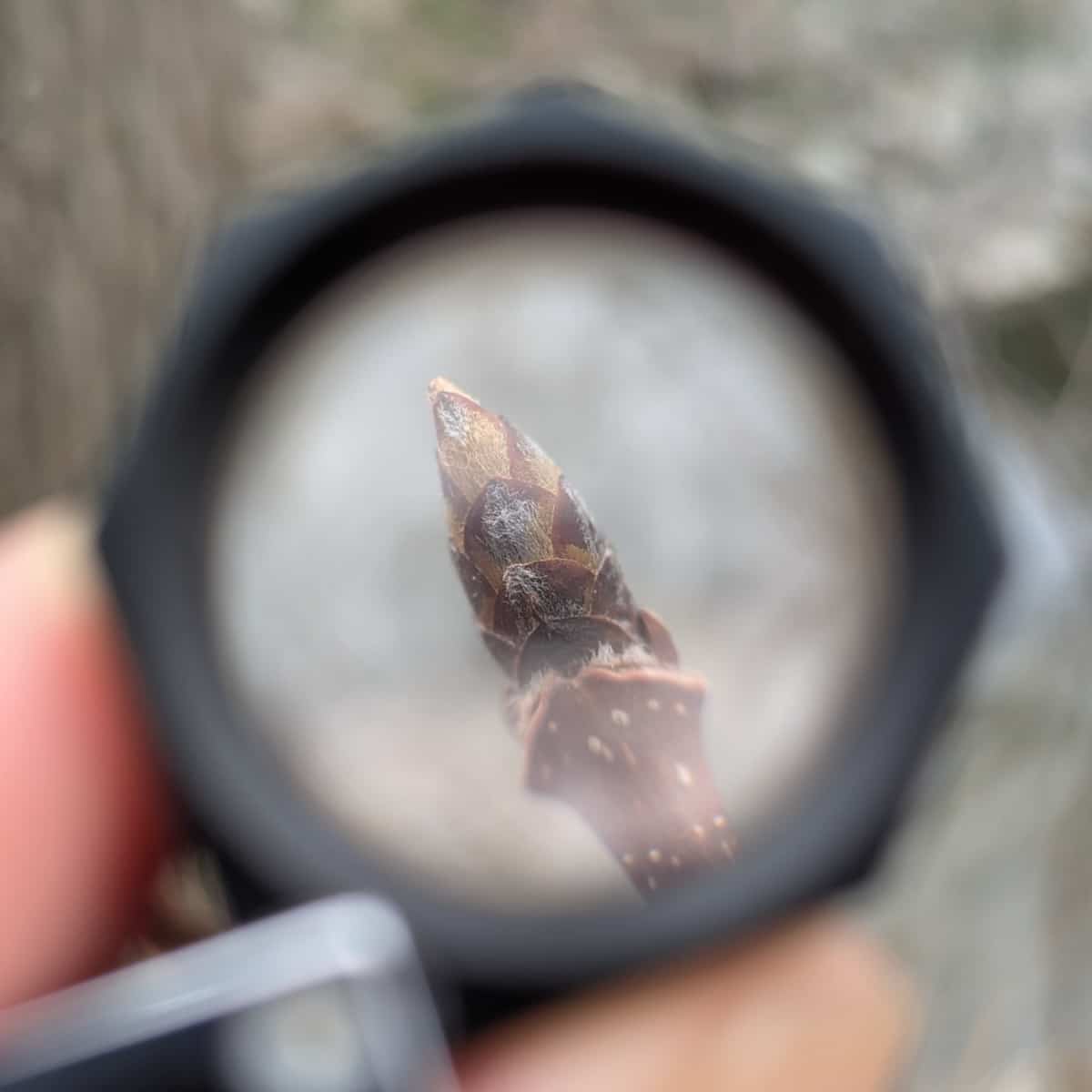
Cover Image: Acer saccharum in Canada by Loïc Mathieu / iNaturalist. CC-BY