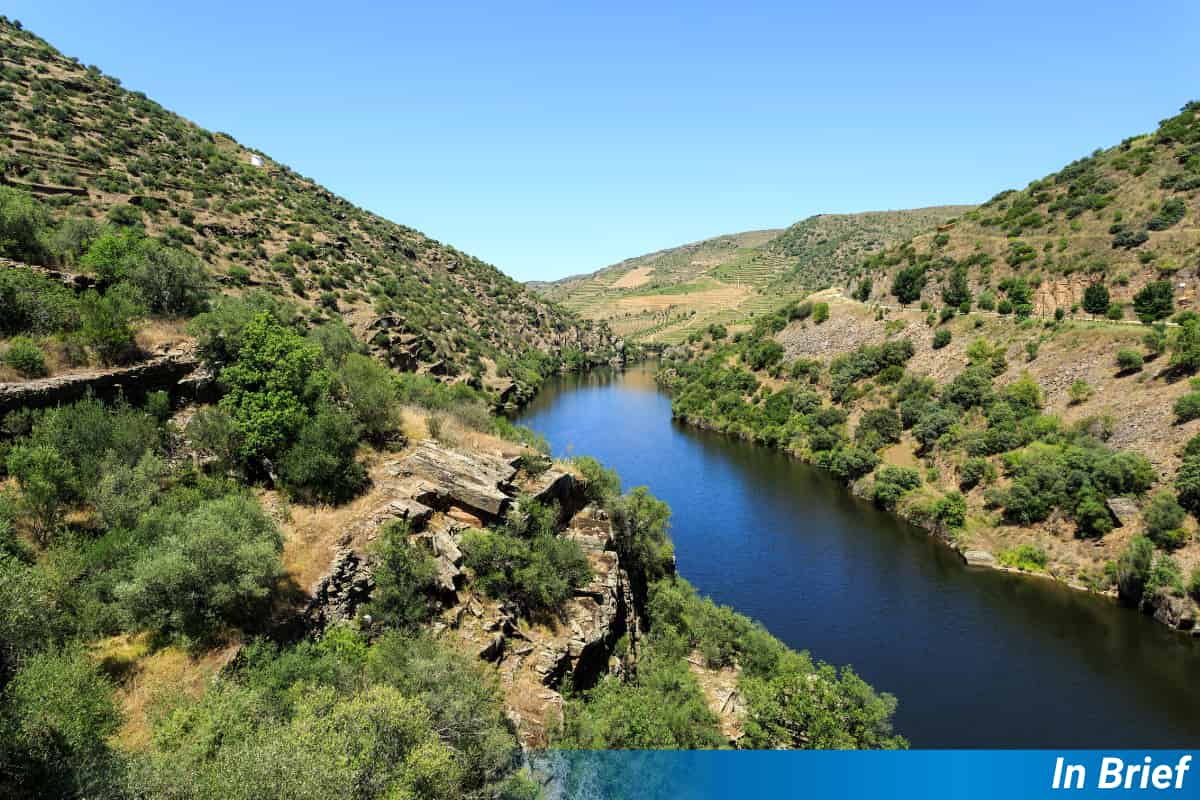



Wildfires are getting worse in Europe. Kirkland and colleagues examined 20 years of fire data from northeastern Portugal’s Greater Côa Valley, to see if they could find what causes more severe fires. In particular they investigated claims that abandonment of pastures increased fire risk. Yet, surprisingly, they found that livestock grazing doesn’t necessarily reduce fire risk.
The ecologists found that scrubland was the most fire-prone landscape, with 47% burning over the 20-year period. Not surprisingly, the dry conditions in late summer increased the risk of large fires. More surprisingly areas with higher sheep densities were more likely to burn. It appears that sheep trimming the grass did not reduce fire risk. Cattle seem to have no effect either way.
Kirkland and colleagues tracked the effect of the fires using satellite data to map fires larger than 1 square kilometre between 2001-2020. They combined this with information on land cover, weather, livestock density, and protected area status. They then statistically analysed the results to determine which factors best explained where fires occurred.
Our findings indicate that alone, increasing grazing pressure is unlikely to provide a simple solution, as is sometimes promoted throughout Europe. Only through integrated management strategies that consider various environmental, climatic, and social factors can we mitigate the growing threat of large fires in the Mediterranean while allowing abandoned lands to naturally regenerate and safeguard both the environment and communities at risk.
Kirkland, M., Atkinson, P.W., Aliácar, S., Saavedra, D., De Jong, M.C., Dowling, T.P.F., & Ashton-Butt, A. 2024. Protected areas, drought, and grazing regimes influence fire occurrence in a fire-prone Mediterranean region. Fire Ecology 20:88. https://doi.org/10.1186/s42408-024-00320-9