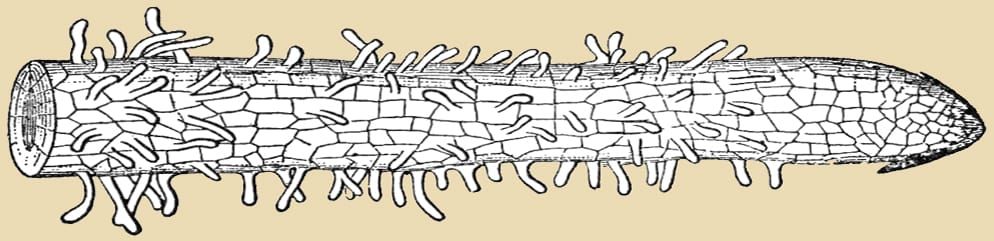

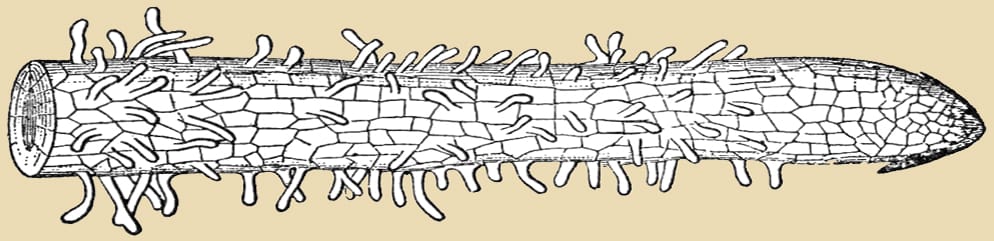
At the subterranean interface between ‘plant’ and ‘non-plant’ few structures play a more important role than root hairs – tiny, closed-ended tubular projections from single cells in the root’s epidermis. Not only do they participate in uptake of water and nutrients, but in legumes they are also important in the initiation of nitrogen-fixing nodules. Root hairs have also been beloved of developmental biologists for many years as model systems that can help to unravel the mysteries of plant cell development. So popular has their study become that keeping on top of all the weird and wonderful root hair phenotypes that have been unearthed can be a full-time study in itself. To help the time-pressed rhizologist – and in keeping with today’s ‘i’-dominated technology world – we now have ‘iroothair.org’, a ‘comprehensive database of root hair genomics information… to assist in the study of root hair development and system biology’. This ‘unique resource for root hair research that integrates the large volume of data related to root hair genomics in a single, curated and expandable database’ is freely available and showcased by Miroslaw Kwasniewski et al.. The iRootHair service is maintained at the Department of Genetics, University of Silesia (Poland).