


What difference can a garden make? Research by Timberlake and colleagues has found it can be life-saving. Despite only making up 2% of local landscape, at critical times of the year gardens can provide between 50% to 95% of the nectar available to pollinators. The authors the seasonal provision of nectar in gardens, at times when the supply is diminished in farmland, highlights the importance of identifying gaps in floral resources in time as well as space.
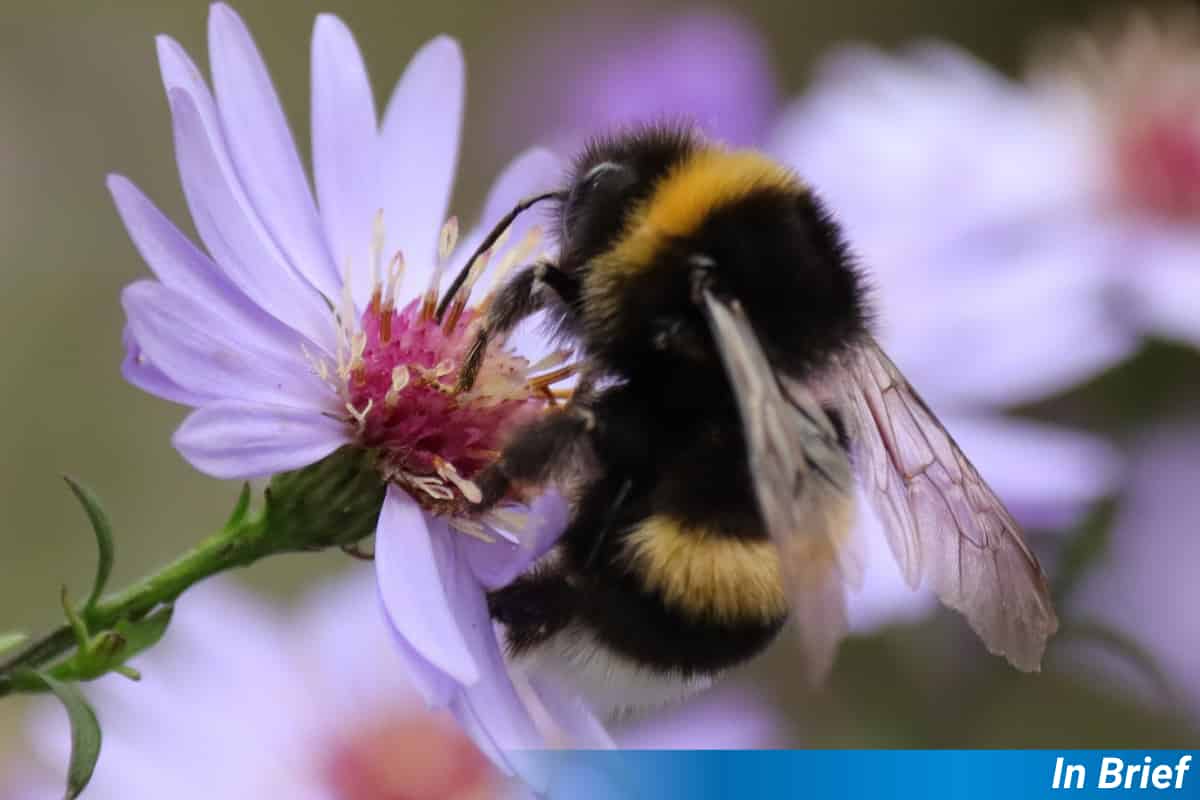
The team found that bees were found twice as often in gardens compared to farmland in early spring, and 4-12 times more often in late summer. The difference is important as 90% of British farmland is within reach of garden flowers for bees. The authors believe that if gardens were not available to bees, then colonies could decline by up to a sixth.
The research comes from two directions. First they measured nectar production in three farms and 59 gardens throughout the growing season. Timberlake and colleagues also counted bee activity on walking surveys in gardens and farmland. This gave them an idea of where the bees were and what they were getting.
Next, they took this information to build a computer model, BEE-STEWARD. This was an agent-based model to see how bees based on Bombus terrestris, the buff-tailed bumblebee, reacted to changes. The biggest change they made was removing flowers from gardens. Doing this made survival for the virtual bumblebees a lot more difficult.
Previous research shows bee populations are declining due to modern farming practices. Against this gardens are known to support pollinators but the reasons weren’t fully understood. It turns out that gardens aren’t microscale farms, but distinctive habitats that can help out bees when they most need it, and it’s their difference to natural surrounding that matters
[T]he annual nectar production of gardens is actually similar to that of semi-natural farmland habitats such as hedgerows and field margins. Moreover, their low coverage of farmland landscapes means their total contribution to landscape nectar supply is relatively small. Therefore, we hypothesize that it is not the quantity of floral resources provided by gardens that makes them so important to pollinators, but instead the timing of their resource supply.
Timberlake, T.P., Tew, N.E. & Memmott, J. 2024. Gardens reduce seasonal hunger gaps for farmland pollinators. Proceedings of the Royal Society B. https://doi.org/10.1098/rspb.2024.1523 (OA)