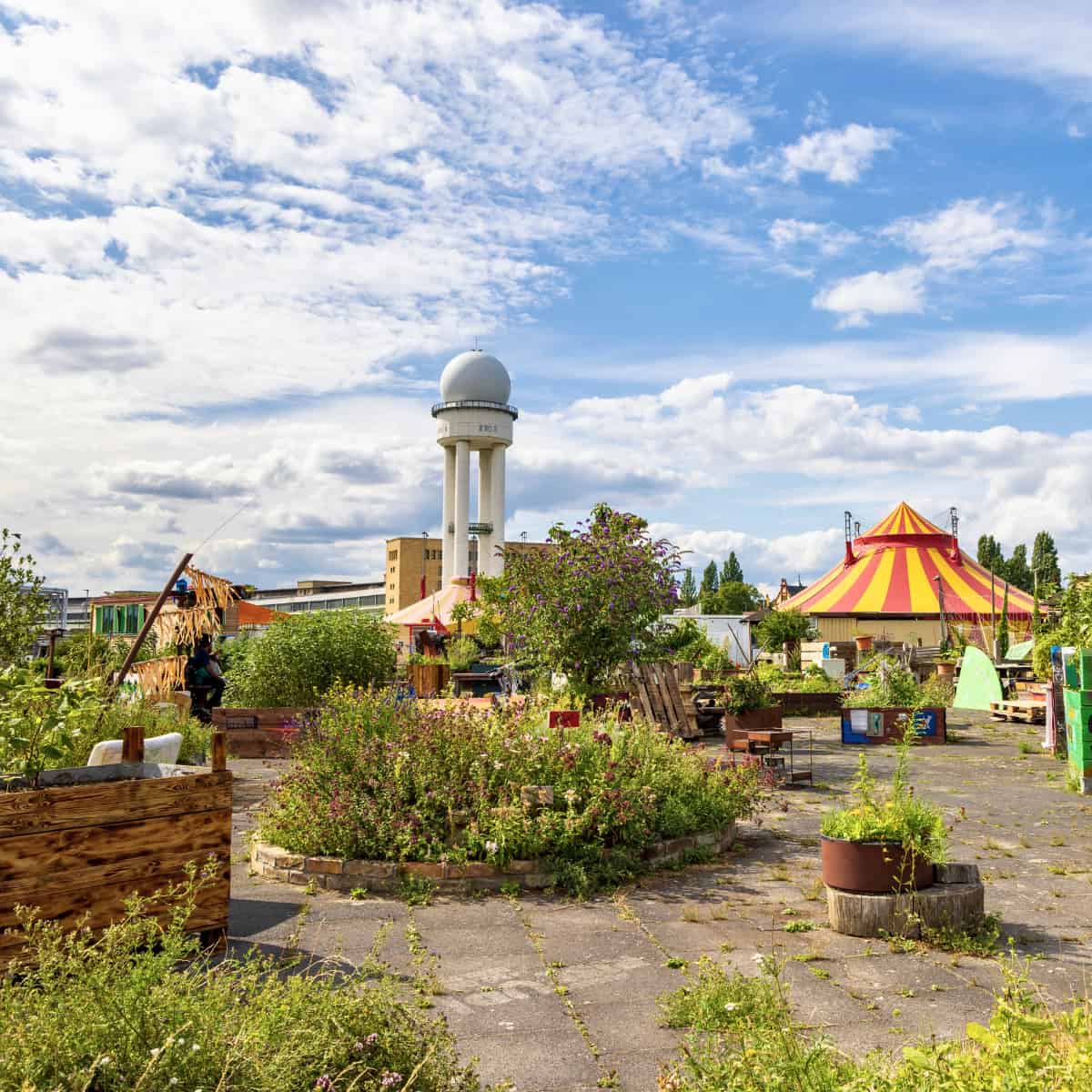



What can an urban garden do for pollinators? Sexton and colleagues tracked pollinator visits in 33 community gardens across Berlin and Munich over two years, analysing how different factors affect which pollinators flourish. They found that local garden features like plant diversity and ground cover have a much stronger influence on pollinators than the surrounding urban environment. Their work shows that a lot of urban conservation is in the hands of gardeners and the choices they make.
Sexton and colleagues found four key factors were important in gardens: floral richness, vegetation height, bare soil availability, and woody plant richness. Floral richness isn’t simply about species, but also about the variety of flower types, shapes, colours, and blooming periods available to pollinators. This was the most important factor for predicting pollinator communities. It seems more varieties of plants are better than big displays.
It’s not just the presence of flowers that matters. Vegetation height reflected the opportunities for microclimates to develop, and for a variety of nesting sites for different life stages of pollinators. Woody plant richness also provided a greater diversity of habitats, which the researchers note increased the numbers of bumblebees and other wild bees, butterflies, and hoverflies. Gardens with less woody plant richness attracted more generalist insects, like honeybees, spiders and cockroaches.
Surprisingly, Sexton and colleagues found insects can benefit from patches with no plants at all. Gardens with greater bare soil availability supported more distinctive assemblages of ground-dwelling pollinators, particularly beetles and thrips. What might look like “empty” space, can provide a crucial ecological service, supporting ground-nesting specialists. And it’s not just crawling insects that benefit. A bare patch of soil in a sunny well-drained location will have thermal properties that could help a flying pollinator get the warmth it needs to get on the wing on a cool day.
The broad scope of the research has led to some unexpected results. Often pollinator studies are bee studies. Sexton and colleagues’ work tackles arthropods as a whole visiting flowers. This has enabled them to make a surprising finding about the ecological theory of urban biotic homogenisation, which predicts that urban communities become more similar due to shared urban pressures. This is not what they found.
Landscape imperviousness positively predicted floral beta diversity. In the most urban sites (i.e., those surrounded by the highest amounts of landscape imperviousness), beta diversity was the highest, indicating the greatest level of floral plant species turnover in these more urban sites.
Beta diversity here is describing how different the various gardens are from each other, and it emphasises the choices of individual gardeners. Far from being the same, urbanisation appears to be creating distinctive urban islands each with their own diversity. It means every gardener has the opportunity to make choices to conserve their own unique pollinator community. Even things you see as imperfections in your own garden, like bare soil, could be the niche that a pollinator has been looking for.
Sexton, A.N., Conitz, F., Karlebowski, S., Neumann, A.E., Schmack, J.M., Sturm, U., & Egerer, M. (2025). Urban pollinator communities are structured by local‑scale garden features, not landscape context. Landscape Ecology, 40:50. https://doi.org/10.1007/s10980-025-02062-8
Cross-posted to Bluesky & Mastodon.
Image: Canva.