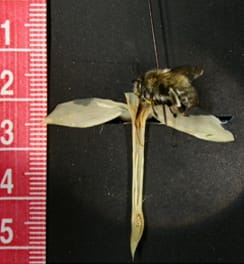



Heterostyly and related style polymorphisms are good model systems to evaluate the importance of functional pollinators in the maintenance of population variability. Santos-Gally et al. study floral traits in style-dimorphic Narcissus papyraceus in the south-west of the Iberian Peninsula and north-west Africa in relation to visitation rates by long- versus short-tongued pollinators. They find that allometric effects of discrete variation in flower size are associated with variation in reciprocity, but neither tube length or stigma–anther separation account for morph-ratio variation. Loss of stylar polymorphism in populations is correlated with high visitation rates of short-tongued pollinators, which suggests that their abundance may overwhelm any possible effects of long-tongued pollinators.