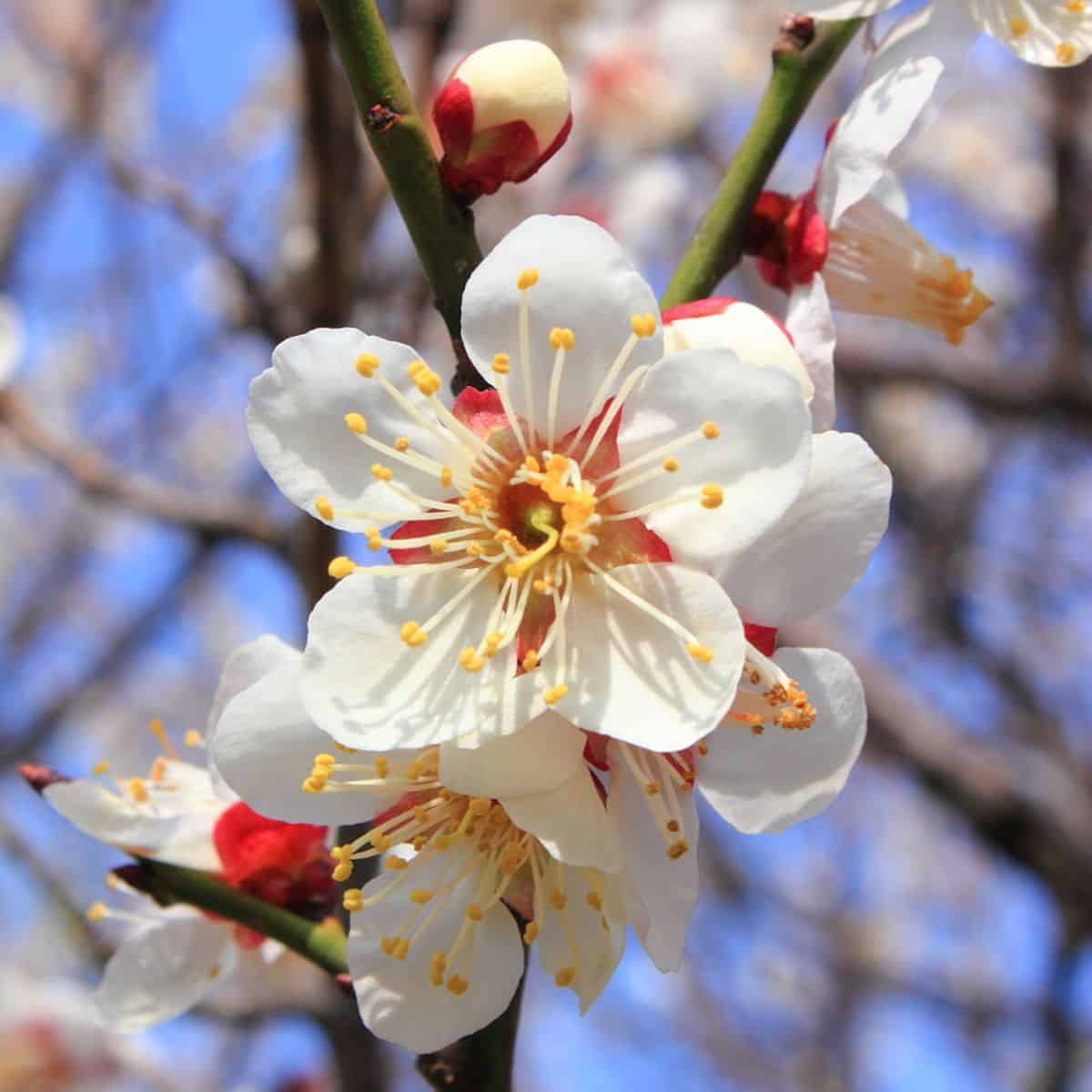



Next time you stop to admire a flower, take a moment to really look at its petals — their size, colour, and shape. These delicate structures are not just for decoration; they tell a fascinating story about how plants survive, thrive, and, most importantly, reproduce. Just like we are naturally drawn to the beauty of flowers, petals play a vital role in attracting pollinators. Larger petals can act like bright billboards in a crowded landscape, catching the attention of these visitors from far away.
However, producing big, showy petals is not an easy task: it demands precious resources, such as energy and nutrients, that the plant could use elsewhere. Moreover, while it is true that big, showy petals attract pollinators, they can also make the plant more visible to hungry herbivores and other natural enemies. Plants face a tricky balancing act: growing petals big enough to attract help but not so big that they invite danger or waste resources.
But why do some plants invest in large, showy petals, while others keep them small and subtle? Petal size is not just about attracting animals, as it also helps flowers retain heat in cold environments or conserve energy in harsh, dry regions. So, petal size is a key trait shaped not only by pollinators but also by the climate.
Despite this, most past research has focused on how animals influence petal shape and size, but what about the non-living forces, such as temperature, rainfall, and elevation? How do they affect the way flowers look and grow? Understanding how petal size interacts with these abiotic forces can give us a deeper insight into how plants adapt to their habitats, especially if we aim to understand how plants are likely to respond to climate change.
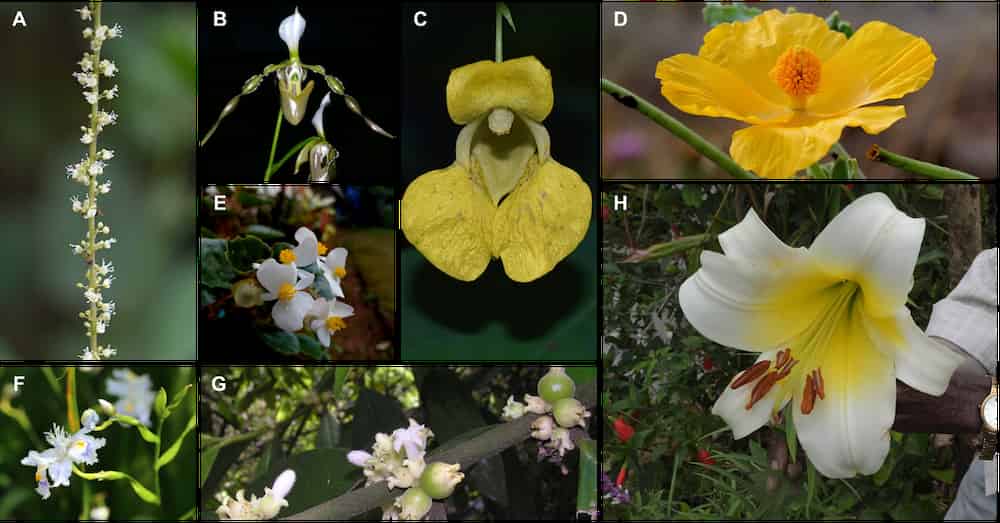
With this in mind, Siyu Chen and colleagues analysed detailed petal measurements from over 10,000 Chinese flowering plant species. By linking this floral data to pollination modes and climate conditions, they uncovered how flowers adjust petal size in response to environmental pressures, from icy mountaintops to steamy southern forests.
The study showed that the higher the altitude, the smaller the petals tend to be. At elevations around 3200 meters —where there are harsh conditions such as cold, strong winds, and less oxygen are the rule— plants, especially herbaceous ones, have to adapt to survive.
Temperature and rainfall also affect petal size. In cold climates (below 0ºC) or very dry areas (less than 1000 mm of rain per year), flowers are generally smaller. These harsh conditions limit growth and force plants to conserve resources. Interestingly, petals are also small when rainfall is very high, particularly in herbaceous plants. This may be an evolutionary strategy to avoid water damage from excessive rain.
The research also showed that woody plants, like trees and shrubs, tend to have larger petals in warm and humid regions such as southern China. Meanwhile, herbaceous plants have larger petals in more stable climates, like southwest China. In extreme environments, such as dry, cold, and harsh areas, plants have smaller petals, with herbaceous species adjusting the relative size of their petals more quickly. This suggests that extreme conditions limit how much a plant can “invest” in its flowers.
Overall, these patterns reveal a delicate balance between growth, reproduction, and survival. As climate change accelerates, knowing how plants adjust their flowers to different conditions becomes crucial. These findings not only deepen our understanding of plant diversity but also offer key insights into how plants might respond to future shifts in climate. In the end, flowers are not just beautiful; they are living strategies shaped by their environment and are proof of nature’s ongoing adaptation.
With this in mind, Siyu Chen and colleagues analysed detailed petal measurements from over 10,000 Chinese flowering plant species. By linking this floral data to pollination modes and climate conditions, they uncovered how flowers adjust petal size in response to environmental pressures, from icy mountaintops to steamy southern forests.
The study showed that the higher the altitude, the smaller the petals tend to be. At elevations around 3200 meters —where there are harsh conditions such as cold, strong winds, and less oxygen are the rule— plants, especially herbaceous ones, have to adapt to survive.
Temperature and rainfall also affect petal size. In cold climates (below 0ºC) or very dry areas (less than 1000 mm of rain per year), flowers are generally smaller. These harsh conditions limit growth and force plants to conserve resources. Interestingly, petals are also small when rainfall is very high, particularly in herbaceous plants. This may be an evolutionary strategy to avoid water damage from excessive rain.
The research also showed that woody plants, like trees and shrubs, tend to have larger petals in warm and humid regions such as southern China. Meanwhile, herbaceous plants have larger petals in more stable climates, like southwest China. In extreme environments, such as dry, cold, and harsh areas, plants have smaller petals, with herbaceous species adjusting the relative size of their petals more quickly. This suggests that extreme conditions limit how much a plant can “invest” in its flowers.
Overall, these patterns reveal a delicate balance between growth, reproduction, and survival. As climate change accelerates, knowing how plants adjust their flowers to different conditions becomes crucial. These findings not only deepen our understanding of plant diversity but also offer key insights into how plants might respond to future shifts in climate. In the end, flowers are not just beautiful; they are living strategies shaped by their environment and are proof of nature’s ongoing adaptation.
READ THE ARTICLE:
Chen, S., Lu, J., Dong, Y., Li, Y., & Mao, L. (2025). Size Variation in Flower Petals of Chinese Animal‐Pollinated Plants in Response to Climatic and Altitudinal Gradients. Ecology and Evolution, 15(5), e71396. https://doi.org/10.1002/ece3.71396

Victor H. D. Silva
Victor H. D. Silva is a biologist passionate about the processes that shape interactions between plants and pollinators. He is currently focused on understanding how urbanisation influences plant-pollinator interactions and how to make urban green areas more pollinator-friendly. For more information, follow him on ResearchGate as Victor H. D. Silva.
Portuguese translation by Victor H. D. Silva.
Cover picture Ume flower (white plum), at Kadokawa Garden, Suginami Ward, Tokyo by Kakidai (Wikimedia Commons). CC BY-SA


.jpg?ref=botany.one#/media/File:Allophylus_cobbe_(5781623750).jpg)


.jpg?ref=botany.one#/media/File:%E7%B2%97%E8%91%89%E6%9C%A8_Lasianthus_chinensis_-%E9%A6%99%E6%B8%AF%E6%B2%99%E8%9E%BA%E6%B4%9E_Sha_Lo_Tung,_Hong_Kong-_(9240148310).jpg)

