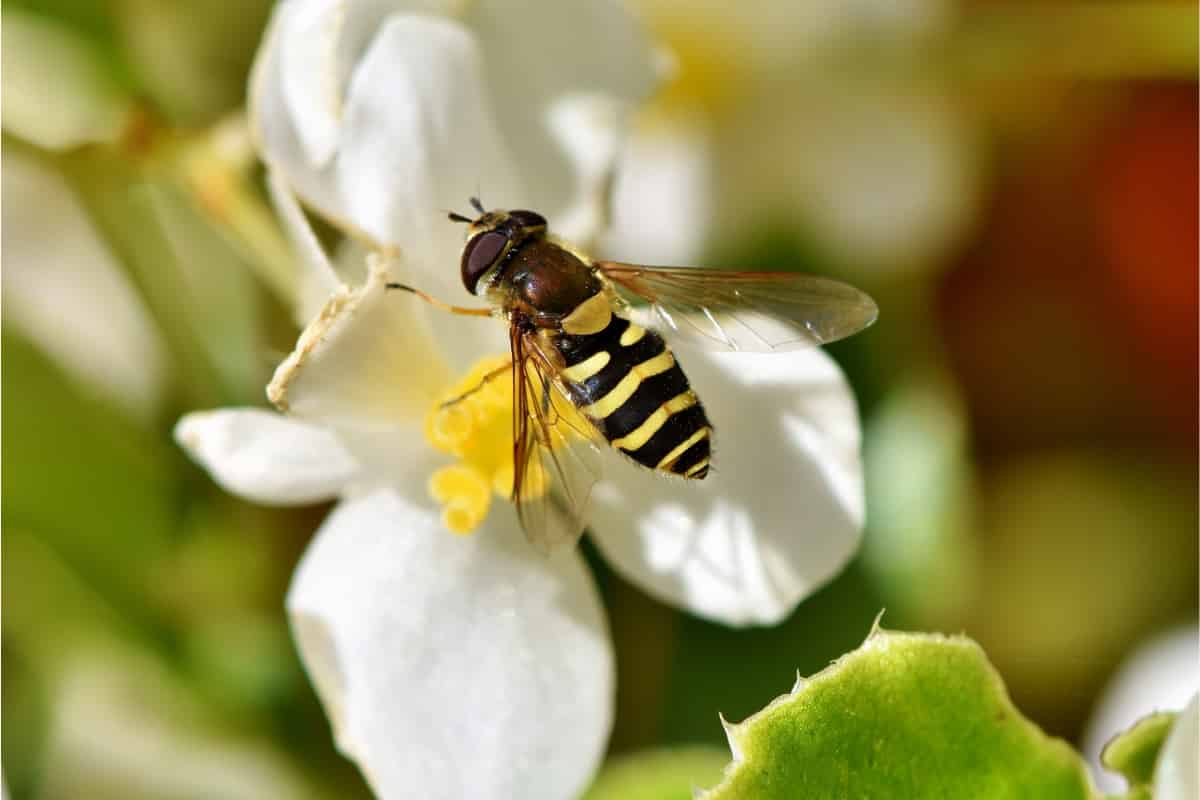



Researchers Pizante and colleagues have uncovered a surprising link between treed field borders and hoverfly abundance in canola crops. Their study, conducted in central Alberta, Canada, reveals that small patches of trees along field edges act as powerful exporters of these beneficial insects into crops.
The most striking finding was the sheer number of hoverflies moving from treed borders into crops. On average, nearly 85,000 hoverflies per kilometre of treed border entered the crop each week. This was 33 times more than the number exported by grassy field edges. Surprisingly, this massive movement didn’t change during the canola bloom as expected.
To uncover these patterns, the team used special bi-directional traps to catch hoverflies moving in both directions between field borders and crops. They also surveyed the plants in each border type to see if specific vegetation features explained hoverfly movement.
Interestingly, the study found that treed borders supported a more diverse hoverfly community than grassy ones. However, no single plant feature within treed borders explained the huge export of hoverflies, suggesting that something about treed areas themselves attracts these insects.
These findings highlight the importance of keeping tree lines along crop fields. By supporting more hoverflies, which both pollinate crops and eat pests, trees in borders could boost farm yields while promoting biodiversity.
Pizante, R., Acorn, J. H., Jiménez, I. P., & Frost, C. M. (2025). Treed field borders net-export over 82,000 more hoverflies per km every week into canola crops than herbaceous field borders, regardless of mass-flowering crop bloom. Agriculture, Ecosystems & Environment, 377, 109271. https://doi.org/10.1016/j.agee.2024.109271 (OA)