


Imagine walking through a bustling market, drawn to a stall that appears to be packed with fresh and juicy fruit. You lean in, ready to grab a bite, only to discover there is nothing to buy. A similar trick is being played in the world of flowers. Some plants are masters of disguise, luring pollinating insects without offering any reward in return.
This clever deception is known as mimicry, one of the most ingenious survival strategies of nature. We often think of butterflies imitating leaves or snakes pretending to be venomous, but flowers also know how to play this game. Some blooms produce no nectar or pollen, yet they still attract visitors by resembling nearby plants that do make these rewards.
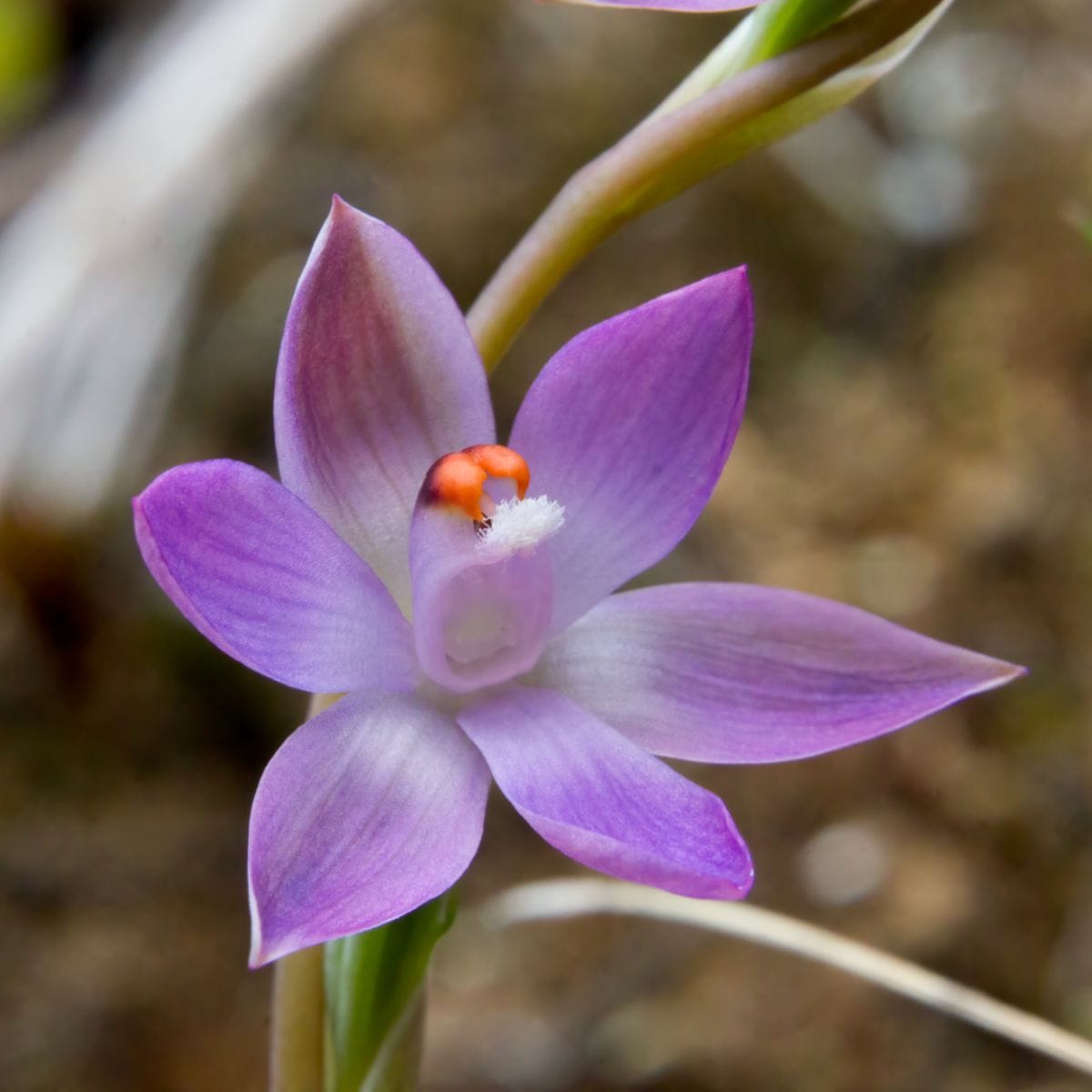
This type of trickery is known as Batesian floral mimicry and exploits the relentless search for food of insects. Among the flowers that excel at this art are the sun orchids of the genus Thelymitra, found in southwestern Australia. They sport bright yellow false anthers that mimic the pollen-filled stamens of neighbouring buzz-pollinated flowers.
Botanists have long suspected that these orchids deceive bees, coaxing them to visit flowers that offer nothing in return. But until now, evidence that this ruse actually benefits the sun orchids has been scarce. To solve this, Daniela Scaccabarozzi and Nina Sletvold set out to test experimentally whether the false anthers in sun orchids truly function as a form of buzz-pollination mimicry.
They focused on two species, Thelymitra macrophylla and Thelymitra crinita, which grow alongside both pollen-rich buzz-pollinated plants and nectar-producing flowers. They compared flower colours, watched how bees behaved around these flowers, and performed experiments: in some orchids, the false anther was carefully removed; in others, it was painted to blend in with the petals; and a control group was left untouched. Finally, they counted how many fruits each orchid produced, revealing which tricks truly paid off.
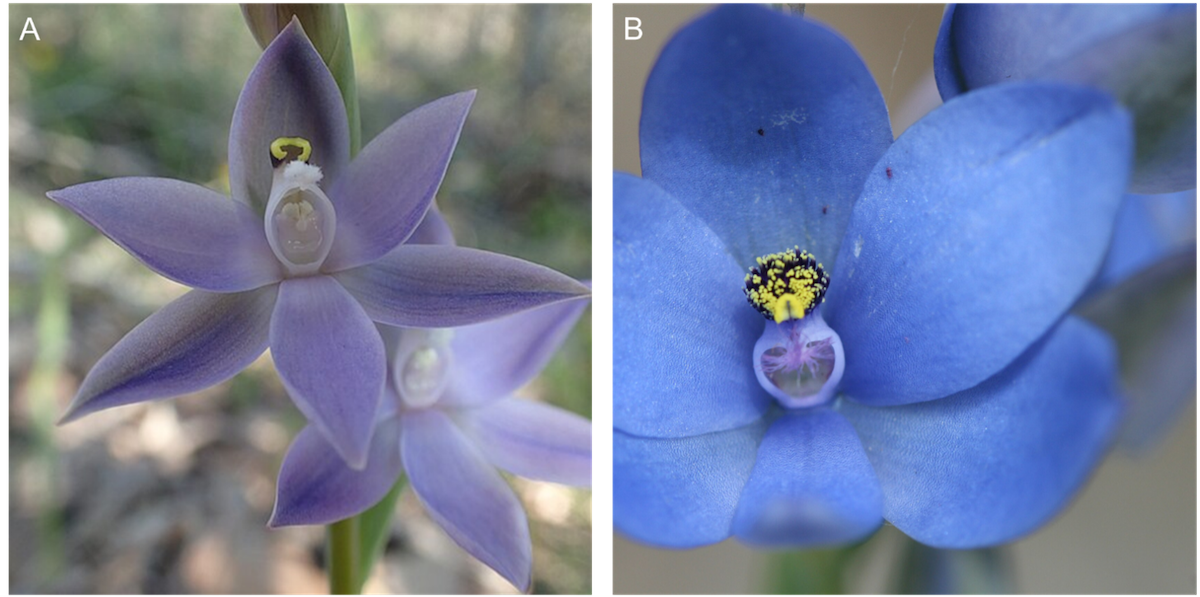
The results revealed just how convincing these floral impostors are. Both Thelymitra macrophylla and Thelymitra crinita matched the colours of their rewarding neighbours almost perfectly. So, to the bees’ eyes, the orchids resemble these rewarding neighbours, which likely helps to draw them in.
Regarding the visitors, native bees, especially those from the genus Leioproctus, behaved as if the orchids were real food sources, grasping the bright false anthers and sometimes even attempting to buzz them, just as they would on an actual pollen-producing flower. This suggests that sun orchids employ visual mimicry to deceive pollinators.
Furthermore, the contact with the false anthers positioned the bees so that pollen sacs stuck to their bodies, allowing accidental pollination. Remarkably, the same bees visited the the neighbouring pollen-rich flowers but ignored nectar-producing ones, highlighting the precision of this mimicry.
When the false anthers were removed or painted, fruit production dropped by 50 to 70 per cent, regardless of how many real pollen plants were nearby. This confirmed that the false anther itself is essential for fooling pollinators. In other words, the sun orchids are not just decorating their flowers; they are sending a carefully crafted visual message that persuades bees to visit and pollinate them by accident.
Overall, these findings show how specific visual cues can steer pollinator behaviour and that in nature, appearances can be everything, and sometimes a clever illusion is the key to life. Understanding such interactions can offer insights into the co-evolution of flowers and pollinators and could one day inform the conservation of these specialised plant–pollinator systems.
READ THE ARTICLE
Scaccabarozzi, D., & Sletvold, N. (2025). Do sun orchids mimic buzz‐pollinated plants? An experimental test of the adaptive significance of false anthers. Functional Ecology. https://doi.org/10.1111/1365-2435.70129

Victor H. D. Silva is a biologist passionate about the processes that shape interactions between plants and pollinators. He is currently focused on understanding how urbanisation influences plant-pollinator interactions and how to make urban green areas more pollinator-friendly. For more information, follow him on ResearchGate as Victor H. D. Silva.
Portuguese translation by Victor H. D. Silva.
Cover picture by Haydenrjones (Wikimedia Commons).