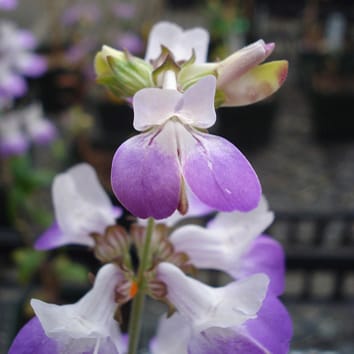


Collinsia heterophylla, a protandrous, preferentially cross-pollinating hermaphrodite, undergoes delayed selfing facilitated by floral senescence. Jorgensen and Arathi find that under drought stress, cross-pollination early in the floral lifespan reduces floral longevity, but excess soil moisture does not extend longevity. Pollen receipt, a reliable cue for fecundity, accelerates flower drop, but similarly reduced longevity in unmanipulated flowers under water-stress generates a potential for exacerbating sexual conflict in this species. Reduction in longevity under drought suggests a strong environmental effect that could perhaps alter the preferred breeding mode; however, higher outcrossed seed production over that by autonomous selfing implies that inbreeding depression may limit the benefits of selfing.