


I’ve squished the keynote and the short PPP4 session together here, as they both cover engaging people with plants. I hadn’t prepared for this, so I’ll be interested to see how broken these notes are.
https://youtu.be/9KgKFMR7eB0?t=68
Talk by Ned Friedman
https://twitter.com/plantspplplanet/status/1169521223941931008
We opened with Ned Friedman botanical gardens promoting understanding of evolution. This is a subject PPP has been covering, e.g. R‐E‐S‐P‐E‐C‐T: How Royal Botanic Gardens Victoria is responding to climate change, Saving plants, saving ourselves and The challenge for botanic garden science.
https://twitter.com/JessBTurner/status/1169521047206580224
https://twitter.com/dawngarden/status/1169521592520585218
Friedman started with looking through Darwins’s botanical output. He put forward the idea that Darwin laid down the ideas across his books that sparked modern botany. Then he went further: “Darwin was the most important horticulturalist of the 19th century.” Friedman produced a glowing obituary in the Gardener’s Chronicle and Agricultural Gazette, showing the opinion of the time.
Interestingly, (and he’s right) Friedman argues that Darwin gets associated more with zoology than botany, and that botanists could make more of Darwin’s plant work. One of the illustrations of this is showing how embedded Darwin’s work is in the plant world of the time, and ran through some early evolutionists. Some of this is very close to Darwin’s ideas, Patrick Matthew was extremely close, and Friedman argued that the tendency to see heredity and plant-crossing that led to evolution as an almost inevitable idea.
https://twitter.com/zoemig/status/1169522619667898368
https://twitter.com/RJABuggs/status/1169522943078088704
https://twitter.com/RJABuggs/status/1169523616368738304
He went on with many more examples of early horticultural and botany coming close to Darwin’s theory. For this reason he argues that botanical gardens are the place to teach evolution. The favored place to learn, Friedman said, are Natural History museums which are animal-focused, and are about pattern not process. He then referred to research that shows visitors don’t learn about Natural Selection.
https://twitter.com/zoemig/status/1169525056264949760
https://twitter.com/fiona_jordan/status/1169525534344306694
https://twitter.com/zoemig/status/1169525483723198464
https://twitter.com/BrachySteph/status/1169530884388741120
Botanical gardens are museums of living objects. “We can do things with living objects that we cannot do with bones.” Botanical gardens collected freaks and weirdos, Friedman said, not the perfect type as an example. He also argued that botanical gardens are places where evolution happens. The example he has is a tree that is a mutant with color-shifted blossoms. By counting the tree rings, he can date the summer where the mutation happened. I need to read more about this.
https://twitter.com/RJABuggs/status/1169525878428229632
It’s not all mutation. Friedman went on to hybridisation. He can explain why some plants hybridise and some don’t. This can allow botanical gardens to talk about pattern as well as process. Friedman pointed out Simon Hiscock’s work at Bristol botanical garden, with an Angiosperm phylogeny garden. That sounds like I need to visit there.
Friedman: “When you enter a botanical garden you should be confronted by Darwin.” Also:” Botanical gardens have a unique opportunity to introduce the public to evolutionary thinking in ways that are not threatening.” Teaching evolutionary theory is botanical gardens job.
https://twitter.com/RJABuggs/status/1169529263470579712
He finished by noting that after Origin, Darwin moved on to orchids, a book praised by Asa Gray for tackling opposition to Natural Selection. In the reply, Friedman quoted: “Of all the carpenters for knocking the right nail on the head, you are the very best: no one else has perceived that my chief interest in my orchid book, has been that it was a “flank movement” on the enemy.”
The Arnold Arboretum must be a fantastic place to visit, or work at.
https://youtu.be/9KgKFMR7eB0?t=2559
Talk by Jill Edmondson
https://twitter.com/RJABuggs/status/1169531211775139840
Next the session proper started with Jill Edmondson, on food security and citizen science. I’d read her paper on this topic in PPP earlier. Th problem she saw was the shift of people moving from the countryside into towns. Now more people live in urban than rural environments.
https://twitter.com/JessBTurner/status/1169531271447490560
https://twitter.com/RJABuggs/status/1169531987650064384
https://twitter.com/plantspplplanet/status/1169533628650590208
You can grow food in urban enviroments in allotments, but in the UK allotment provision has dropped by 80% since the second world war. Yet 50% of space in urban areas is greenspace. It can’t all be used, but a goodly proportion can.
She also connected food bank use with lack of access to fresh fruit and vegetables, and the health consequences. Food banks tend to focus on long-life food, for good reason. Regardless of Brexit, it got a mention, urban agriculture is much needed anyway. You need to evaluate how the space is used, and she’s done a lot of work on this.
https://twitter.com/zoemig/status/1169534379569438720
https://twitter.com/fiona_jordan/status/1169534568443125760
A typical citizen science project gets 12% retention, Edmondon’s MYHarvest got 37%. She noted that these are people who are already engaged with growing. The results need more work, but the graphs presented show that allotments and gardens can make a contribution to food security. For MYHarvest, with the data that’s come in Edmondson hopes to provide data on what crops are most likely to be successful in your location. You can visit MYHarvest at https://myharvest.org.uk/
So Sheffield would be a fun place to work too.
https://youtu.be/9KgKFMR7eB0?t=3928
Talk by Chris Thorogood
https://twitter.com/JessBTurner/status/1169536592370962432
https://twitter.com/plantspplplanet/status/1169537581270347776
Finally, up came Chris Thorogood on engaging people with plants. He started with lamenting the paucity of engaging material on plant science in schools. One route round this, he said, is to shake up people’s preconceptions of what plants do. He’s been doing this with the Flora Obscura column in PPP, for example Oxygyne.
https://twitter.com/JessBTurner/status/1169538980989345793
Wow plants are a way to get people into botanical gardens and engaging with plants. Here are a few examples from @OBGHA and engagement they have had through @thorogoodchris1’s twitter #PPP19 pic.twitter.com/3rLRxViE7d
— Zoë Migicovsky (@zoemig) September 5, 2019
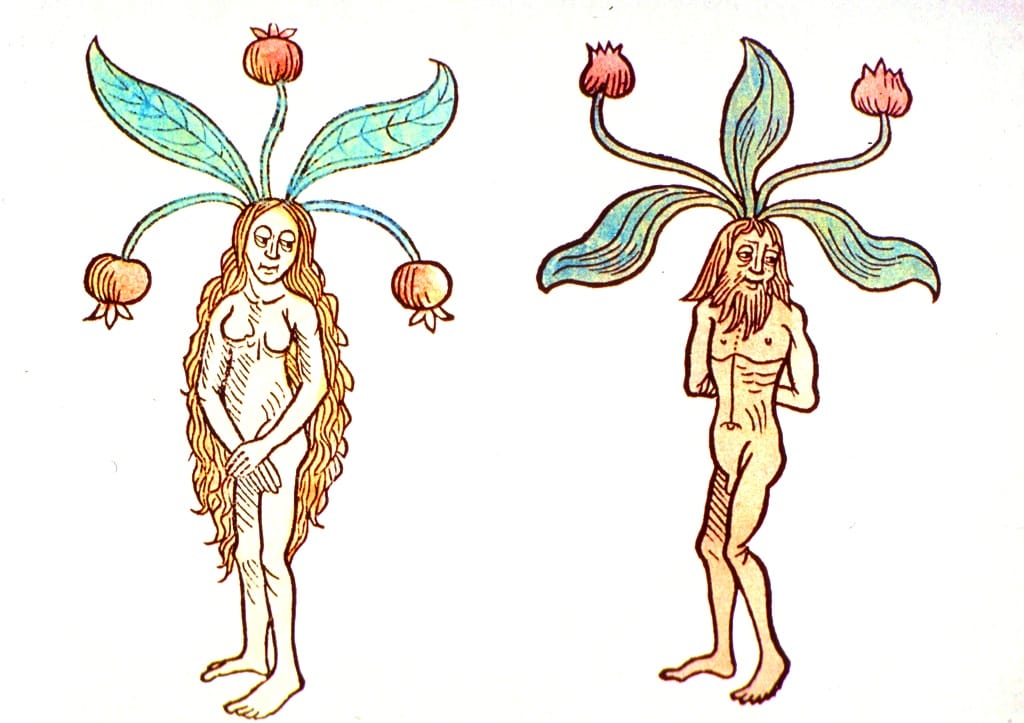
There are all sorts of plants that excite people, Thorogood said. Pitcher plants that can serve as toilets for small furry animals do well. As well as 'wow plants', Thorogood talked about culturejamming, and how he used mandrakes, popular in Harry Potter, to engage people. Oxford Botanic Garden has been growing mandrakes for about 400 years. He livestreamed a mandrake harvest and got about 20000 viewers.
At Harcourt Arboretum, they have static displays on conservation. People connect more with conservation in animals rather than plants. So they're comparing plants with animals. So Chichibu Birch is equivalent to a Black Rhino.
https://twitter.com/fiona_jordan/status/1169542363330617344
The talk closed with some impressive engagement statistics for Flora Obscura. Oxford would be a fun place to work too, but I already knew that.
Plants People Planet Symposium 2019