

Say pollinators. What comes to mind? Is it sweet, furry bees or dainty, colourful butterflies? Perhaps graceful and shiny hummingbirds? Maybe bats, if you’re feeling risky. Truth is, there are plenty of other insects and vertebrates out there who also make a substantial contribution to plant sex, but rarely get any public credit for it. Indeed, some animals you’d never think of as pollinators can turn out to be irreplaceable allies in the reproduction of some quirky plants: from tiny crustaceans in the sea to crawling crickets and cockroaches on land. Yes, you read that right: cockroaches!
Over the past few years, Dr. Kenji Suetsugu, a researcher at Kobe University in Japan, has been drawing scientific attention to the importance of some seriously overlooked bugs for the pollination and seed dispersal of a wide range of plants. In one of his most recent papers, Suetsugu revealed that the Asian plant Balanophora tobiracola strongly relies on wild cockroaches for sexual reproduction. What’s most interesting is that this species is no ordinary plant. In fact, it doesn’t even look like one. Balanophora plants are obligate parasites, which means they lack green leaves, cannot do photosynthesis at all, and thus survive upon the exploitation of other plants’ resources. All you can see from them above ground are their extremely tiny flowers, clumped into fleshy inflorescences that rather resemble the fruiting body of a fungus.
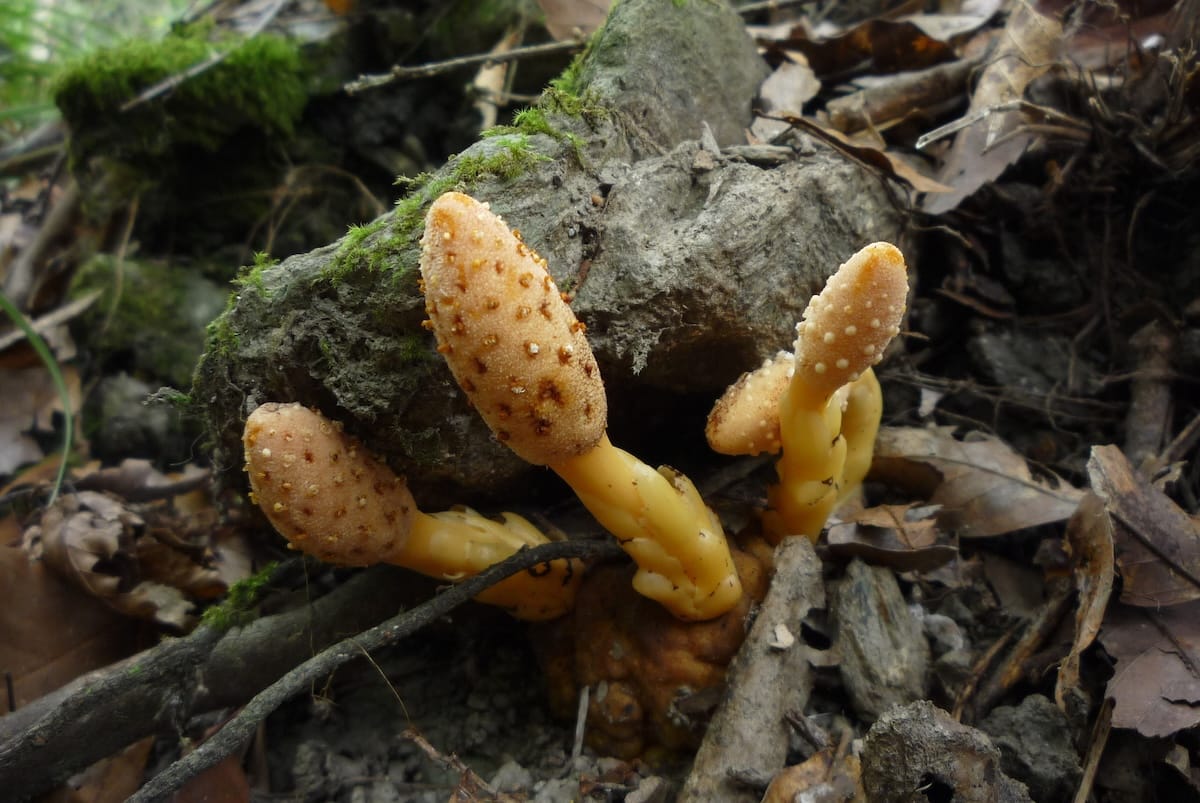
According to the author, parasitic plants are known for their odd affairs with unusual pollinators. Previous field observations of Balanophora tobiracola already featured a variety of not-so-charming floral visitors, including some long-legged flies that look like giant mosquitoes, dull-coloured beetles that lay their eggs in old inflorescences, and moths whose larvae feed on the fleshy plant tissue around flowers and seeds—plus cockroaches, of course. But Suetsugu wanted to know whether any of these animals actually act as effective pollinators, and to what extent this particular plant species depends on them for seed production.
So, the research team travelled to the Japanese island of Yakushima in search of the blooming parasitic plants bursting out of the forest soil. They patiently sat beside them day and night, or hid behind their woody hosts and neighbours, close enough to see what types of animals came by. A couple of bug guests were taken to the lab to check how many pollen grains they were carrying on their bodies. Yet, some visitors were far too shy around the researchers’ unfamiliar presence, like cockroaches. So one year, Suetsugu got a time-lapse camera and set it up next to the plants, capturing more than 34,000 frames of all the secret life that occurred around the mushroom-looking inflorescences.
The team also carried out some pollination experiments in the field. They manually pollinated some inflorescences, manipulated others to remove certain floral structures, and covered them with mesh bags with different-sized openings to filter the kinds of animals that could access the flowers. When they looked at the outcome after several weeks, one of their main findings quickly stood out. Balanophora tobiracola is capable of producing clonal seeds from unfertilized ovules, no pollen required—a phenomenon called agamospermy. Moreover, the average number of seeds produced by the inflorescences was nearly identical across experiments, with or without pollination. This led the author to conclude that agamospermy serves as a backup strategy for the species to ensure reproduction no matter what: even if there are no compatible plants in the vicinity or no animal visitors to carry pollen around.
However, clonal reproduction brings about some risks, like reduced genetic diversity and the accumulation of harmful mutations. Sex is advantageous as it promotes variation and adaptability, and the study showed that Balanophora tobiracola still leans on bugs for sexual reproduction. But not just any bug. Ants and cockroaches were the most frequent visitors and the most effective pollinators. Ants, though, bore far fewer pollen grains and spent most of the time foraging in the same inflorescence, likely encouraging self-pollination. Cockroaches, on the other hand, carried up to 50 times more pollen and often scurried from plant to plant, favoring pollen exchange. In fact, a single visit from the most common cockroach species strikingly boosted the proportion of fertilized seeds per inflorescence.
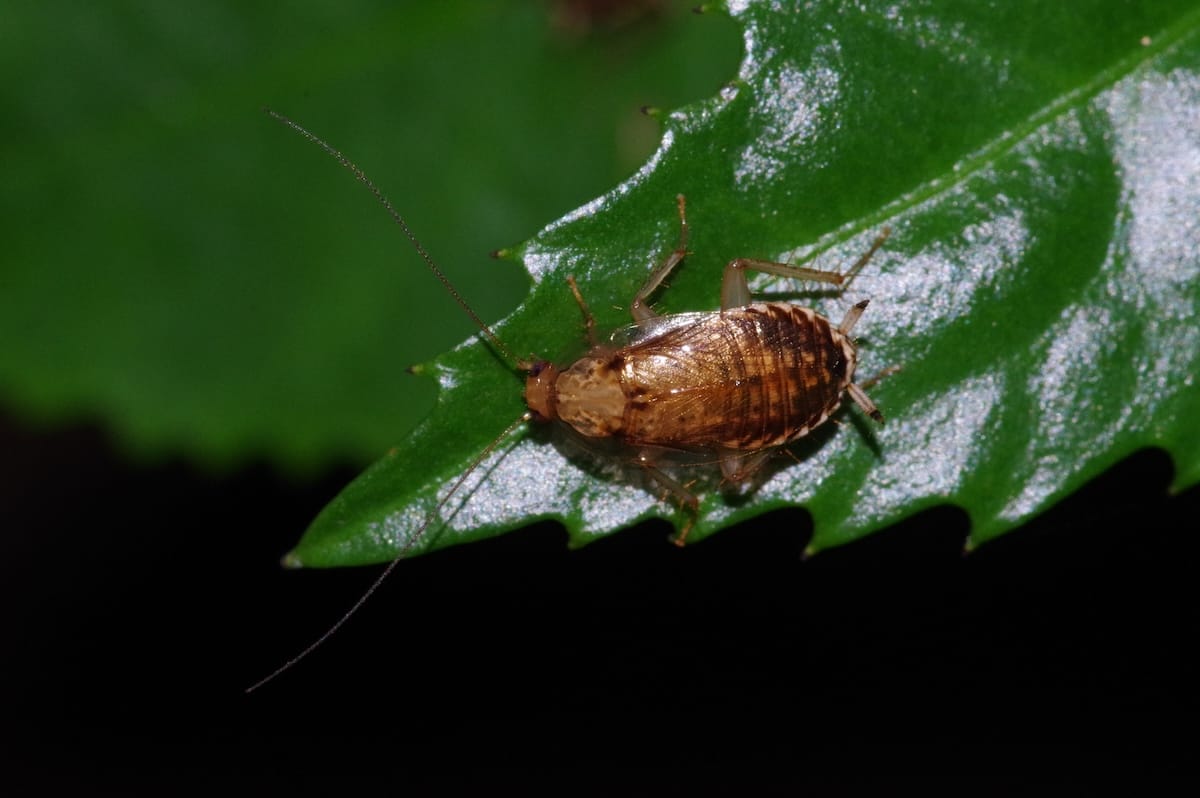
Now, cockroach pollination isn’t a brand-new discovery. A few other studies have reported it in different parts of the world and across multiple plant lineages, not just parasitic ones. Yet, according to Suetsugu, we may be seriously underestimating the importance of roaches as plant pollinators. These misunderstood critters are almost everywhere, and many species are keen on floral resources, like energy-rich nectar and protein-packed pollen. The thing is, they’re mostly nocturnal, so their interactions with plants are easy to miss. And let’s be honest: we just don’t like them, and our research might be biased because of that.
The evidence from Balanophora tobiracola suggests that cockroach pollination can be especially important for plants blooming close to the dark and chilly corners of the forest floor, which are definitely not the favouritespots of more typical pollinators. Studies like this keep widening our perspective on the diverse and fascinating strategies of flowering plants to ensure reproduction—well beyond the classic picture of bees and butterflies gliding through charming flowers in a sunny prairie.
READ THE ARTICLE
Suetsugu, K. (2025). Cockroach pollination ensures sexual reproduction in the non-photosynthetic plant Balanophora tobiracola. Plant Biology, 27(2). https://doi.org/10.1111/plb.13770
Andrés Pereira-Guaqueta
Andrés is a Colombian biologist fascinated by plant-animal interactions and eager to share scientific knowledge outside academia. He is currently finishing his master’s degree at the National Autonomous University of Mexico. His main research interests revolve around the relationships between flowering plants and their animal pollinators, and how they respond to our rapidly changing world.
Spanish translation by Andrés Pereira-Guaqueta.
Cover picture by zachcheng (iNaturalist).