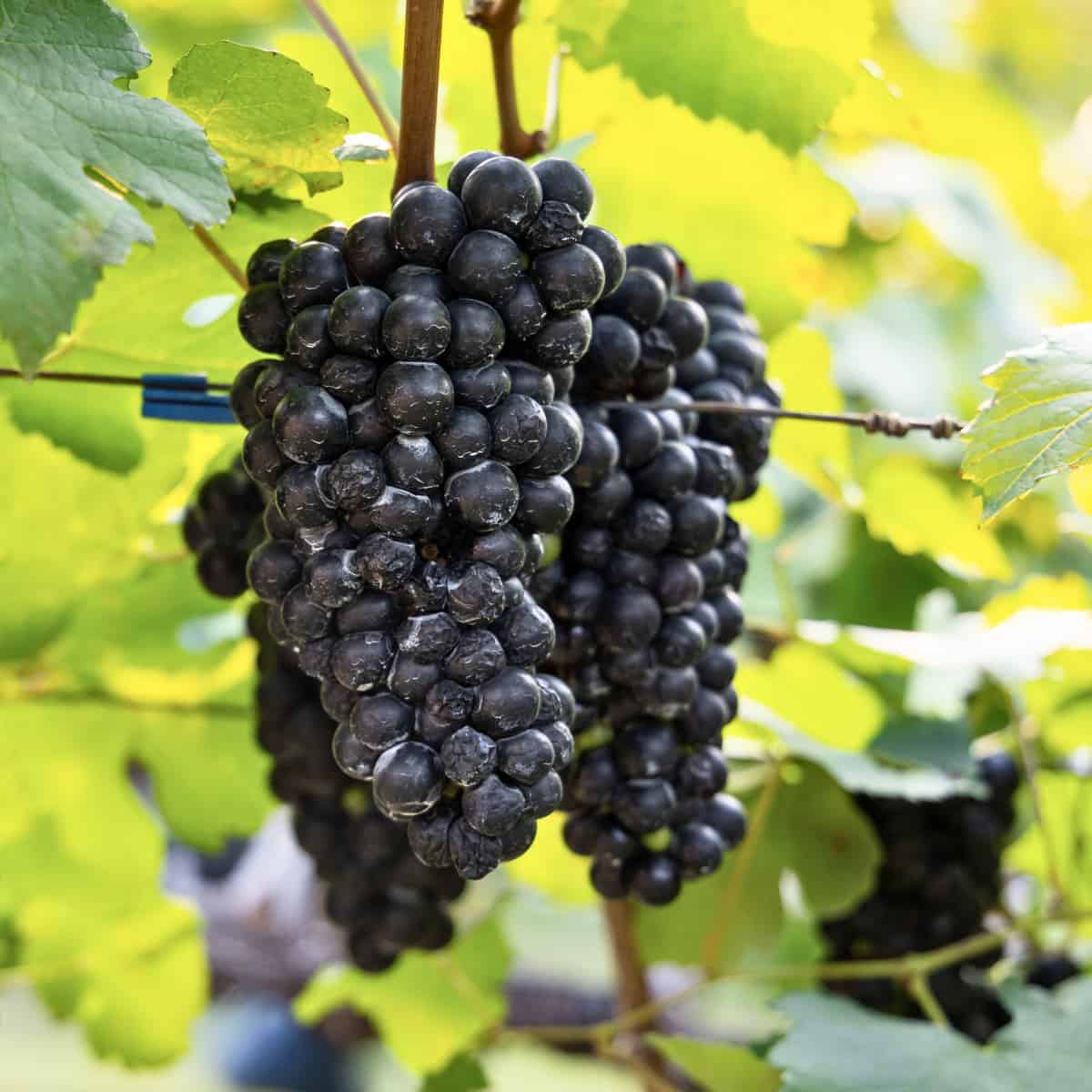



Climate change is affecting how grapevines photosynthesise, according to a review of research by Somkuwar & Dhole in Theory in Biosciences. The unique flavours of wine grapes are a complicated interaction of chemical processes, driven by the plant’s ability to capture energy from sunlight, water and carbon dioxide. The authors note that as light intensity and carbon dioxide levels rise, the biosynthesis of anthocyanins and tannins, chemicals that give wine some of its distinctive characteristics, declines.
Another problem is that grapes are ripening faster. When this happens, the sugar-to-acid ratio increases, and that’s a problem because the amount of sugar in the grape directly affects the alcohol concentration of the wine. The changes are significant. Compared to forty years ago, grape farmers are harvesting their crop two or three weeks earlier. The large-scale changes in climate are leaving their mark at a cellular level in grapes.
Somkuwar & Dhole looked at photosynthesis rates, chlorophyll content, and grape berry composition under various temperature conditions. They found a positive correlation in photosynthesis between 15℃ and 30℃. Beyond this the photosynthetic machinery breaks down, and there’s a negative correlation. However, even before this peak is reached the grapes suffer water stress, and enzymes begin working less efficiently, so the optimal temperature range for grapes is 22℃ to 27℃. Not all grapes are equal in how they deal with this stress. Somkuwar & Dhole say that Cabernet Sauvignon are better equipped for stress compared to Syrah/Shiraz grapes. Bad news if you’re fond of an Aussie Shiraz.
The vines’ responses to temperature stress highlight a larger challenge: as climate zones shift, the map of suitable growing regions is being redrawn. Like other plants, grapes are feeling the pressure to migrate, and that’s a major headache for the wine industry. Vineyards can’t simply migrate without causing some serious issues for viticulture. The problem is that wine isn’t purely about the grape. It’s also about the terroir, which encapsulates the topography, the biological community in the soil, farming practices and other factors. For some wines terroir is absolutely critical. Take Champagne, for example. If you want to have Champagne in the future, you need to find a way to grow Chardonnay, Pinot Noir and Meunier grapes in the Champagne region. Otherwise you’ll simply have a sparkling echo of a lost wine.
Somkuwar, R.G., & Dhole, A.M. (2025). Understanding the photosynthesis in relation to climate change in grapevines. Theory in Biosciences. https://doi.org/10.1007/s12064-025-00435-w
Cross-posted to Bluesky & Mastodon.
Image: Canva.