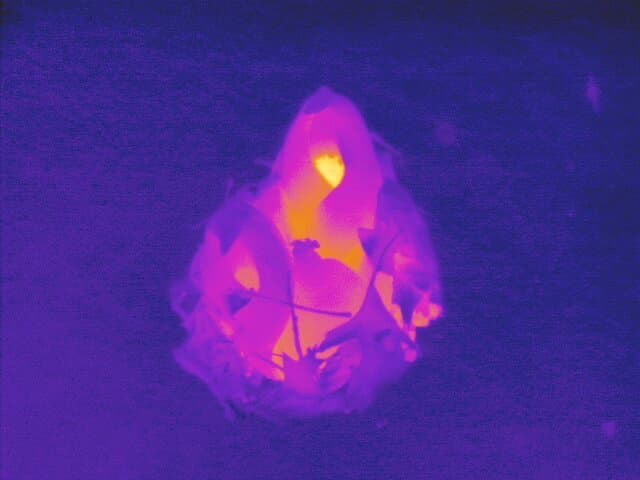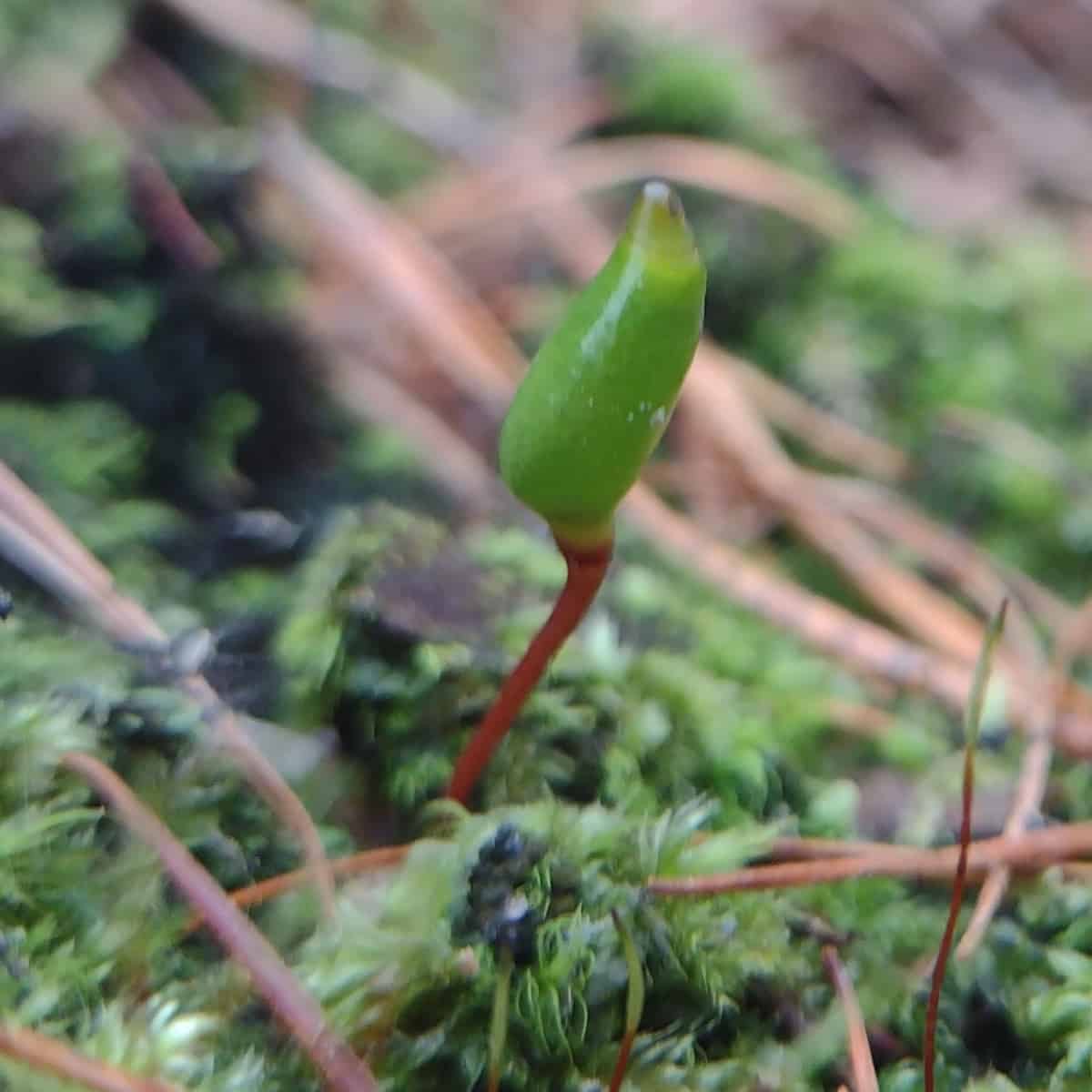



A lot of the time I can be shown an endangered plant, and not realise what it is, because I don't know what every plant in the world looks like. But Buxbaumia viridis is an endangered plant that I might accidentally tread on while looking for it. In my defence even experts might miss B. viridis a lot of the time, because a lot of the time the plant isn't really visible.
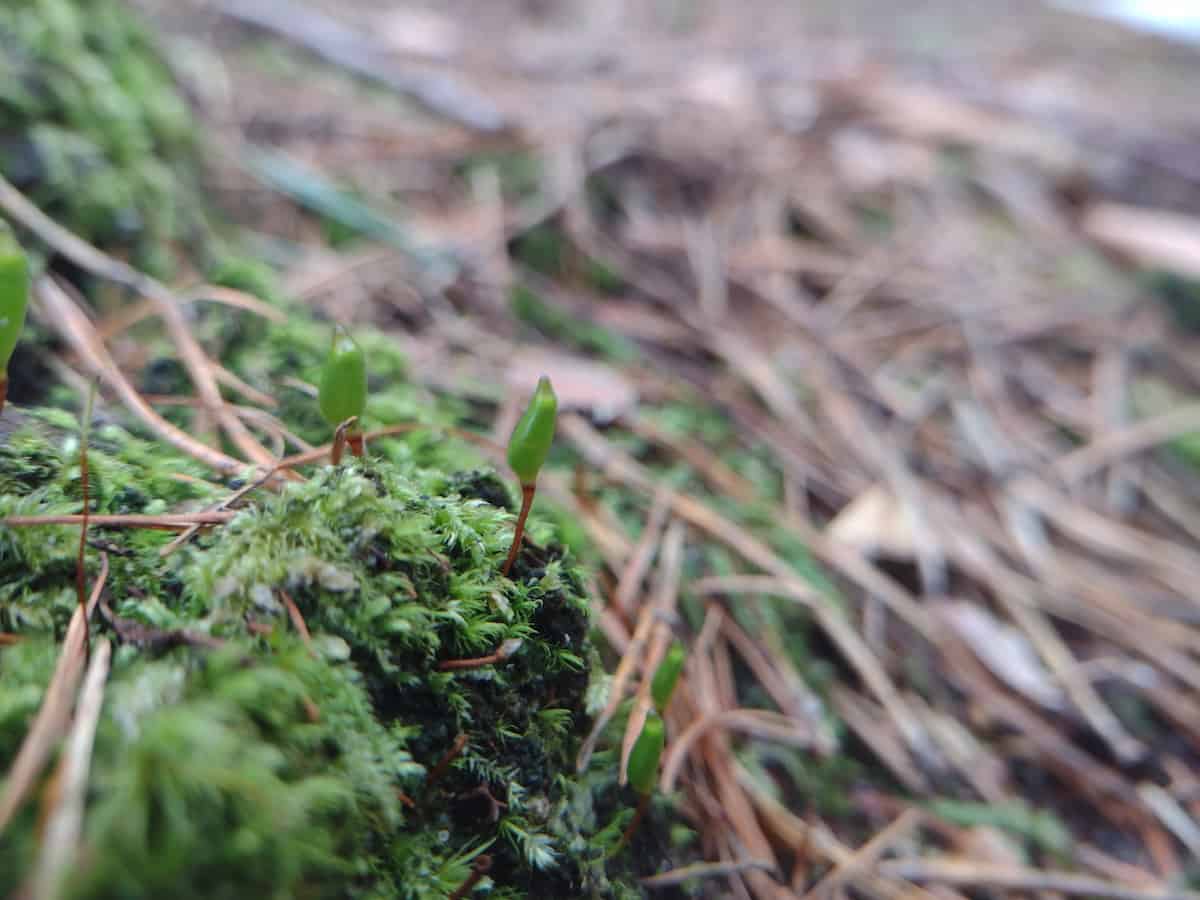
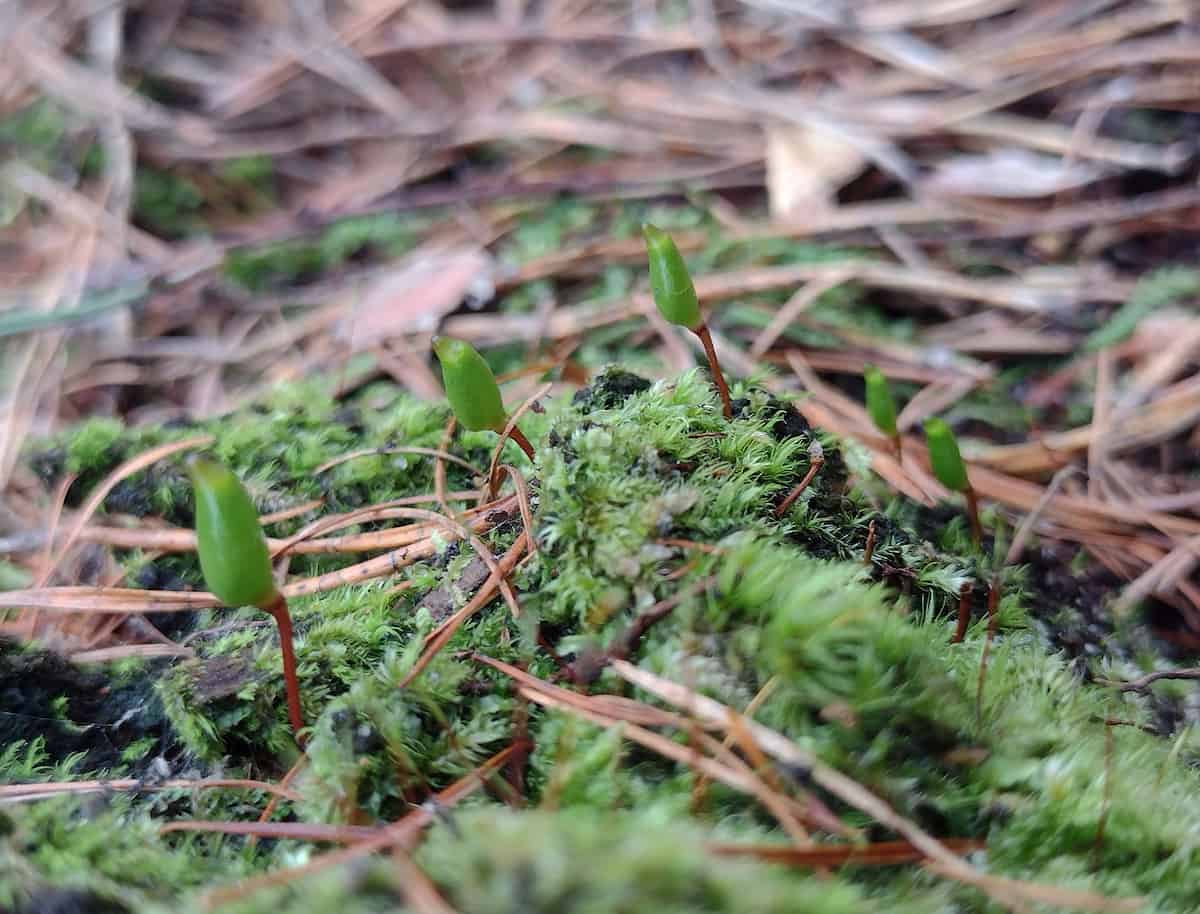
Mosses have alternating generations. One generation has male and female plants. This is called the haploid generation and the plant will have one set of genes, n. The plants of this generation are called gametophytes because it's a plant (-phyte) that produce gametes. When the female is fertilised, a new plant grows with genes from both parents, so it has 2n genes. This is the diploid generation, and the plants of this generation are called sporophytes, because they produce male and female spores that disperse to make the next haploid generation, and that's what these photos by Bartosz Czołczyński in Poland show.
In mosses it's normally the gametophytes that are the easiest part to see, but that's not the case for Buxbaumia viridis. The haploid generation is tiny. When fully grown, the male plant is a leaf and an antheridium, the male reproductive organ. The female plant will eventually produce a few leaves, but these are short-lived. Catching B. viridis in this stage is difficult as most of the time the moss prefers to live as protonema. These are microscopic thread-like strands of cells (you can see some Sphagnum protonema in this article). So unlike many other mosses, the sporophyte can't rely on a parent to provide its nutrients during its brief life. So how does it eat?
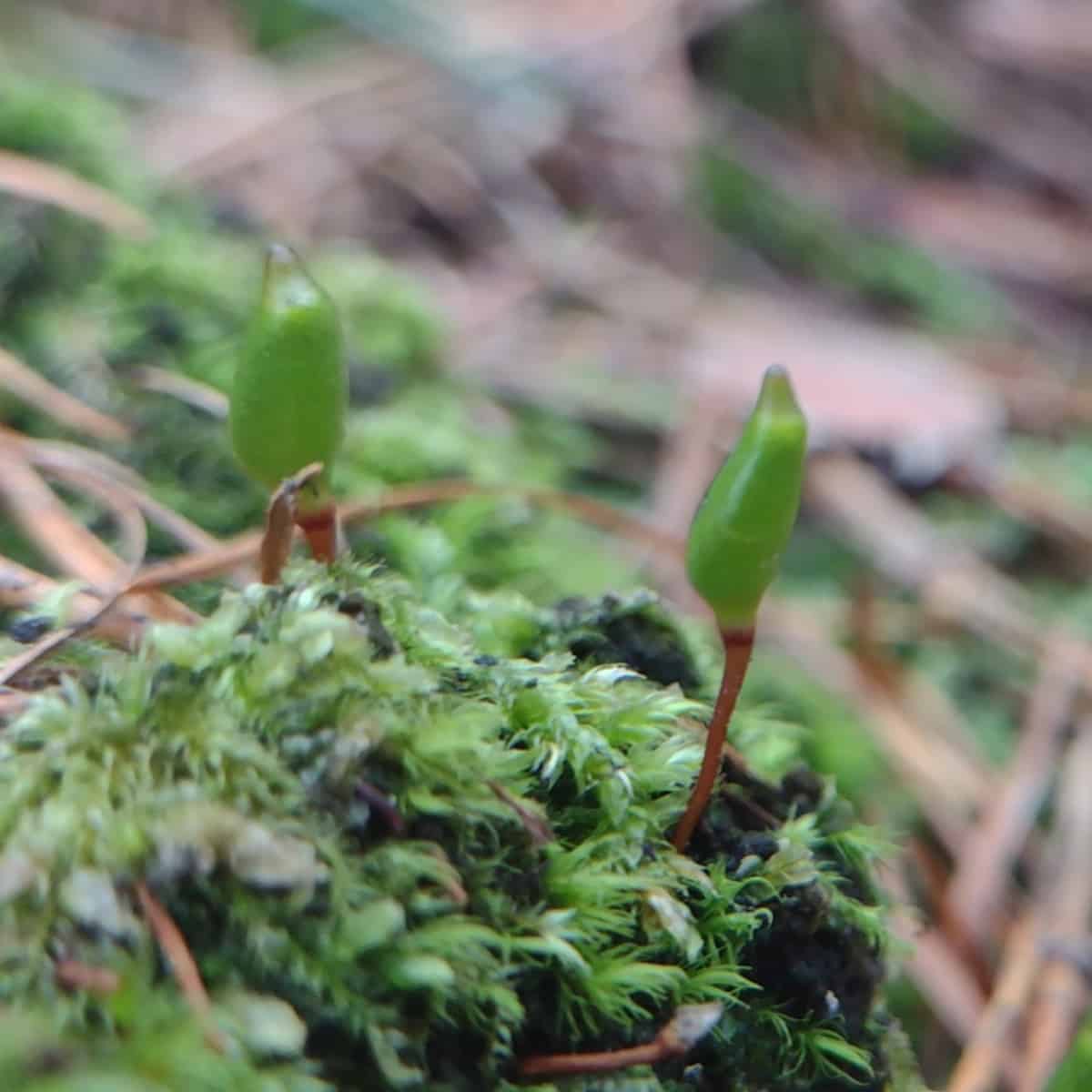
You can see from the photos that the sporophyte is green, which is a big clue that it can photosynthesise, but it still needs nutrients. It was thought that Buxbaumia viridis solves this by being saprotrophic. This is a word you might more associate with fungi, it means that it lives on dead material. It likes conifers, particularly Norway Spruce and Silver Fir and it's certainly saproxylic, living on dead wood, but it appears that it doesn't digest the dead wood directly. Matt Candeias says that: "it is far more likely that these mosses rely heavily on partnerships with mycorrhizal fungi and cyanobacteria for their nutritional needs." and I have no reason to contradict him.
Once the spores are spread, the sporophyte dies, and the new spores develop into more protonema.
Not surprisingly, for a moss that's so difficult to spot, there's some discussion about how endangered it is. Natcheva and colleagues conducted a study in Bulgaria, where it was Red-listed as Near Threatened and found it in both managed and unmanaged forests. They argue it's not rare, but has been overlooked partly due to how difficult it is to spot and how little is known about its ecology. Spotting this moss helps plug some of those gaps in knowledge.
Cover image: Buxbaumia viridis by Bartosz Czołczyński / iNaturalist CC0