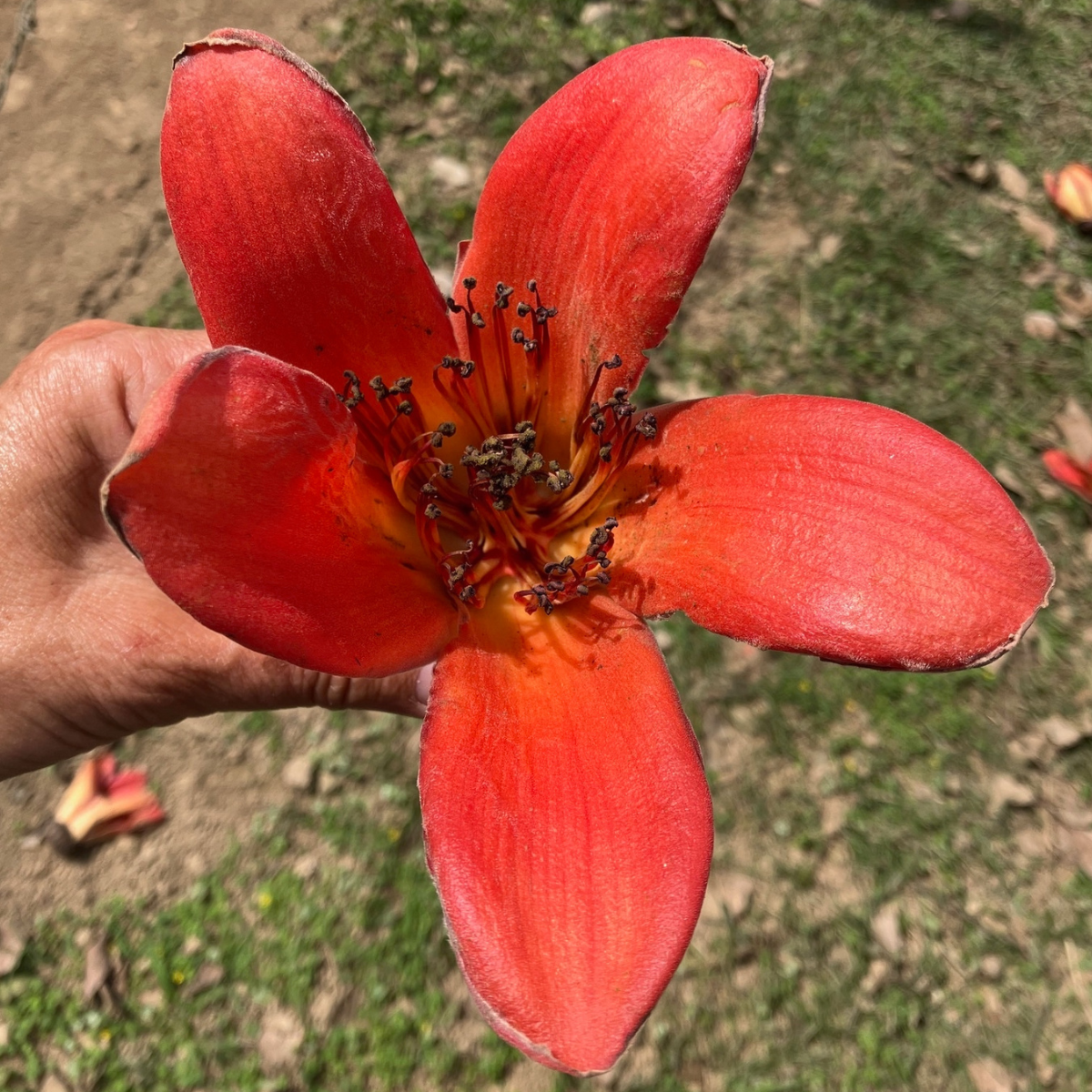



Bombax ceiba is one of those trees that demands attention. Native across tropical and subtropical Asia, from India and southern China through to northern Australia, it can reach thirty metres or more. Its straight trunk is reinforced in youth by spines that deter animals from making a meal of its bark, and possibly to stop them from climbing the tree to feast on its flowers. In the dry season, the tree drops its leaves entirely. Then the bare grey branches erupt into flower. The blooms are large, fleshy, and range from orange to scarlet.
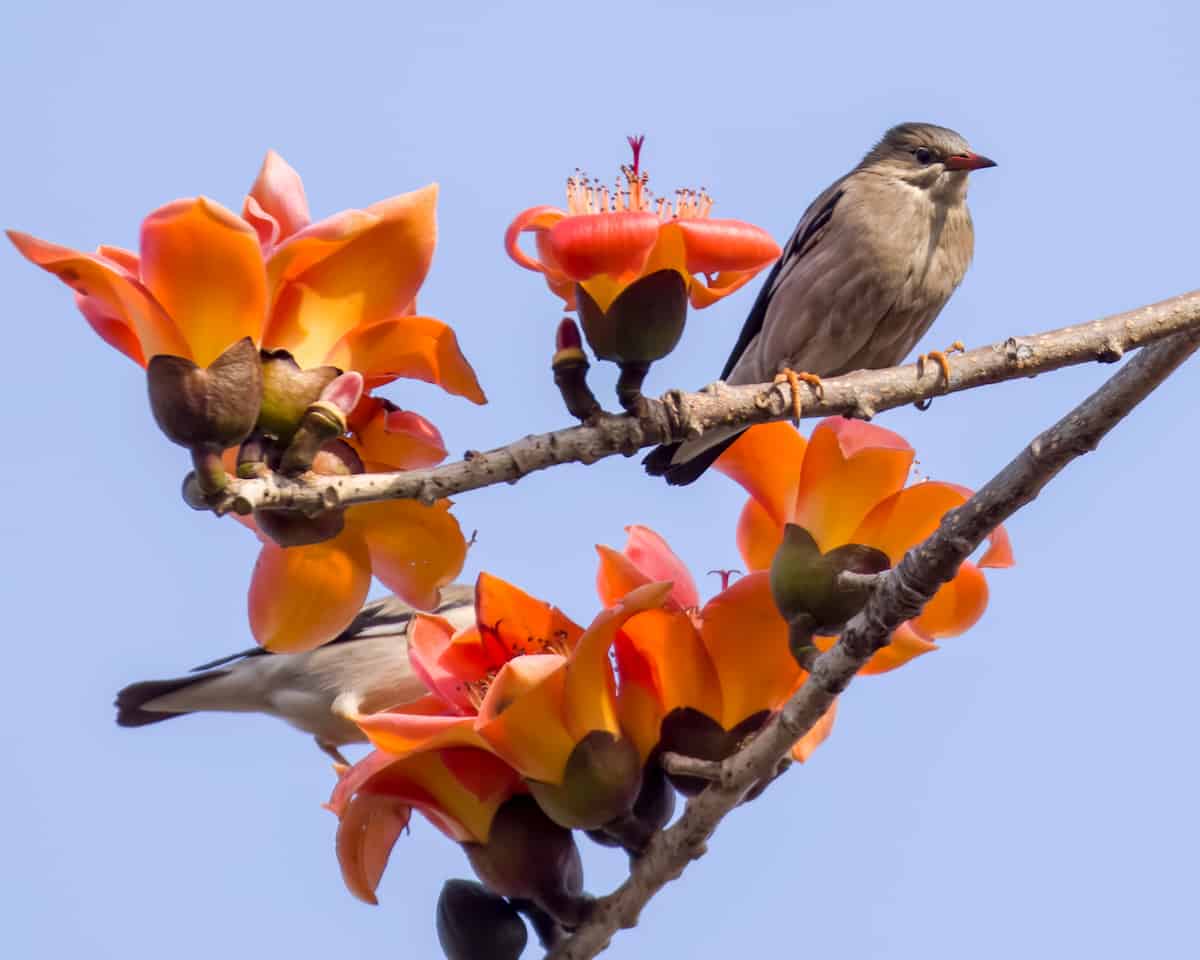
The flowers are built for big pollinators. Each bloom produces copious nectar, and the main visitors are birds and bats rather than insects. In parts of India, birds as big as blackbirds and mynas can crowd the flowering trees, while in Southeast Asia, fruit bats and flying foxes are important nocturnal pollinators. The flowers are robust enough to withstand rough handling, yet they only last a day. After pollination, the tree produces large capsules that split open to release seeds embedded in a mass of silky white fibres, giving the tree one of its common names: the red silk-cotton tree.
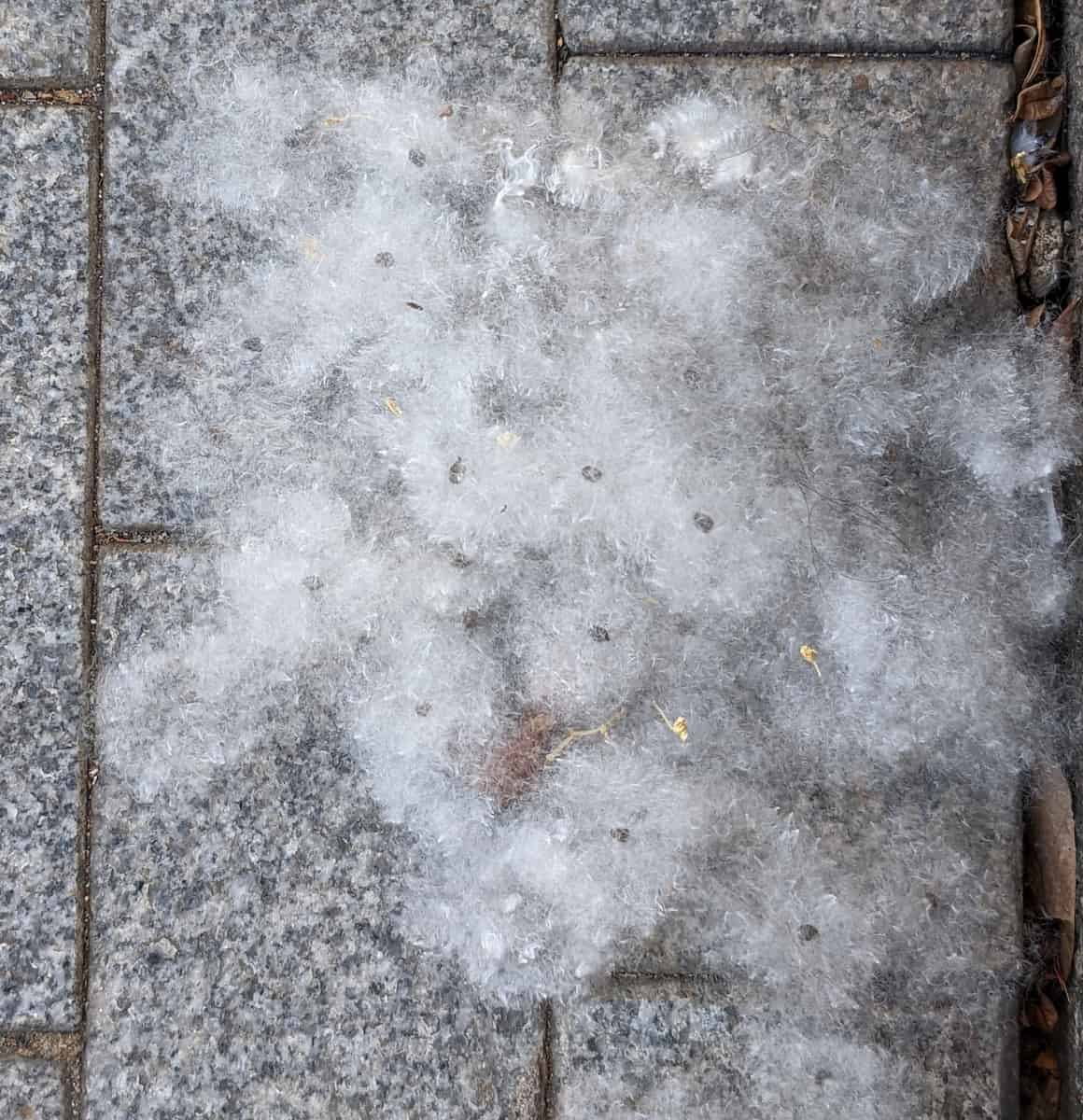
The kapok-like fibre has been used for centuries to stuff pillows, mattresses, and life jackets, though it has largely been displaced by synthetic materials. But Bombax ceiba's usefulness extends well beyond fibre.
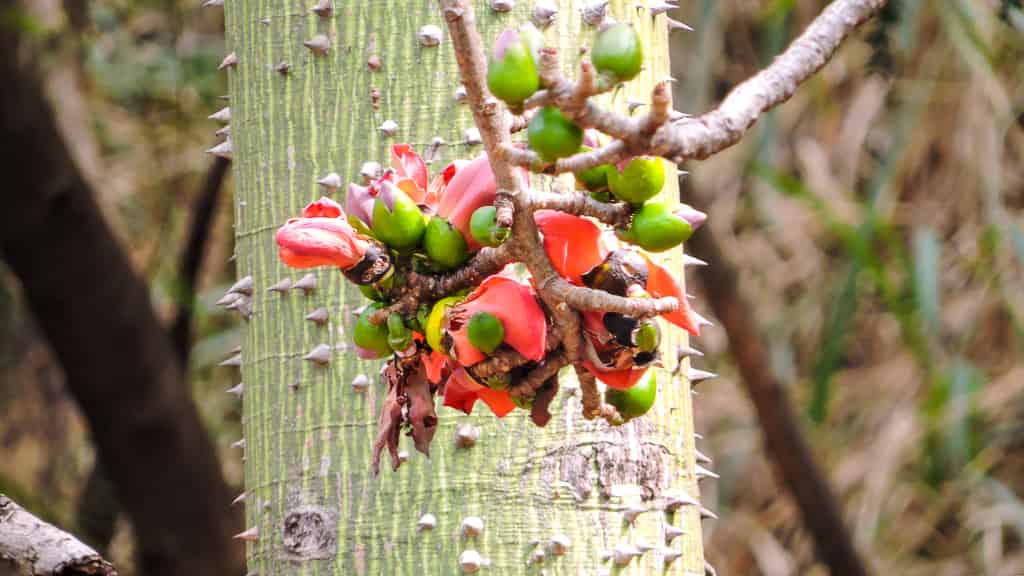
It has been used as a famine food, and the gum that exudes from the bark, known as mocharas, has its own medicinal tradition. Other parts of the tree have their own uses in Ayurveda and Chinese medicine, making it a culturally important plant. It is the official flower of Guangzhou and in Hong Kong, old Bombax ceiba specimens are registered heritage trees.
Cover image: Bombax ceiba by Cathy Rogers / iNaturalist CC BY-NC