


Plants and pollinators work like pieces of a puzzle: when the fit is just right, the chances of successful pollination skyrocket. A flower’s shape, colour, scent, and timing all evolved as clues to attract the right visitor. These combinations of traits are called pollination syndromes, and they help scientists predict which animal is likely doing the job.
This evolutionary matchmaking ensures that pollen sticks to the right animal and reaches another flower of the same species—a must for plants that can’t fertilise themselves and rely entirely on cross-pollination.
But nature doesn’t always follow the rules. Some plants seem to “mix pieces” of different puzzles, attracting more than one type of pollinator. This flexibility can be a lifeline when one kind of visitor is in short supply, for example, during a season when bats are scarce or in regions where hummingbirds are more common.
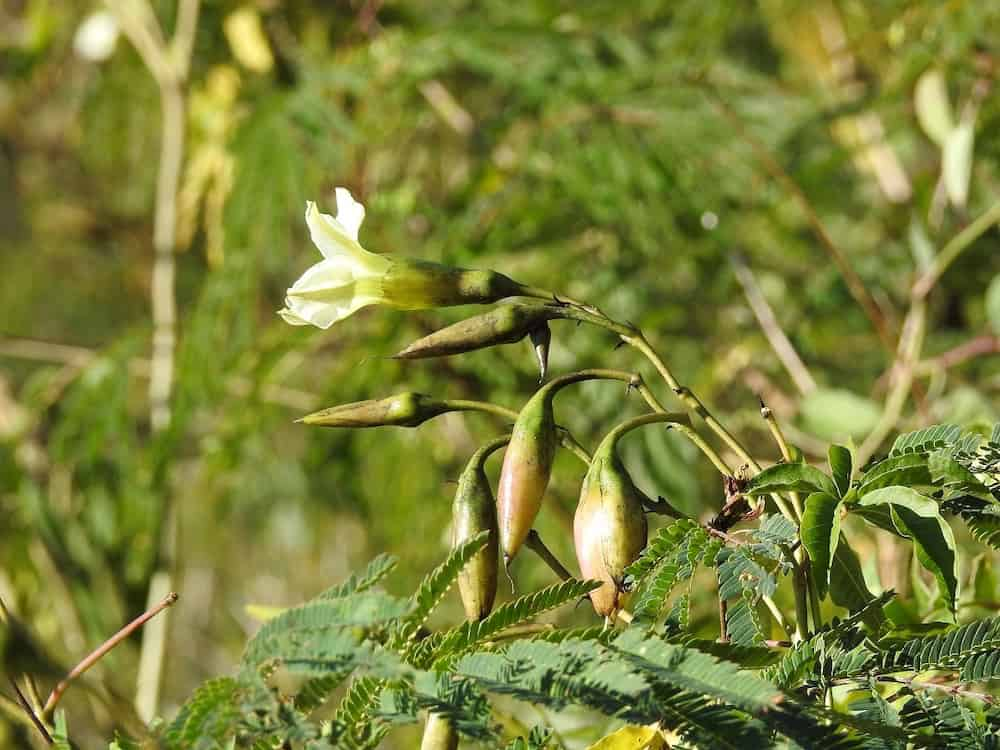
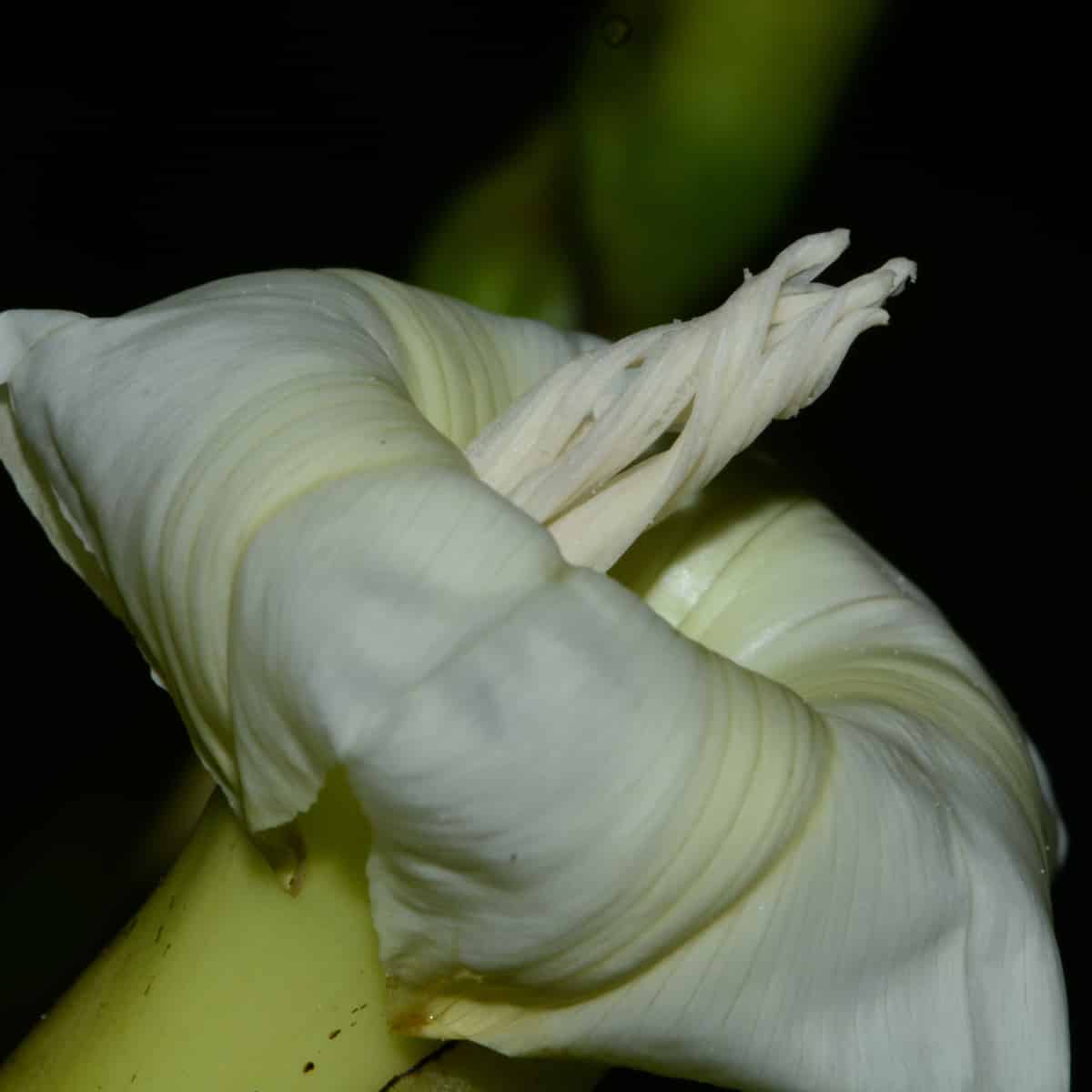
This becomes clearer when we look at Merremia platyphylla, a tropical vine with pale flowers that open at dusk, ooze nectar, and carry a slightly musky scent. These are exactly the kinds of traits that bats have evolved to seek out. However, surprisingly, there had never been a confirmed record of bats pollinating any species in its genus—or even in its entire plant tribe.
This knowledge gap caught the attention of researcher Ernesto Medina and his team. So, they conducted a study in Mexico to observe pollinators in action and test the effectiveness of each one.
The study revealed that flowers open in the late afternoon and peak in nectar production just before nightfall—timed perfectly for bats. But this early opening also gives bees and hummingbirds a chance to sneak in first. Since each flower only lasts one night, the timing of visits is critical.
The chemical analysis showed that the flowers’ scent changes over time. In the afternoon, they release compounds like benzaldehyde and limonene, which appeal to daytime pollinators. At night, the mix shifts to attract bats, with 1-ethenyl-4-ethylbenzene and 4-ethylacetophenone being released. The nectar gives off its own set of distinct aromas.
By filming flower visits and capturing pollinators, the team confirmed that bees, hummingbirds, moths, butterflies, and bats all visited the flowers. But only bees, hummingbirds, and bats touched the flower’s reproductive parts. Of these, bats proved to be especially effective: several captured individuals were dusted with Merremia platyphylla pollen.
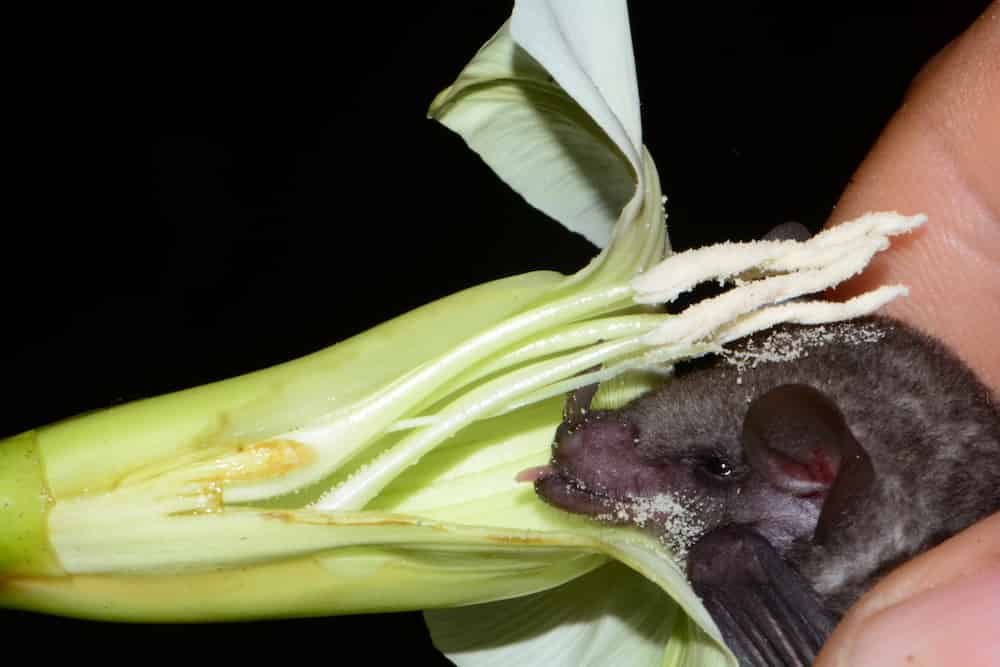
Pollination experiments revealed something crucial: the plant can’t pollinate itself—not even with human help. It needs animal visitors to produce fruit. Cross-pollination by hand led to the highest fruit set (80%), followed by nocturnal visitors like bats (50%), and then daytime visitors like hummingbirds (24%).These findings suggest that Merremia platyphylla relies on a mixed pollination strategy: bats are its primary pollinators, but hummingbirds can step in when bats are scarce. This kind of flexibility isn’t just a clever trick—it may be key to survival in a rapidly changing world. As pollinators disappear or shift their ranges due to habitat loss and climate change, plants like Merremia platyphylla remind us that resilience often lies not in specialisation but in the ability to adapt.
READ THE ARTICLE:
Medina, E., Rosas‐Guerrero, V., Lara, C., Martínez‐Díaz, Y., & Cuevas, E. (2025). First record of bat‐pollination in Merremia (Convolvulaceae). Plant Biology. https://doi.org/10.1111/plb.70016

Victor H. D. Silva is a biologist passionate about the processes that shape interactions between plants and pollinators. He is currently focused on understanding how urbanisation influences plant-pollinator interactions and how to make urban green areas more pollinator-friendly. For more information, follow him on ResearchGate as Victor H. D. Silva.
Portuguese Translation by Victor H. D. Silva.
Cover picture by Victor Rosas-Guerrero.