


Plants are incredibly diverse, and so are botanists! In its mission to spread fascinating stories about the plant world, Botany One also introduces you to the scientists behind these great stories.
Today, we have Dr Alexander Bowles, a Glasstone Research Fellow at the University of Oxford (United Kingdom). His research focuses on the diversification of plants and algae over the past billion years, exploring the evolutionary processes that have led to their extraordinary diversity. He is particularly interested in how the evolutionary history of plants has impacted other organisms. Alex combines fieldwork, genomics, and phylogenetic analyses to uncover the hidden patterns and processes underlying the evolution of plants and algae. Beyond research, he shares his passion for plants through outreach and engagement. Readers can follow his work via Bluesky as @alexmcbowles.bsky.social, where he posts about ongoing research, discoveries, and insights into the plant world.
What made you become interested in plants?
I have always been curious about the natural world and the role plants play in sustaining it, but my professional interest developed later in my academic journey. After completing an MSc in Ecology, Evolution and Conservation, I was unsure whether to pursue a PhD. I was fortunate to secure an internship at Royal Botanic Gardens, Kew, where I worked on the Plant and Fungal Trees of Life (PAFTOL) project. Seeing the incredible diversity of plants in Kew’s living and herbarium collections, and thinking about them from an evolutionary perspective, was genuinely inspiring. It made me reflect on the deep history of life on Earth and the processes that have shaped it. From that point on, I knew I wanted to contribute to advancing our understanding of plant evolution through a PhD.
What motivated you to pursue your current area of research?
My internship at Royal Botanic Gardens, Kew exposed me to researchers who were deeply passionate about understanding plants and their wider significance. Seeing how they approached scientific questions — with curiosity, rigour and creativity — strongly influenced me. As I began my PhD, I discovered how much I enjoyed designing experiments and investigating unanswered questions in plant evolution. I came to see research as a form of problem-solving — piecing together evidence through careful analysis to uncover previously untold stories about the history of life. Studying plant evolutionary biology, where deep time frames every question, has also shaped how I think about the present and our place within the natural world. This intellectual challenge and perspective are what continue to motivate me in my career.
What is your favourite part of your work related to plants?
One of my favourite aspects of working with plants is the sheer number of unanswered questions they present. Despite their fundamental importance to life on Earth, plants remain remarkably underexplored. Their diversity — in form, function, and evolutionary history — means there is always something new to uncover. I find the sense of discovery particularly exciting: identifying a previously unrecognised adaptation or understanding how a lineage evolved a novel trait feels like piecing together part of a much larger story. That constant opportunity to learn and reveal something previously unknown is deeply motivating and makes working in plant science both intellectually challenging and immensely rewarding.
Are any specific plants or species that have intrigued or inspired your research? If so, what are they and why?
I have always been interested in plants across the full breadth of the green lineage, from algae to angiosperms, because every species carries a unique evolutionary story. Glacier algae particularly fascinate me: these microscopic organisms form dark purple patches on ice surfaces in polar and alpine regions, where they not only survive but actively shape their ecosystem by influencing glacier melt. Their adaptations to intense light, freezing temperatures, and nutrient limitation raise compelling evolutionary questions. I have also been interested in the evolution of stress tolerance in land plants. A striking example is Deschampsia antarctica, one of only two flowering plants native to Antarctica. The delicate green shoots of this grass rise from snow and rocky soil, surviving extreme cold, desiccation, and high ultraviolet radiation. Studying such species helps reveal the genetic and physiological mechanisms that enable survival at the limits of life.

Could you share an experience or anecdote from your work that has marked your career and reaffirmed your fascination with plants?
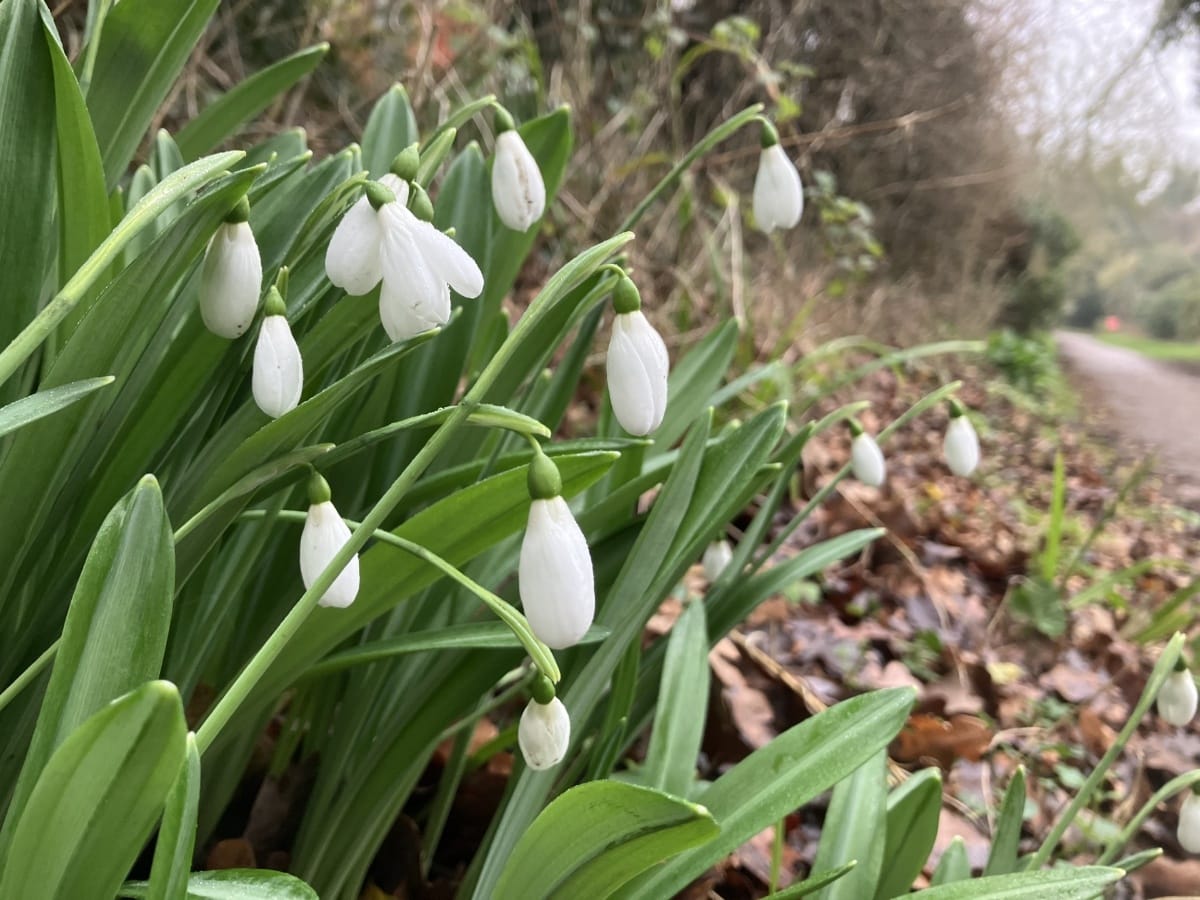
Rather than a single moment, one experience that continually shapes my fascination with plants is my daily walk. I slow down, noticing leaves, flowers, and subtle growth patterns, letting the rhythm of walking spark new questions about form, function, and adaptation. Here in rainy Oxford, snowdrops are just finishing, catkins are appearing on bare branches, and winter aconites and hellebores are brightening the undergrowth. Soon, crocuses and daffodils will signal the first signs of spring. These small encounters — ordinary yet extraordinary in their own way — constantly remind me that every plant has a story to tell, whether it’s evolutionary, ecological, or physiological. This daily ritual not only deepens my appreciation for the botanical world but also inspires the curiosity and care that drive my research.
What advice would you give young scientists considering a career in plant biology?
My main advice is to choose a topic that genuinely excites and motivates you. Curiosity is the engine of research, and passion will carry you through the inevitable challenges of experiments, fieldwork, or data analysis. Explore widely early on — from algae to flowering plants, from molecular mechanisms to ecological interactions — to discover what truly captures your imagination. Seek out mentors, internships, and collaborations; working alongside experienced researchers will not only teach practical skills but also inspire new perspectives. Finally, remember that science is as much about asking questions as finding answers. Be open to surprises, embrace failures as learning opportunities, and celebrate small discoveries along the way. A career in plant biology is incredibly rewarding for those who stay curious.
What do people usually get wrong about plants?
Plants are often seen as background characters, mere scenery to the animal world. In reality, plants are endlessly fascinating and active participants in ecosystems. They sense and respond to their environment, communicate chemically, compete and cooperate, and drive the flow of energy and nutrients that sustain life. The Venus flytrap snaps shut in milliseconds to capture prey, Acacia trees enlist ants as bodyguards, and Rafflesia arnoldii, the world’s largest flower, survives as a parasitic plant, drawing nutrients from its host with no leaves, stems, or roots of its own. These examples show that plants are innovators, strategists, and survivors. Appreciating their complexity not only deepens scientific understanding but also inspires awe for the hidden ingenuity of the plant world.