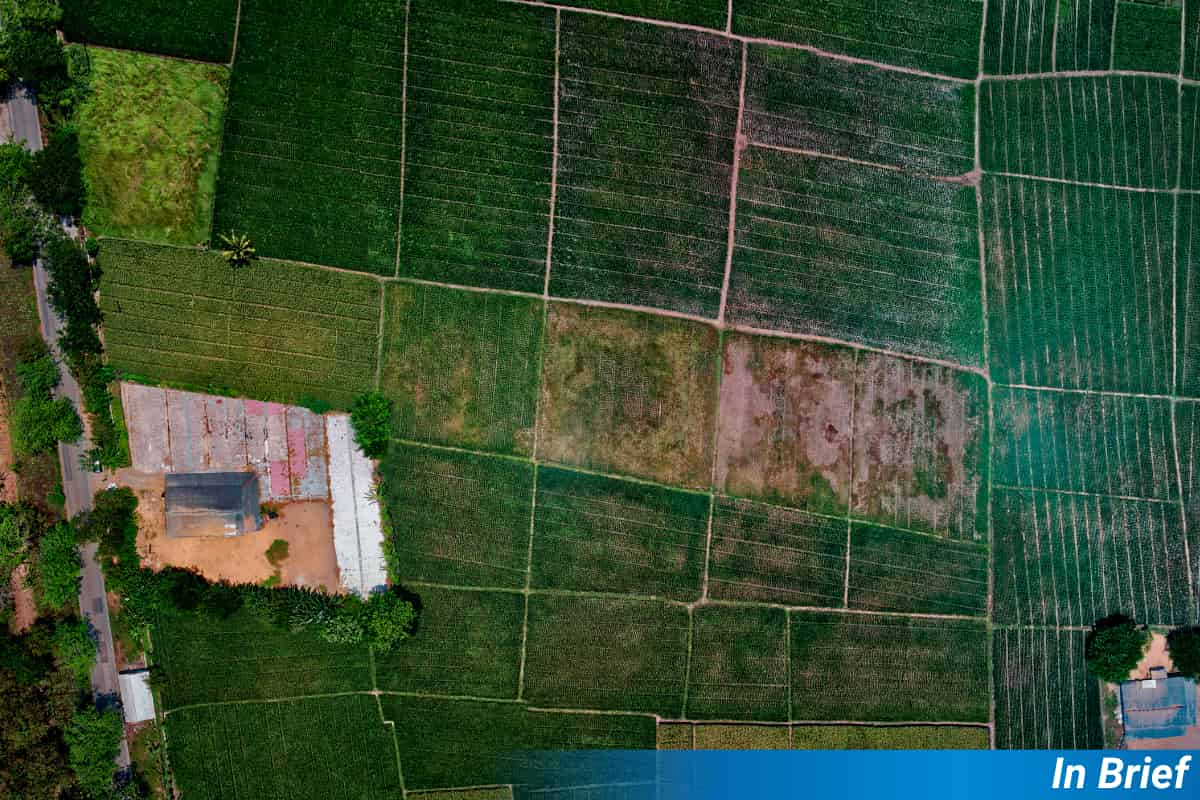



Gillespie and colleagues have created an AI tool called Deepbiosphere to track plant biodiversity. Using satellite images and data from citizen scientists, this deep learning model has mapped over 2,000 plant species across California. It outperforms traditional methods, spotting both towering redwoods and wildflowers with high accuracy. Deepbiosphere could revolutionise global efforts to monitor plant life, helping us understand how climate change and human activity are reshaping ecosystems.
The authors claim that Deepbiosphere outperforms traditional species distribution models, achieving higher accuracy. It can map species at up to a few metres resolution and accurately identify plant communities. The model detected both mature and young regrowth in redwood forests, showing the lasting effects of deforestation. It can also identify rapid changes in plant communities after events like wildfires, demonstrating its potential for monitoring biodiversity changes over time.
Gillespie and colleagues developed a deep learning model, Deepbiosphere, using a modified convolutional neural network architecture to fed with combined aerial imagery from the National Agriculture Imagery Program with over 650,000 plant observations from citizen scientists across California. The model was trained to predict the presence of 2,221 plant species. Its performance was compared to traditional modeling approaches like MaxEnt and Random Forest.
Plant biodiversity is changing rapidly due to habitat destruction and climate change. Traditional methods lack the spatial and temporal resolution to detect these rapid changes for individual species. Deepbiosphere’s approach, combining deep learning with remote sensing, offers new possibilities for high-resolution biodiversity monitoring.
Ultimately, we envision a paradigm shift toward open-source foundation models that are continuously trained and improved with new remote sensing data, citizen science observations, and data modalities as they become available. Achieving this from public airborne or satellite imagery and growing citizen science observations will make biodiversity monitoring more accessible, thus advancing local and global nature conservation goals.
Gillespie, L. E., Ruffley, M., & Exposito-Alonso, M. (2024). Deep learning models map rapid plant species changes from citizen science and remote sensing data. Proceedings of the National Academy of Sciences, 121(37), e2318296121. https://doi.org/10.1073/pnas.2318296121 (OA)