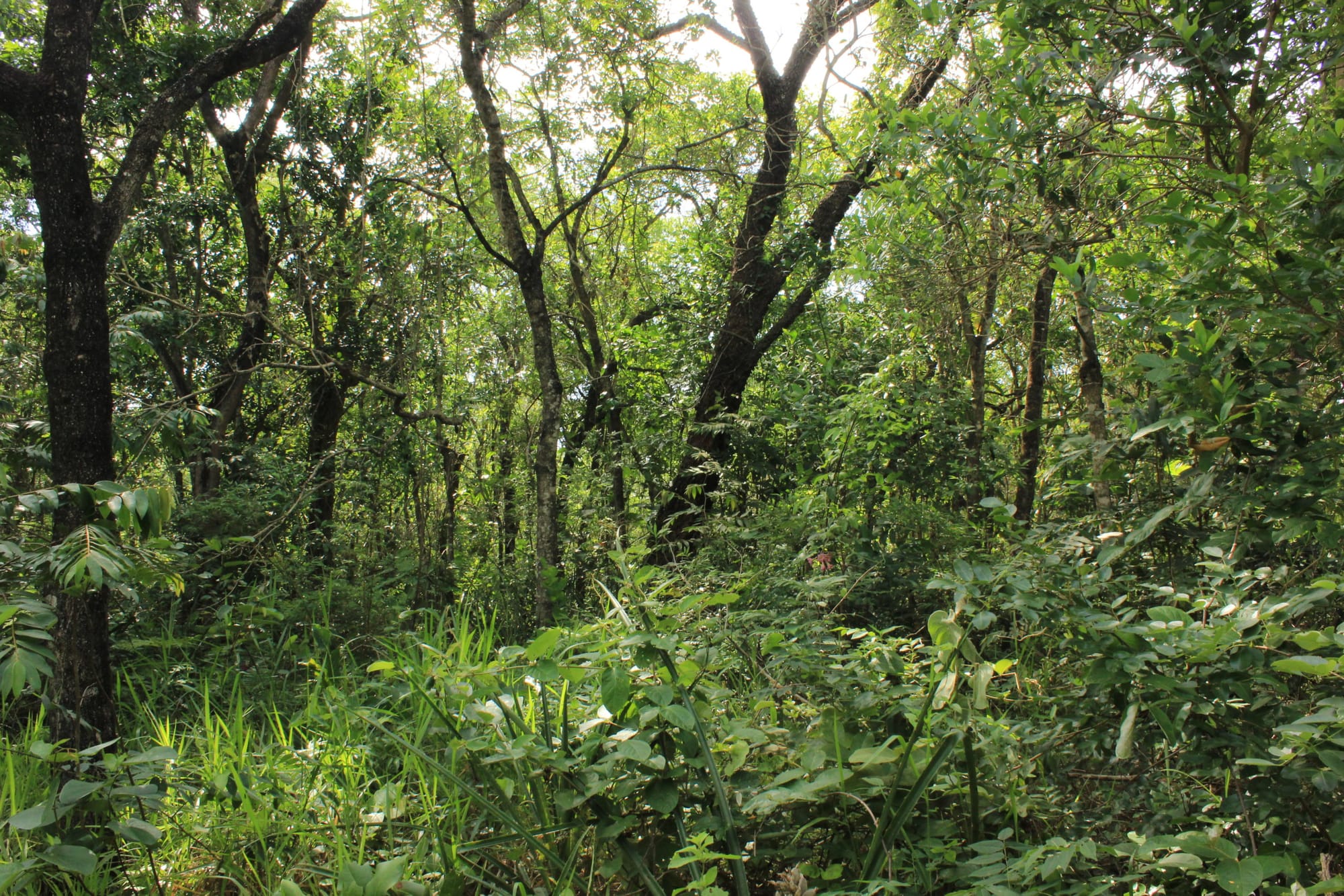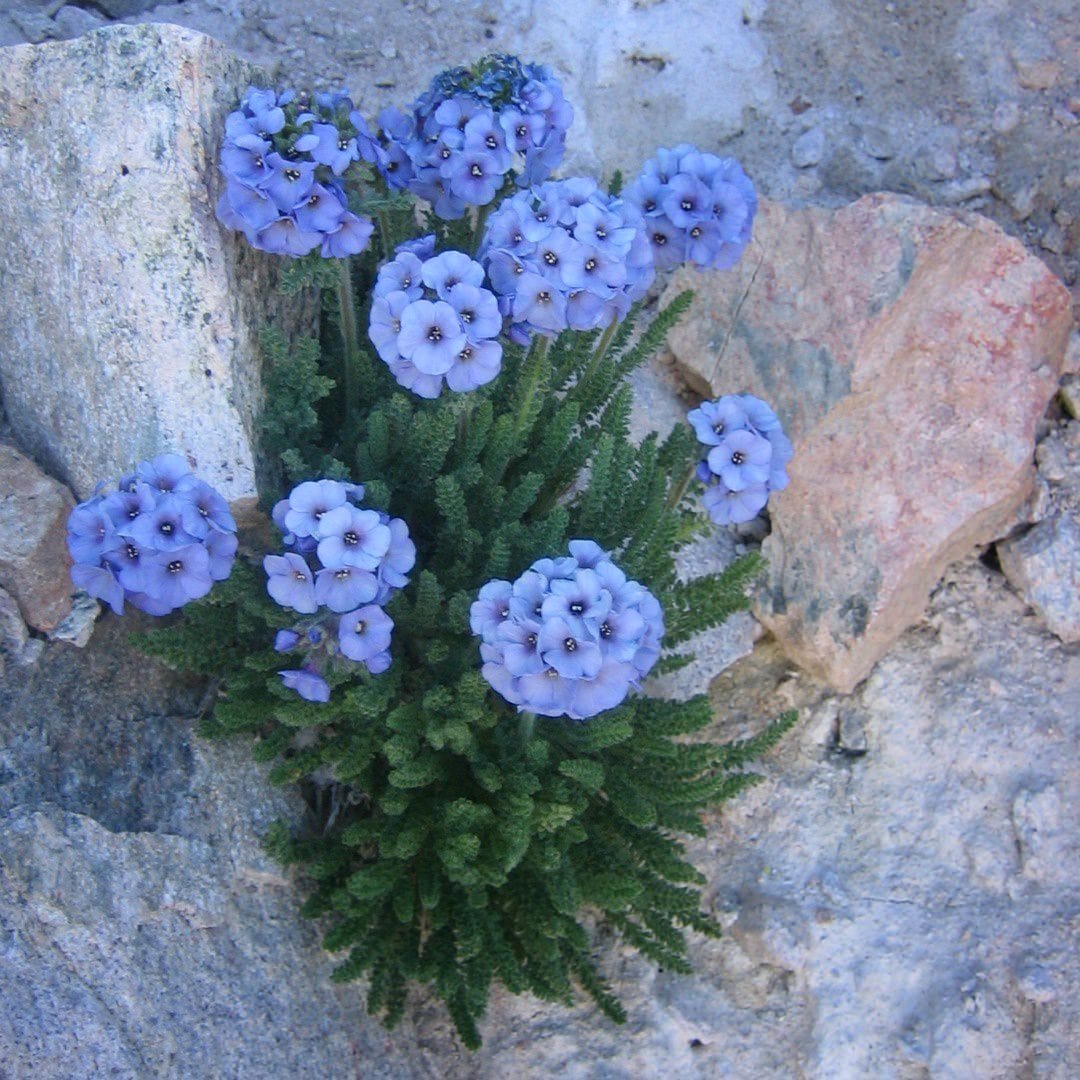


Increasing temperatures mean that while plants don’t actually move, the range of the species can. New plants can successfully germinate in areas that previously were too cold for them to be viable. That means some plants can find they have new neighbours in their patch, and with new neighbours can come new problems. There’s a new paper exploring this in Ecology and Evolution “How shrub encroachment under climate change could threaten pollination services for alpine wildflowers: A case study using the alpine skypilot, Polemonium viscosum” by Kettenbach and colleagues.

P. viscosum has a few names. There’s sticky polemonium or dwarf Jacob’s Ladder. Wikipedia also suggests skunkweed, which might lead to a misunderstanding in some places. It’s an understandable confusion as is turns out that Polemonium, whatever you call it can have flowers that smell sweet or ‘skunky’.
It lives in the Rocky Mountains, above 500 metres in the Canadian Rockies or 1600 feet in the US Rockies. It likes dry, rocky territory and it hasn’t had to cope with Salix glauca or Salix brachycarpa – willows – until recently. However, changing climate means there’s the opportunity for Salix to expand its range and the plasticity of Salix means that it’s very good at taking advantage of new opportunities. And it has. Polemonium is now in competition with its new Salix neighbours, and they have three ways of disrupting the native plant.
1. Salix and Polemonium co-flower
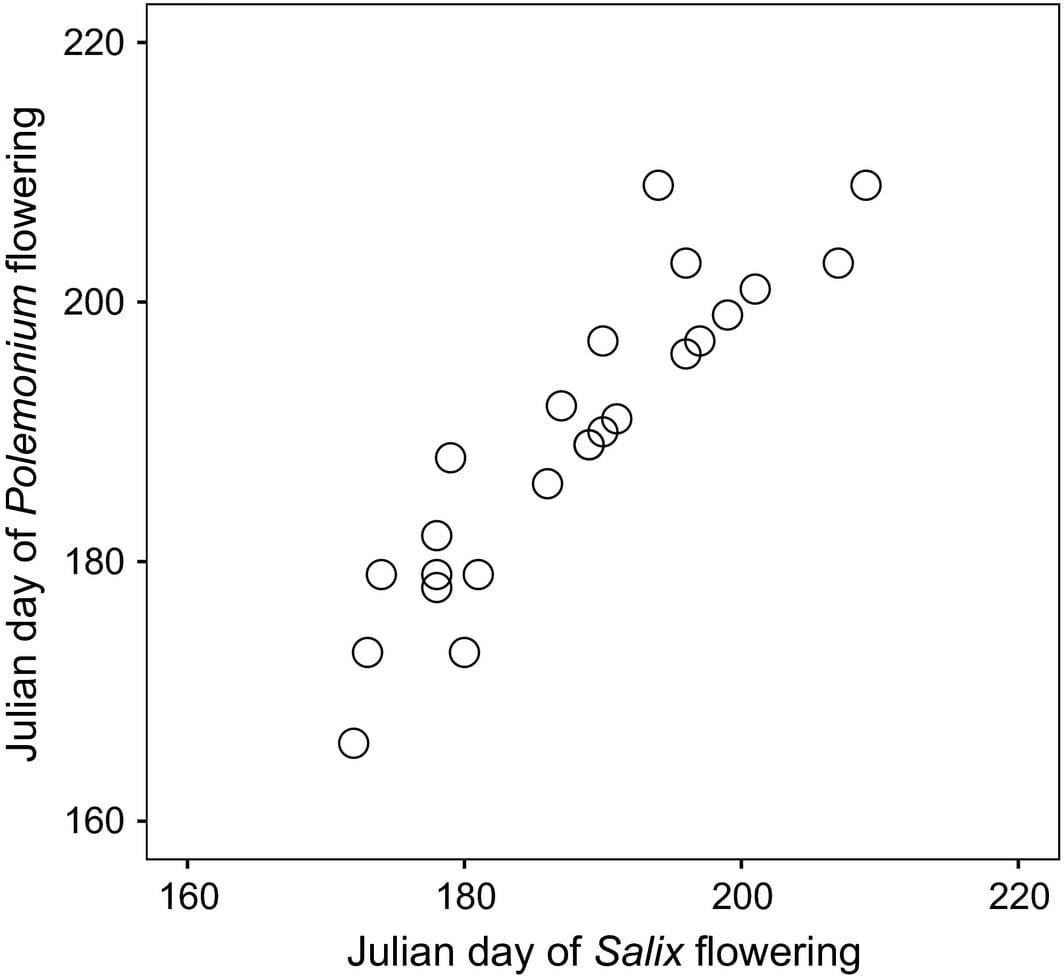
Co-flowering means flowering at the same time. This seems such a common thing that it’s hardly worth having a name for it. I can look out of my window now and see lots of plants co-flowering. In this case, it matters as not all the flowers are for the same pollinators. Each one is attracting their own cohort of pollinators. There may be some overlap, but they might open at different times of day to avoid direct competition. If a plant suffers from co-flowering there is an evolutionary pressure to change flowering time to avoid that competition. Polemonium hasn’t had the time to adapt to its new Salix competitors so co-flowering means it’s up against a very showy display when Salix flowers and that leads to the next problem.
2. Salix and Polemonium share pollinators
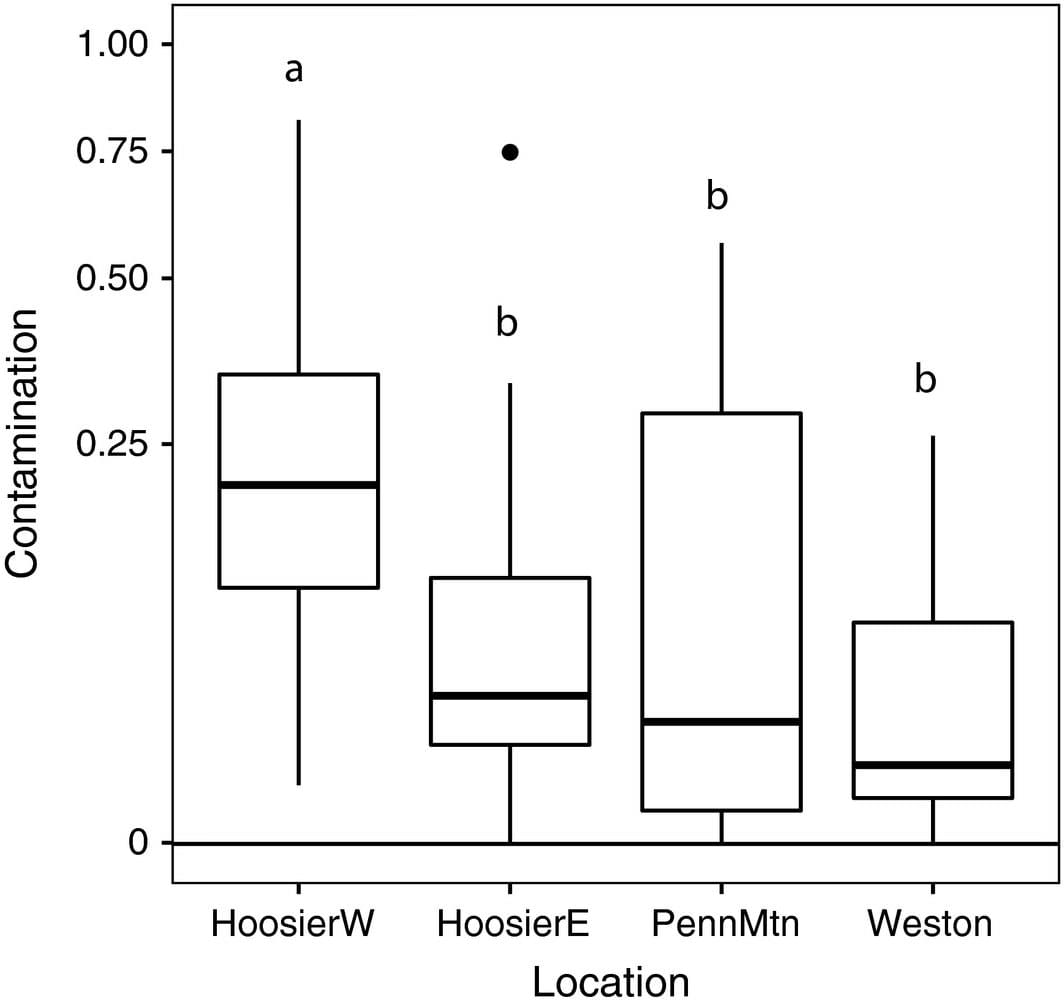
Polemonium attracts bumble bees. So does Salix, and bumble bees love to visit Salix. It means that when a bee arrives at a Polemonium flower, there’s a very good chance it’s carrying Salix pollen. Kettenbach and her colleagues found that all Polemonium flowers had some Salix pollen between 4% to 25%. Polemonium flowers can’t do anything with that Salix pollen, and a pollinator carrying Salix pollen is also likely to return to Salix, meaning the pollen you send out might well end up somewhere it’s wasted. It might sound that the Salix pollen a pollinator brings in is useless but in fact, it’s worse than that.
3. Salix pollen is a contraceptive for Polemonium flowers
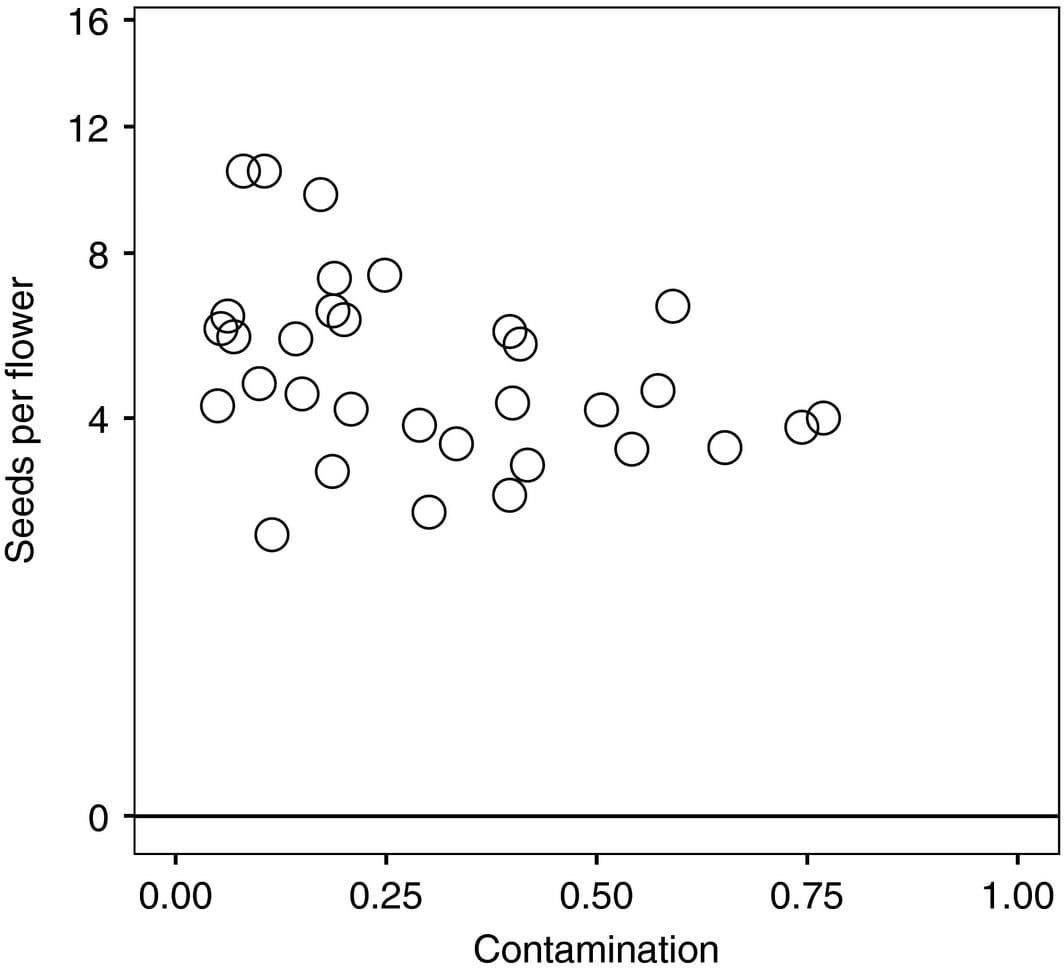
It’s not a surprise that pollen from another species reduces reproduction. There was a paper about that in Annals of Botany recently. It’s not quite clear yet how Salix is a contraceptive. Kettenbach and her colleagues tested to see if it was a simple barrier method. If a stigma is coated in Salix pollen then maybe the Polemonium pollen is blocked. So they compared Polemonium left to pollinate naturally with Polemonium to which they had delivered extra conspecific pollen. They also chose some flowers to receive extra Salix pollen. What they found is that the conspecific pollen made little difference to the seed set in the flower – but adding Salix pollen did. From this they conclude there is some postpollination process going on reducing the fertility of Polemonium flowers.
The reason this matters from a conservation perspective is that not only is Polemonium having to cope with a new competitor, but also climactic conditions, particularly if they are creating a dryer environment, are likely to make the effects of any foreign pollen worse. Kettenbach et al. argue that plant recruitment is difficult at the best of times in alpine environments, and this conflict with Salix could make life much more difficult for Polemonium and other wild flowers. They suggest identifying natural topographic features to block the spread of Salix could help create refugia for plants on mountains. You can pick up the article as an Open Access paper from Ecology and Evolution and see if you agree with their conclusions yourself.