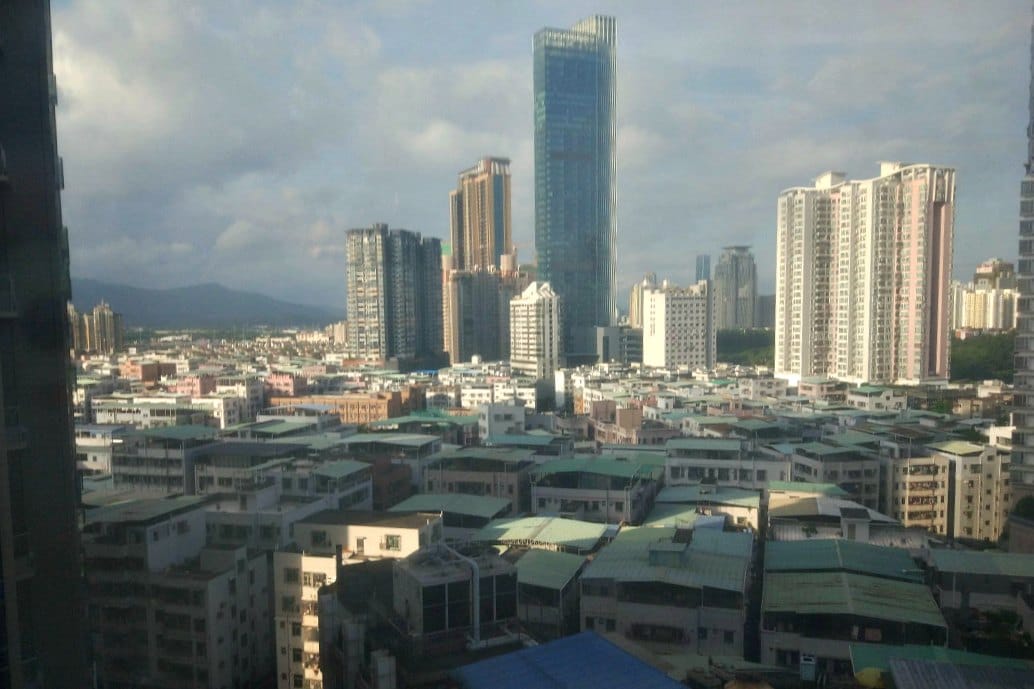



We can start with a couple of blog posts. Jeff Ollerton has posted his highlights. One was finding that the cutest pollinator is the elephant shrew. There’s a paper about it in Flora that seems to be free access and has some pictures. The other post is from Pat Heslop-Harrison with plenty of photos. By the time this gets out you’ll have missed him today at Stand E33, but he will be back on Thursday at 12.15.
Starting the Day
There’s a recurring theme among tweets. There’s a plant missing from the IBC, but one person has come prepared.
https://twitter.com/lxsllvn/status/889622492779655168
https://twitter.com/Pathh1/status/889628464902533121
https://twitter.com/JoAshnest/status/889645659858620417
https://twitter.com/UDCMRK/status/889646848197218309
https://twitter.com/bierbryo/status/889658797911715840
Requests
https://twitter.com/Pathh1/status/889645079014584320
https://twitter.com/JJeiter/status/889639550137626625
https://twitter.com/Pathh1/status/889682385528274945
Deconstructing the Plant Regulatory Genome
https://twitter.com/UDCMRK/status/889647536469835776
https://twitter.com/aubombarely/status/889649971431186433
https://twitter.com/JoAshnest/status/889647995616194560
https://twitter.com/aubombarely/status/889649970206445569
https://twitter.com/Pathh1/status/889650582738399232
https://twitter.com/the_pollinator/status/889653188172939265
https://twitter.com/Pathh1/status/889654387081195525
https://twitter.com/aubombarely/status/889656105772752896
https://twitter.com/JM_biologistico/status/889656284471070721
https://twitter.com/aubombarely/status/889656106003435522
https://twitter.com/IntegrPlantBiol/status/889659343511199744
Plant Evolution in the Anthropocene
https://twitter.com/UDCMRK/status/889658535088410624
https://twitter.com/hcacanindin/status/889659187797602304
https://twitter.com/Hong_An_/status/889660001450700800
https://twitter.com/iampalash11/status/889660287992958978
https://twitter.com/aubombarely/status/889661993153679362
https://twitter.com/aubombarely/status/889661995657699328
https://twitter.com/aubombarely/status/889661995666087937
https://twitter.com/JoAshnest/status/889662292379353088
https://twitter.com/JoAshnest/status/889662862230028288
https://twitter.com/charoles/status/889663301726162944
https://twitter.com/IntegrPlantBiol/status/889663836604645376
https://twitter.com/Pathh1/status/889664339002642433
https://twitter.com/hcacanindin/status/889665080379535360
https://twitter.com/charoles/status/889665422827638784
https://twitter.com/JoAshnest/status/889665442905595907
https://twitter.com/Hong_An_/status/889665537369751553
https://twitter.com/aubombarely/status/889665883400011782
https://twitter.com/hsauquet_upsud/status/889665897882726400
https://twitter.com/ccasola/status/889667072019574784
https://twitter.com/Pathh1/status/889667362516910080
https://twitter.com/JoAshnest/status/889675306893590528
https://twitter.com/bierbryo/status/889676008630112256
https://twitter.com/lxsllvn/status/889681865228992513
Meanwhile
https://twitter.com/bierbryo/status/889661147397279744
https://twitter.com/ARC_CMSR/status/889663487068184576
https://twitter.com/ShenzhenCity/status/889670965759692800
https://twitter.com/JoAshnest/status/889675479627710464
https://twitter.com/UDCMRK/status/889673706292772864
https://twitter.com/IntegrPlantBiol/status/889678161813819392
https://twitter.com/_MBreed/status/889683434255204353
https://twitter.com/RenskeOnstein/status/889680028514095104
Exploring the Green Plant Tree of Life
https://twitter.com/lxsllvn/status/889682284575457280
https://twitter.com/Pathh1/status/889677206871433216
https://twitter.com/UDCMRK/status/889678556414046208
Ma H. #IBC2017 phylogeny with 59 genes put monocots outside of magnoliids, ceratophyllacea and chloranthallacea. Amborella stays at root.
— Aureliano Bombarely (@aubombarely) July 25, 2017

Ma H. #IBC2017 about nuclear #phylogenies in #angiosperms. Ma pointed that phylogenies for basal angiosperms have not been totally resolved.
— Aureliano Bombarely (@aubombarely) July 25, 2017
Hong Ma: 8 core angiosperm lineages diversified within 10-15 my #IBC2017 pic.twitter.com/0pZen8SJjp
— Bier Kraichak (@bierbryo) July 25, 2017
Ma H. #IBC2017 dates the origin of angiosperms ~240 MYA. Major eudicots lineages diverged ~120 MYA in an explosive radiation after gamma WGT
— Aureliano Bombarely (@aubombarely) July 25, 2017
Ma: Arabidopsis was resolved as it's own clade separated from their original tribe. #IBC2017
— Bier Kraichak (@bierbryo) July 25, 2017
Ma: ancestral fruit type of Rosaceae is still a mystery #IBC2017 pic.twitter.com/xEUcX9BJOT
— Bier Kraichak (@bierbryo) July 25, 2017
Ma: Crazy short internodes in angiosperm phylogeny plus rate variation presents a challenge for tree estimation. #ibc2017
— Dr. Alex Sullivan (@lxsllvn) July 25, 2017
https://twitter.com/hsauquet_upsud/status/889685708109209604
Hong Ma on fruit traits in Rosaceae- more on the evolution of palm fruits on Saturday in T1-27 and Annonaceae fruits in T2-14 #IBC2017 pic.twitter.com/J4Mi8mkHqz
— Renske Onstein (@RenskeOnstein) July 25, 2017
https://twitter.com/hsauquet_upsud/status/889722868002574336
Mobilising and Integrating Big data in Analyses of Phylogenetic and Spatial Patterns of Biodiversity
Doug Soltis talking big data at #IBC2017 now! pic.twitter.com/R0uNx2vuh3
— AmyMcPherson (@AEMcP) July 25, 2017
Soltis: 大数据 big data for phylogenetics #IBC2017 pic.twitter.com/KWiGvrSz9m
— Bier Kraichak (@bierbryo) July 25, 2017
https://twitter.com/ry_folk/status/889684460471451650
https://twitter.com/Hong_An_/status/889684850256470017
Astounded by the number of rosid species, alone c. 90,000. 70% with no sequence data. Soltis group is trying to fix this #ibc2017
— Dr. Alex Sullivan (@lxsllvn) July 25, 2017
Doug Soltis talks about using big data for biodiversity study. @ry_folk & Miao Sun work featured #IBC2017 pic.twitter.com/AKfdisVhdR
— Matt Gitzendanner (@m_gitz) July 25, 2017
Soltis: Ancestral niche reconstruction shows geographical overlap of genera and potential for ancient hybridization #IBC2017 pic.twitter.com/alZHuBGDEH
— Bier Kraichak (@bierbryo) July 25, 2017
Soltis: ancestral niche modeling approach by @ry_folk to solve hybridization puzzles #ibc2017
— Dr. Alex Sullivan (@lxsllvn) July 25, 2017
Soltis D. #IBC2017: #bigdata for study phylogenies. Explosive divergence in rosids in 5 MY. Niche modeling helps to explain phylogenies
— Aureliano Bombarely (@aubombarely) July 25, 2017
https://twitter.com/ry_folk/status/889687734591389697
https://twitter.com/ry_folk/status/889687761850126338
Soltis: developing phylogenetic tools to identify areas of conservation concern, esp. fast and deployable work flows #ibc2017 pic.twitter.com/23F5FGgPCF
— Dr. Alex Sullivan (@lxsllvn) July 25, 2017
Doug Soltis: from big, automated data OR hand curated trees, good correlation. challenges of broader or deeper phylogenetic data #IBC2017 pic.twitter.com/zYkQKKpO4d
— Pat Heslop-Harrison (@Pathh1) July 25, 2017
Soltis: phylogenetic clustering in central Florida @opentreeoflife gave the similar results as hand-curated phylogeny #IBC2017 pic.twitter.com/GSxeJcAjvs
— Bier Kraichak (@bierbryo) July 25, 2017
#IBC2017 Soltis: ID phylogenetic diversity, then move fast to conserve it. Connect data communities to make it happen. #iamabotanist pic.twitter.com/Jae3kzgWXW
— Heather Cacanindin (@hcacanindin) July 25, 2017
Soltis: BiotaPhy workflows integrated all kinds of big biodiversity data for various analysis #IBC2017 pic.twitter.com/apPP2FOWJw
— Bier Kraichak (@bierbryo) July 25, 2017
Doug Soltis talking about big trees (da shu!) of China plants! #IBC2017 pic.twitter.com/WQRjGCHCAZ
— Julie Allen (@juliamallen) July 25, 2017
https://twitter.com/Oreotrephes/status/889689879306792960
Appreciated the way Soltis emphasized contributions of ERCs throughout his talk #ibc2017
— Dr. Alex Sullivan (@lxsllvn) July 25, 2017
Doug Soltis introducing BiotaPhy, which integrates across iDigBio, @opentreeoflife & LifeMapper. Cool stuff #IBC2017 pic.twitter.com/xLNa9gYdtc
— Mike Moore (@gypsumbotany) July 25, 2017
Soltis question session: how do we get protection for 'ugly' but diverse areas? #ibc2017
— Dr. Alex Sullivan (@lxsllvn) July 25, 2017
Part of the answer lies in Rieseberg's previous talk #ibc2017 #plantsarethekey pic.twitter.com/R8NHZf11OK
— Dr. Alex Sullivan (@lxsllvn) July 25, 2017
Soltis on using 'pretty good' BIG data to perform spatial phylogenetics (PD): which regions to prioritise for conservation? #IBC2017
— Renske Onstein (@RenskeOnstein) July 25, 2017
Thirty Clues to Angiosperm Exceptional Evolutionary Diversification
Magallon: Emergence of angiosperms an 'evolutionary frenzy' #ibc2017
— Dr. Alex Sullivan (@lxsllvn) July 25, 2017
Magallón: many radiations in angiosperm evolution frenzy but when and where?#IBC2017 pic.twitter.com/EYDfzaPmOK
— Bier Kraichak (@bierbryo) July 25, 2017
Magallon: molecular clock estimates for age of angiosperms far far older than undisputed fossils #ibc2017
— Dr. Alex Sullivan (@lxsllvn) July 25, 2017
Magallon: using fossilized birth death process to date angiosperms divergence. FBD uses whole record to estimate rates. #ibc2017 pic.twitter.com/fL2IcKZEAB
— Dr. Alex Sullivan (@lxsllvn) July 25, 2017
Magallón: fossilized birth death process allows inclusion of ALL fossils into the process #IBC2017 pic.twitter.com/YJGJVucJAl
— Bier Kraichak (@bierbryo) July 25, 2017
https://twitter.com/hsauquet_upsud/status/889694704572407808
Magallón: biased sampling leads to 100+ my difference in angiosperm age estimate #IBC2017 pic.twitter.com/OqQfFo6Jbj
— Bier Kraichak (@bierbryo) July 25, 2017
Magallon: accounting for biased taxon sampling in the fossilized birth death model yields a ~100 my younger age of angiosperms #ibc2017 pic.twitter.com/Hu2I2REYAn
— Dr. Alex Sullivan (@lxsllvn) July 25, 2017
Controversy on BAMM lives on at #IBC2017 but Magallón shows that it's still robust for angiosperms pic.twitter.com/XFpUN8CDRJ
— Bier Kraichak (@bierbryo) July 25, 2017
Magallon: Checking prior vs posterior distributions when looking for diversification shifts in angiosperms. #ibc2017 pic.twitter.com/o3WnguwsBm
— Dr. Alex Sullivan (@lxsllvn) July 25, 2017
Magallon: both extinction and speciation rates increased in angiosperms in the relatively recent past #ibc2017
— Dr. Alex Sullivan (@lxsllvn) July 25, 2017
Magallón: constant, independent 30 shifts in diversification in angiosperms #IBC2017 pic.twitter.com/9RH4RXNjGu
— Bier Kraichak (@bierbryo) July 25, 2017
Susanne Magallon: new methods provide better dates for angiosperm diversifications–and there are many radiations. #IBC2017 pic.twitter.com/2X06hPBZWy
— Matt Gitzendanner (@m_gitz) July 25, 2017
Magallon: clues to angiosperm exceptional evolutions diversification #IBC2017 pic.twitter.com/1Dt1jSY2Dx
— Heather Cacanindin (@hcacanindin) July 25, 2017
@AngiosSusana generating the angiosperm tree of life using the fossilised birth-death model… Exciting! #IBC2017 pic.twitter.com/93hlgew9KT
— Renske Onstein (@RenskeOnstein) July 25, 2017
Diversity of Tropical Forests
Species diversity in south east asian tropical forest, by Tetsukazu Yahara, Japan. Huge data collection #IBC2017 pic.twitter.com/jRnCUR6V6k
— Palash Chandra Mondol (@iampalash11) July 25, 2017
Science of the Jade Dragon Mountain
https://twitter.com/hsauquet_upsud/status/889687010750758912
Botanical Contributions from the Biodiversity Heritage Library
#BHLib @BHLProgDirector #IBC2017 presenting "The BHL: empowering discovery through free access to biodiversity knowledge" in Shenzhen, China pic.twitter.com/oWXwM2sEGw
— William Ulate (@WUlate) July 25, 2017
A Checklist of the Orders and Families of Medicinal Plants in the Philippines | Harold Carag et al. @ @BioDivLibrary symposium at #ibc2017
— BHL Program Director (@BHLProgDirector) July 25, 2017
https://twitter.com/UDCMRK/status/889734582391767040
Harold Carag: "A checklist of orders & families of medicinal plants in the Philippines": 1007 species associated to diseases #IBC2017 #BHLib pic.twitter.com/6HEZtXpCLZ
— William Ulate (@WUlate) July 25, 2017
Estimated @BioDivLibrary colleague and friend Zheping Xu reporting on the development and progress of #BHLib China at #IBC2017 pic.twitter.com/NWSzro4ybW
— William Ulate (@WUlate) July 25, 2017
https://twitter.com/UDCMRK/status/889739335347601408
Building Botanical Literature Collections for Global Use: Highlights from the BHL | CA Sheffield @BioDivLibrary ProgManager #ibc2017 pic.twitter.com/Xtq4M7GXYy
— BHL Program Director (@BHLProgDirector) July 25, 2017
Biodiversity and Phylogeography of Bryophytes
Hedenäs: population genetics of #mosses tell us where we should put conservation priority #IBC2017 pic.twitter.com/bsk1cOTtfo
— Bier Kraichak (@bierbryo) July 25, 2017
Zanatta: comparing #moss spores settling.l velocity with Stoke's Law..bigger spore moving slower than expected #IBC2017 pic.twitter.com/c2ddiFV0dB
— Bier Kraichak (@bierbryo) July 25, 2017
Zanatta: mixing species distribution modeling with migration simulation for better prediction of future ranges of bryos #IBC2017 pic.twitter.com/GnJALFhUGy
— Bier Kraichak (@bierbryo) July 25, 2017
Zhu: beautiful ocelli of leafy #liverworts of the new genus Yamaguchianthus #IBC2017 pic.twitter.com/QUaFaNZOwg
— Bier Kraichak (@bierbryo) July 25, 2017
DNA barcode markers shows diversification of spiny plant lineages coincides with that of herbivores in Africa #IBC2017 pic.twitter.com/4EVhvVyoGs
— Bier Kraichak (@bierbryo) July 25, 2017
Plant Speciation in the 21st Century
Moyle: none of the 2000+ gene trees estimated from 100kb windows in tomatoes match the species tree @SpeciationLab #ibc2017
— Dr. Alex Sullivan (@lxsllvn) July 25, 2017
Moyle: when gene tree discordance is high, evolution of traits doesn't necessarily follow species tree #ibc2017
— Dr. Alex Sullivan (@lxsllvn) July 25, 2017
Moyle: embrace the chaos and use gene tree discordance to formulate alternative hypotheses #ibc2017
— Dr. Alex Sullivan (@lxsllvn) July 25, 2017
Moyle: 3 sources of adaptive evolution: introgression, clade-specific de novo mutation, & sorting of ancestral polymorphism #ibc2017
— Dr. Alex Sullivan (@lxsllvn) July 25, 2017
Moyle: phylogenetic association methods, phyloGWAS, look for uniquely sorted variants across species #ibc2017
— Dr. Alex Sullivan (@lxsllvn) July 25, 2017
Gregory Owens: 3 independent origins of Helicanthus hybrid species #ibc2017
— Dr. Alex Sullivan (@lxsllvn) July 25, 2017
Owens: what does a stable hybrid genome look like? % contribution from each parent? Amount of selection? #ibc2017
— Dr. Alex Sullivan (@lxsllvn) July 25, 2017
https://twitter.com/lxsllvn/status/889732281941639168
Giovanni Scopece: Sympatric but not allopatric populations show strong postzygotic isolation in a food deceptive orchid pair #ibc2017
— Dr. Alex Sullivan (@lxsllvn) July 25, 2017
Scopece: apparently no pre or post zygotic barriers in a pair of orchids so why no hybrids? Floral shape makes physical barrier #ibc2017
— Dr. Alex Sullivan (@lxsllvn) July 25, 2017
Ortiz-Barrientos D. #IBC2017. Coastal pop. pairs show multiple origins. NaCl drives speciation in a parallel ecolog. & mut. driven context.
— Aureliano Bombarely (@aubombarely) July 25, 2017
Ortiz-Barrientos D. #IBC2017, #Speciation section talks about Senecio lautus complex with dif. adapting populations in Australia.
— Aureliano Bombarely (@aubombarely) July 25, 2017
Parisod C. #IBC2017 #Speciation driven by #TEs. #hybridation actives TEs. Aegilops #polyploid complex shows specific TEs (BAREs) after WGD.
— Aureliano Bombarely (@aubombarely) July 25, 2017
Parisod C. #IBC2017, shows most TEs increase their meth. levels after WGD. Conflicts between divergent TEs are a mechanism for speciation.
— Aureliano Bombarely (@aubombarely) July 25, 2017
My take-home from Moyle @SpeciationLab #IBC2017 talk: The real fun starts when gene trees are discordant with your species tree.
— Chris Martine | Plants are Cool, Too! (@MartineBotany) July 25, 2017
Epigenetics
Ian Henderson chromatin, DNA methylation & sequence alter recombination pattern; transposons matter too #IBC2017 https://t.co/zdR8IQRJjw pic.twitter.com/t6Xwt4GWxz
— Pat Heslop-Harrison (@Pathh1) July 25, 2017
Plant Responses to Flooding
Christophe Maurel on the role of K+ and AQP on regulation of root hydraulics to flooding #IBC2017 pic.twitter.com/ABe0NcQmxc
— Christine Scoffoni (@cscoffoni5) July 25, 2017
Second great talk by Christophe Maurel on AQP role on Kleaf and stomatal closure #IBC2017 pic.twitter.com/4EmXHm8vTm
— Christine Scoffoni (@cscoffoni5) July 25, 2017
Kunfang Cao on hydraulics and stomatal responses in mangroves #IBC2017 pic.twitter.com/Ql5SoXMqM5
— Christine Scoffoni (@cscoffoni5) July 25, 2017
Evolutionary Trends in Boraginales
Maximilian Weigend doing an excellent job breaking down morphological evolution in #Boraginales. Great points abt homology too #IBC2017
— Mike Moore (@gypsumbotany) July 25, 2017
Maximilian Weigend shows that many #Boraginales accumulate calcium phosphate in trichomes-previously unknown in plants. FASCINATING #IBC2017 pic.twitter.com/Q2NaC5ItbF
— Mike Moore (@gypsumbotany) July 25, 2017
Evolutionary History of Vitis
Great work by Dr. Klein on the evolutionary history of Vitis using genotyping-by-sequencing. Confirms monophyly, distinct clades. #IBC2017
— Heather Cacanindin (@hcacanindin) July 25, 2017
Polyploidy, Evolution, Function and Diversification
Shengyi Liu thinks about his data in Brassica. Asymmetry endows Diversity, we need to enhance diversity of C genome for breeding. #IBC2017 pic.twitter.com/3KlIdA02tS
— Pat Heslop-Harrison (@Pathh1) July 25, 2017
Ten Years of Barcoding at the African Centre for DNA Barcoding
van der Bank: DNA barcoding helps screening for illegal trade of endangered #cycad in S Africa #IBC2017 pic.twitter.com/1ZWwy5YuCW
— Bier Kraichak (@bierbryo) July 25, 2017
Barcoding in da box!! It's here Lifescanner Solution #IBC2017 pic.twitter.com/H6qiLVBqmd
— Bier Kraichak (@bierbryo) July 25, 2017
DNA Barcoding Genomics and Plant Identification
Hollingsworth: musing a move toward organellar, nuclear markers, genomes with minimalism and verifiability in mind #IBC2017 pic.twitter.com/sDwYy8Q8TI
— Bier Kraichak (@bierbryo) July 25, 2017
Tan: barcoding markers work better at identifying herbaceous plants. Things get worse with more species in a genus #IBC2017 pic.twitter.com/qkica01Hv3
— Bier Kraichak (@bierbryo) July 25, 2017
@llforrest tells us about tiny things that live with us on our modern building #IBC2017 pic.twitter.com/hyXK9NMlO8
— Bier Kraichak (@bierbryo) July 25, 2017
"There is no such a thing as a cryptic species. Just a lazy bryologist" #IBC2017
— Bier Kraichak (@bierbryo) July 25, 2017
@llforrest on creating a real moss wall on a cement #IBC2017 pic.twitter.com/qOb9941IpQ
— Bier Kraichak (@bierbryo) July 25, 2017
Dönmez: 3 out of 11 markers appear to be useful for Turkish geophyte species #IBC2017 pic.twitter.com/Q5JhorVI7Z
— Bier Kraichak (@bierbryo) July 25, 2017
Zhu: a vey cute plant with many medicinal uses, making it endangered in China #IBC2017 pic.twitter.com/8kfQ9RpZUO
— Bier Kraichak (@bierbryo) July 25, 2017
Zhu: using secondary structure and mini barcoding region within ITS2 to identify a medicinal plant from China #IBC2017 pic.twitter.com/ZtDKVtmuS1
— Bier Kraichak (@bierbryo) July 25, 2017
Insights into Land Plant Evolution Garnered from the Marchantia Genome Project
J. Bowman speculates that ancient sex chromosomes may explain lack of WGD in liverworts #ibc2017 pic.twitter.com/0u9smoRqvV
— Matt Johnson, PhD (@mossMatters) July 25, 2017
Plant Biodiversity and data Mobilisation in the 21st Century
https://twitter.com/hsauquet_upsud/status/889748433854058496
Hornworts, a Missing Link to Study Fundamental Questions of Plant Biology
. @peter_szovenyi the hornwort genome: small in total size but with a high percentage of unique genes and collapsed gene families #ibc2017
— Matt Johnson, PhD (@mossMatters) July 25, 2017
The Monocotyledonous Underground: excavating the Evolutionary history of Geophytes
https://twitter.com/ry_folk/status/889758056925540352
@wile_phylote giving a great talk on the relationship between geophyte growth forms and environment conditions #IBC2017 pic.twitter.com/quEDxH5x7M
— richie hodel (@richiehodel) July 25, 2017
.@wile_phylote on the question of what drives geophytic growth form: "We're still fleshing that out." GOOD ONE. #IBC2017 https://t.co/JhwItTzjjE
— Chris Martine | Plants are Cool, Too! (@MartineBotany) July 25, 2017
Rebranding Botanical Collections
https://twitter.com/UDCMRK/status/889760945781829632
Cultural Variation in the Depiction of Plants in Indian Literature
Gokhale & Shinikar gave great talk on plants, literature & culture! Call for collab btwn #science & #humanities for #conservation #IBC2017 pic.twitter.com/3UpTZ1doRi
— Matt Gitzendanner (@m_gitz) July 25, 2017
Electronic Floras
https://twitter.com/hsauquet_upsud/status/889764178600144898
https://twitter.com/UDCMRK/status/889764500030803968
https://twitter.com/hsauquet_upsud/status/889766666778705920
https://twitter.com/UDCMRK/status/889781303419310080
Evolution of Land Plants and Their Interaction with the Environment
Kevin Boyce on how leaf veins can tell us about the past #IBC2017 pic.twitter.com/74W0Il2uSY
— Christine Scoffoni (@cscoffoni5) July 25, 2017
Kevin Boyce on how leaf veins can tell us about the past #IBC2017 pic.twitter.com/74W0Il2uSY
— Christine Scoffoni (@cscoffoni5) July 25, 2017
François Lutzoni on synchronized radiations of fungi and plants #IBC2017 pic.twitter.com/s7WzxRac9I
— Christine Scoffoni (@cscoffoni5) July 25, 2017
Kevin Boyce: Extrapolating paleoecosystems from modern ones, which are dominated by angiosperms, is problematic. #IBC2017 1/2
— Alex Taylor (@ATayters) July 25, 2017
Green Life, Beautiful Genes
Dr. Huan-Ming Yang, chairman of BGI-Shenzhen, making a passionate case for plant sciences, quoting Chinese poetry and astronauts #IBC2017
— Alex Taylor (@ATayters) July 25, 2017
Huan-Ming Yang next #IBC2017 . I didn't recognize his name but you all know him: founder of BGI sequencing, on "Green life, beautiful genes" pic.twitter.com/gMC86a1gpv
— Pat Heslop-Harrison (@Pathh1) July 25, 2017
Invasive species, algae blooms, extinctions – "plants have already warned us" – Dr. Huan-Ming Yang #IBC2017
— Alex Taylor (@ATayters) July 25, 2017
Outside
https://twitter.com/kheyduk/status/889751788030574592
#LED #hydroponic grow setups at #IBC2017 – greens could be grown in cities with no pesticides, little water and relatively little energy pic.twitter.com/XaFVkvxRLU
— Alex Taylor (@ATayters) July 25, 2017
https://twitter.com/MLinkPerez/status/889752942827388928
https://twitter.com/ebsessa/status/889786072271642624
A nod to #BeltandRoad, a giant international trade and infrastructure initiative, at #IBC2017 pic.twitter.com/GwyX9Y9kur
— Alex Taylor (@ATayters) July 25, 2017
