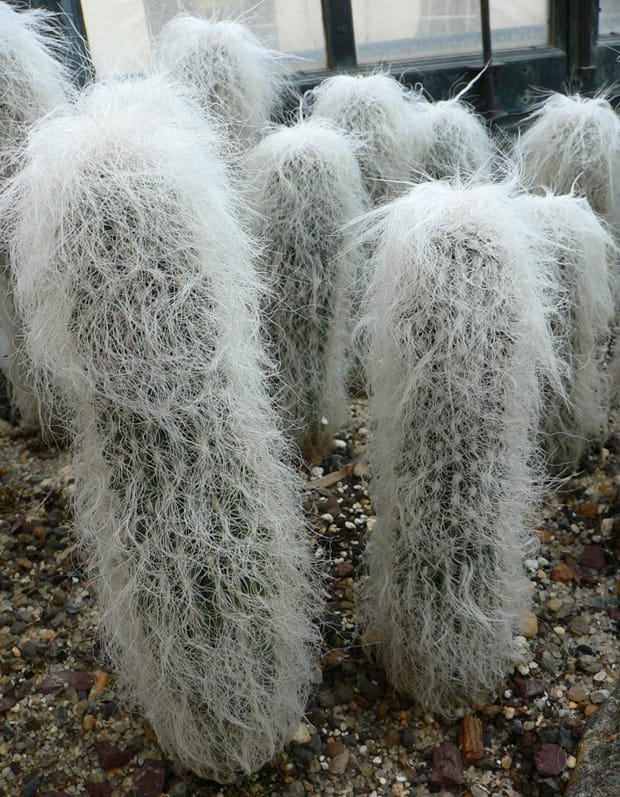



Aposematism, a ‘family of antipredator adaptations where a warning signal is associated with the unprofitability of a prey item to potential predators’, is usually defined from an animal perspective (hence terms like ‘prey’ and ‘predator’). And that is probably because only animals have generally been considered to go in for this strategy. Although plants employ a wide range of devices, colours and odours that attract animals who perform various beneficial services – e.g. pollination or fruit/seed dispersal, these are not warning signals but are viewed more as ‘advertisements’. However, for some time there’s been a growing suggestion that aposematism might also be a feature of plant behaviour (although one recognises that the idea that plants might ‘behave’ is as dangerous a notion as considering plants to be ‘intelligent’, but I’ll risk it!). One of the most recent examples of this putative phytoaposematism is considered by Kazuo Yamazaki and Simcha Lev-Yadun. Taking their inspiration from well-documented examples of spiders who mimic flowers, which thereby renders them camouflaged so that their flower-visiting prey can’t see them and consequently fall victim to the arachnid’s advances, they reflect that the production of white trichomes by some plants might mimic arthropod silk. The pair argue that, since herbivores shun spider-webs to avoid predation or toxic attacks, or refrain from colonizing plants that have already been occupied by other herbivores, these plant structures may mimic those animal features. Consequently, such plants are likely to be less affected by herbivory than those that don’t bear such features. Interestingly, the pair concedes that this may not be a case of classical mimicry, but rather an exploitation of ‘the herbivore’s perceptual state concerning the avoidance of potentially risky objects’. So, a case of plants playing ‘mind-games’ with animals? It therefore seems that arachnophobia (‘a specific phobia, the fear of spiders and other arachnids such as scorpions’) is not just a human condition. However, the authors don’t dismiss the possibility that these web-like structures may also have other defensive or physiological functions, or even mimic fungal hyphae…
[For more on this fascinating, and often colourful, world of plant aposematism and anti-herbivory defence, we recommend other publications from the prolific output of the University of Haifa’s Professor Simcha Lev-Yadun, e.g. ‘Defensive masquerade by plants’, ‘Potential defence from herbivory by “dazzle effects” and “trickery coloration” of leaf variegation’ and ‘Why is latex usually white and only sometimes yellow, orange or red? Simultaneous visual and chemical plant defense’ – Ed.]