


Pollinators are in crisis. With wild pollinator communities declining at alarming rates around the world, concern is growing about the future of ecosystems and food production. Such concerns are well-founded, as 85% of the world’s plants rely on animals for pollination, including 70% of the crops we grow for our own consumption. One of the reasons behind such a dramatic decline is the transformation of natural sites into urban landscapes — a process that shows no sign of slowing, with an estimated 68% of the world’s population living in cities by 2050.
However, while cities might not seem like ideal homes for wild pollinators, researchers have found that urban green spaces—such as parks and gardens—are increasingly important havens, sometimes offering a lifeline to species struggling in more degraded environments. As a result, scientists and urban planners have started working together to develop strategies to make cities more pollinator-friendly. An obvious solution would be to plant more flowers, but a recent study by Serena Sinno and colleagues shows that attracting wild bees is not just a matter of quantity, but of floral variety.
The research team selected 16 green spaces—including community gardens, parks, and cemeteries—scattered across Montreal in southeastern Canada. At each site, they set up small plots and collected bees using traps that mimic flowers or nets. They also catalogued all the flowering plants in each plot and measured two traits known to affect bees’ visits: the length of the flower tubes and the nectar’s sugar concentration.
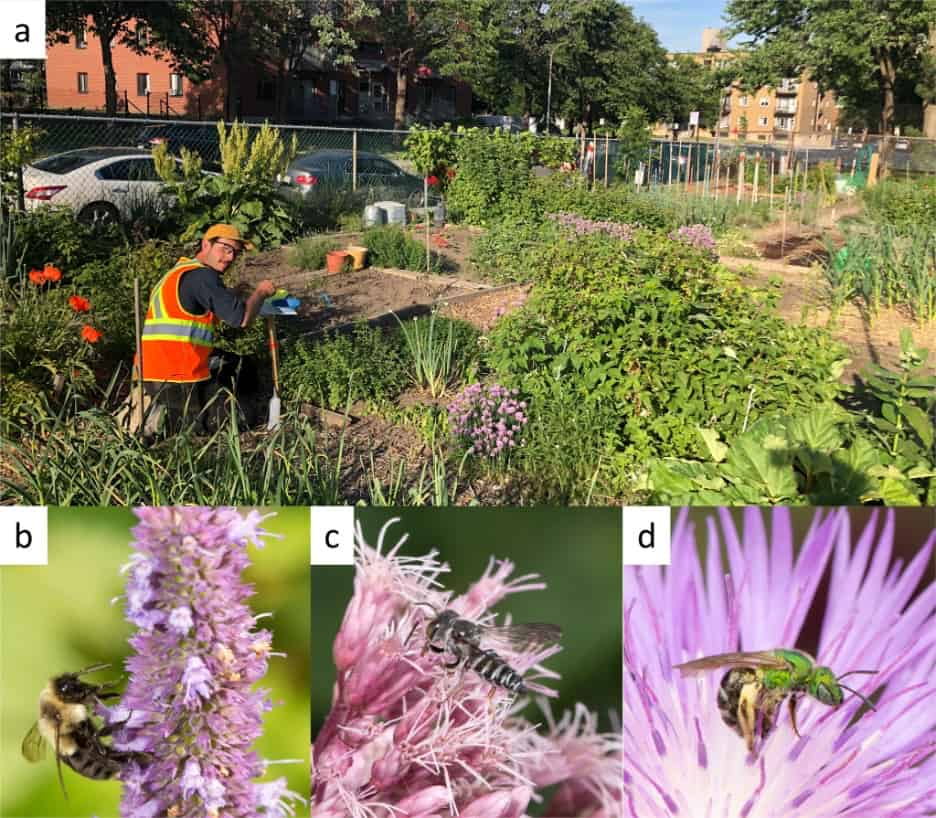
The researchers found that wild bee diversity was higher in places where flowers had a greater variety of flower tube lengths. This is particularly interesting given that the average flower size did not significantly affect bee diversity. Because bees have different sizes and tongue lengths, they tend to visit flowers that fit their morphology—just like you wouldn’t use a straw that’s too short to reach a drink. Short-tongued bees avoid deep flowers, while long-tongued bees can access them with ease. Therefore, a mix of flower shapes, rather than many flowers of the same size, means there’s something for everyone—allowing more bee species to find a good fit.
That said, the idea that more flowers attract more bees still holds true, as the study found that an increase in flower cover was also linked to greater bee diversity. Thus, to ensure our cities are bee-friendly, we need to combine an abundance of flowers with a rich variety of shapes.
While nectar plays a crucial role in a bee’s diet, nectar sugar concentration was not clearly linked to bee diversity in Sinno’s study. However, the authors note that we shouldn’t discount nectar sweetness just yet, as further research is needed to fully understand the nutritional resources our cities provide for bees and other pollinators.
Ultimately, this research gives city planners, gardeners, and even balcony plant enthusiasts a practical way to help pollinators: plant generously and with variety in mind. From long tubes to open blooms, the more varied your flower shapes, the more likely your patch will be a buzzworthy success. This beautifully simple insight could shift how we design urban spaces—and, hopefully, help turn our cities into thriving oases for bees and other pollinators.
READ THE ARTICLE:
Sinno, S., MacInnis, G., Lessard, J.P. and Ziter, C.D., 2025. Variation in flower morphology associated with higher bee diversity in urban green spaces. Ecological Applications, 35(1), p.e3067. https://doi.org/10.1002/eap.3067

Victor H. D. Silva
Victor H. D. Silva is a biologist passionate about the processes that shape interactions between plants and pollinators. He is currently focused on understanding how plant-pollinator interactions are influenced by urbanisation and how to make urban green areas more pollinator-friendly. For more information, follow him on ResearchGate as Victor H. D. Silva.
Portuguese translation by Victor H. D. Silva.
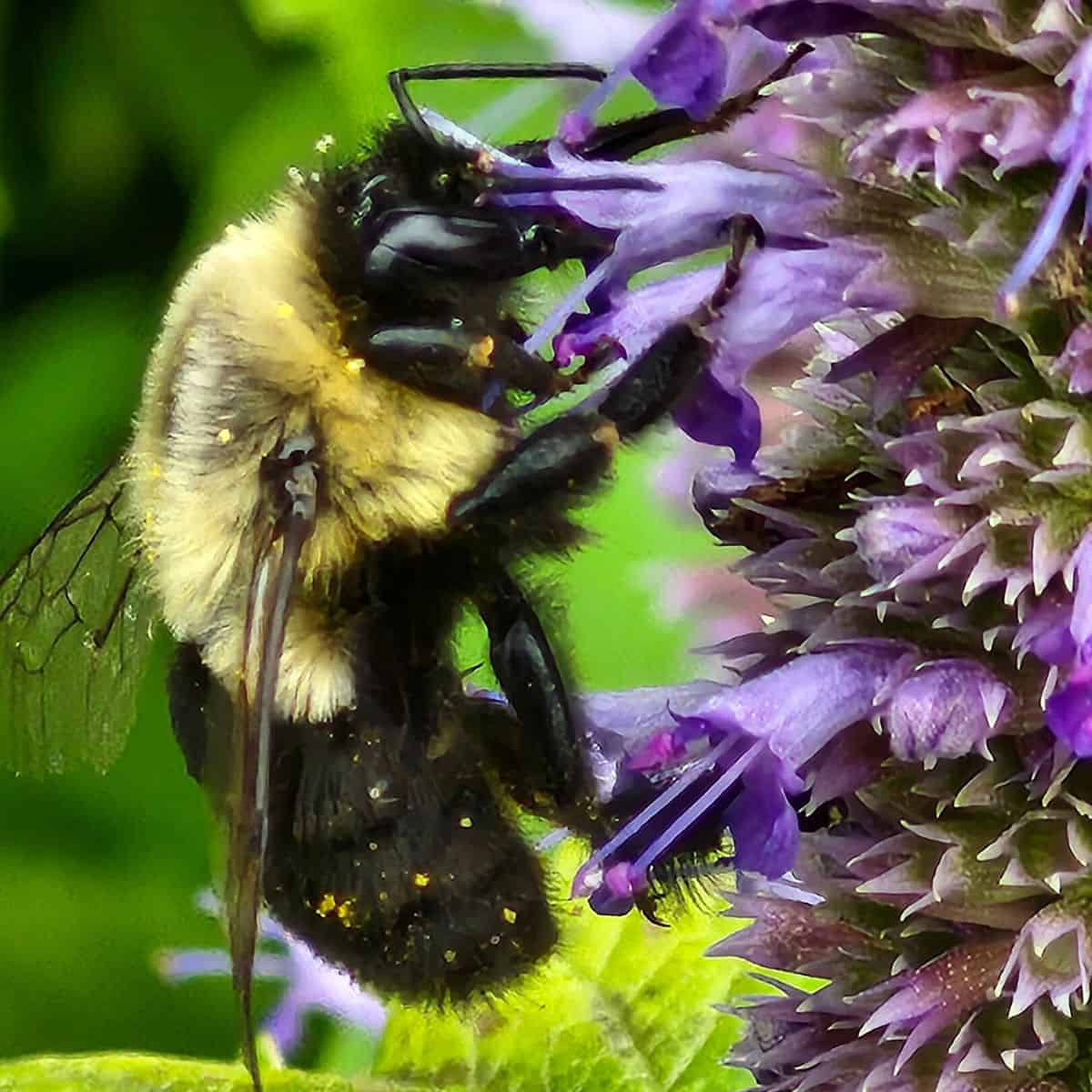
Cover picture: Bumblebee on lavender. Photo by Jeangagnon (Wikimedia Commons).