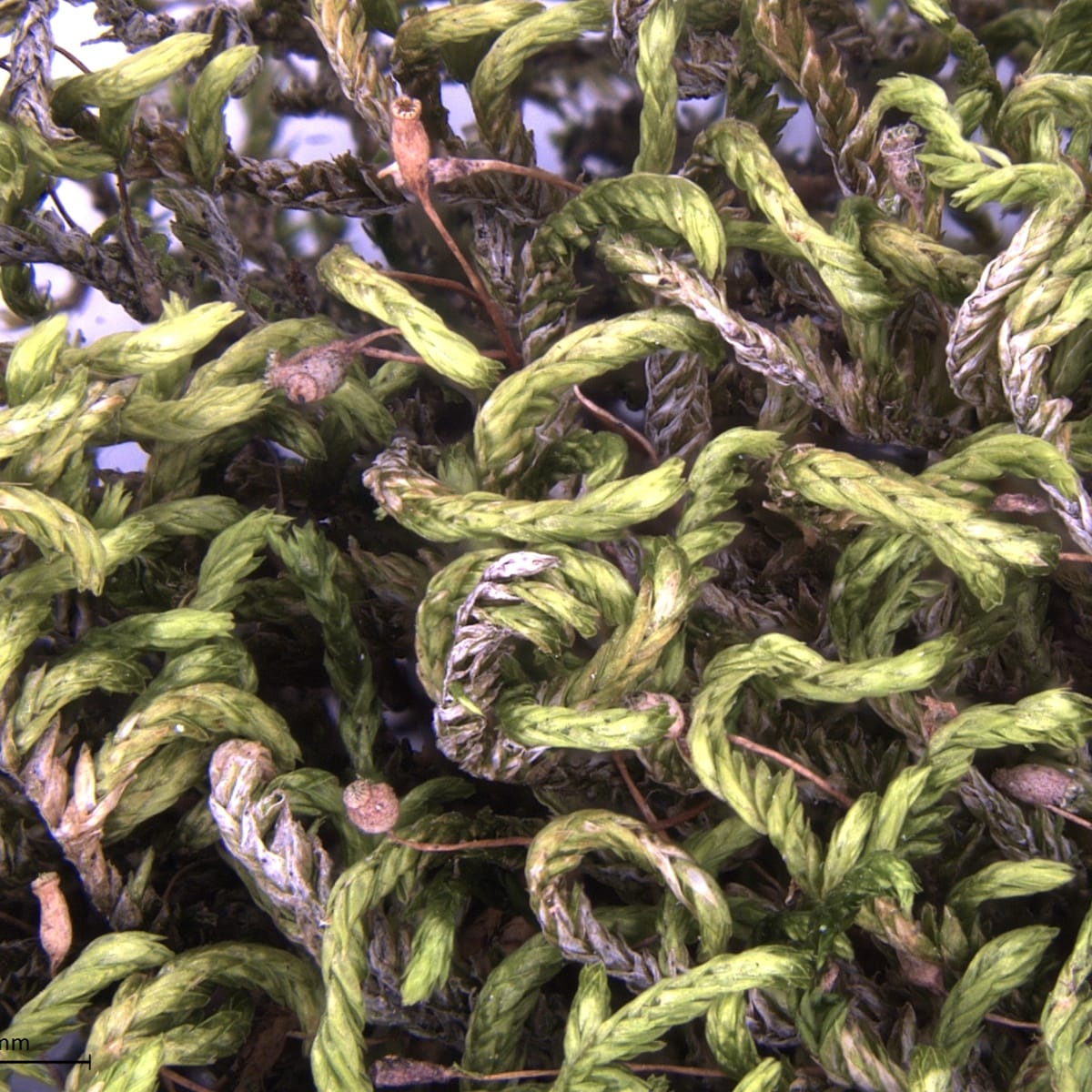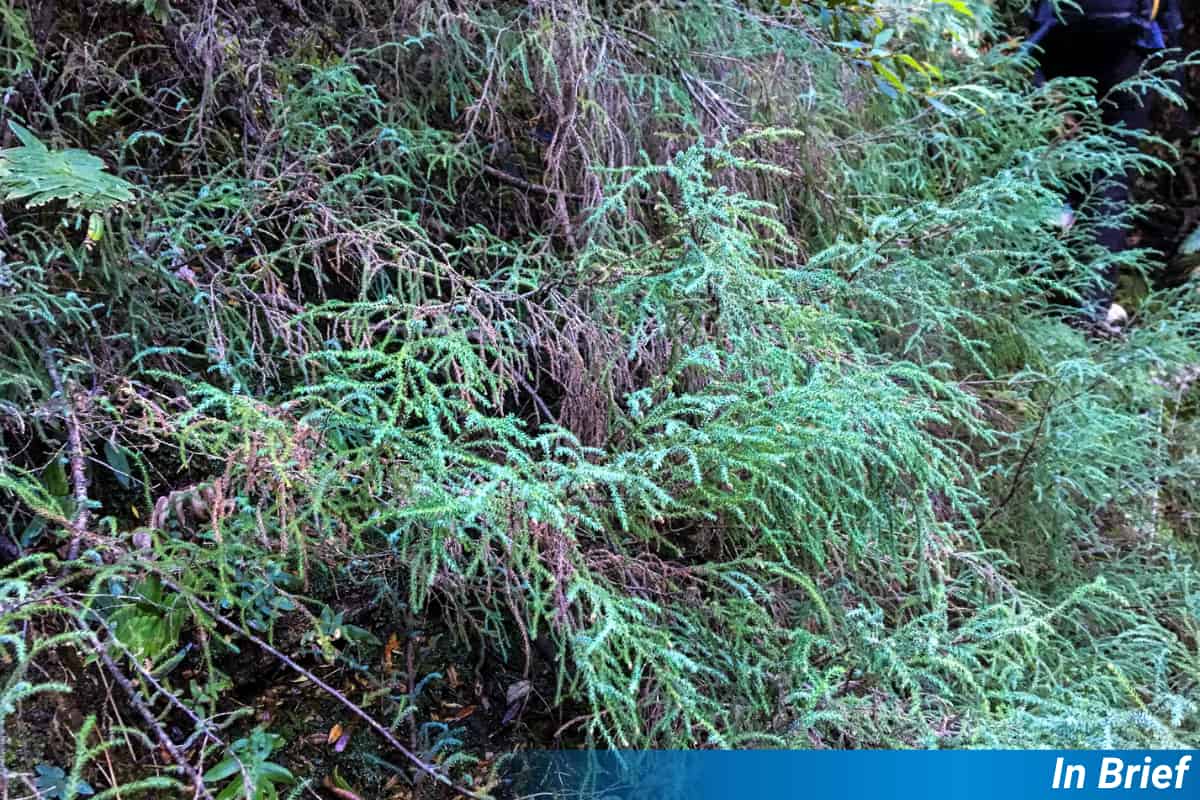



What does it mean for a plant to survive? Pherosphaera fitzgeraldii, the Dwarf Mountain Pine of Australia, is a critically endangered plant found in the Blue Mountains. A new paper by McMaster and colleagues explores how isolated populations of these pines are connected, and how genomics has important role to play in the recovery of the species.
Dwarf Mountain Pines are found only in small area of Blue Mountains, New South Wales. They live life on the edge, literally. They live on cliff edges in waterfall spray zones. The wild population is found along a 9 km stretch of cliffs between Elphinstone Plateau and Wentworth Falls. In this zone, 10 small groups live, where they face threats from pollution and weeds. Worryingly they seem to be struggling to grow new seedlings.
McMaster and colleagues used advanced DNA techniques to study the trees’ genes. What they were looking for was the genetic diversity within and between different plant groups. This allowed them to determine how plants might be related and if they’re breeding successfully. They also used wind pattern data to understand how genes might move between groups.
The team found two main genetic groups – one in the east, and one in the west, of the plant’s range. Many plants are clones, using vegetative growth to survive harsh conditions. Even when the plants swap genes there can be inbreeding, which could be risky for plant’s future health. The analysis shows that some plant groups act as sources of genetic diversity for others.
Wind is a critical factor in how the pines survive as the prevailing winds influence how the plant’s genes move around. The eastern and western plant groups are the result of different wind patterns in the area. The findings show how landscape and climate shape plant evolution even in small areas.
The research helps identify which plant groups are most important to protect. It also suggests that “genetic rescue” – moving genes between groups – could help species. In particular, the team recommend prioritising conservation efforts on four key areas, Wentworth Falls, Katoomba Falls, Leura Falls, Elphinstone Plateau, as these are the sources for most of the plant’s genetic diversity.
McMaster, E. S., Yap, J. S., Chen, S. H., Sherieff, A., Bate, M., Brown, I., Jones, M., & Rossetto, M. (2024). On the edge: conservation genomics of the critically endangered dwarf mountain pine Pherosphaera fitzgeraldii. Basic and Applied Ecology. https://doi.org/10.1016/j.baae.2024.09.003 (OA)
Cross-posted to Bluesky, Mastodon & Threads.
Cover image by Brian G / Flickr CC BY-NC-SA