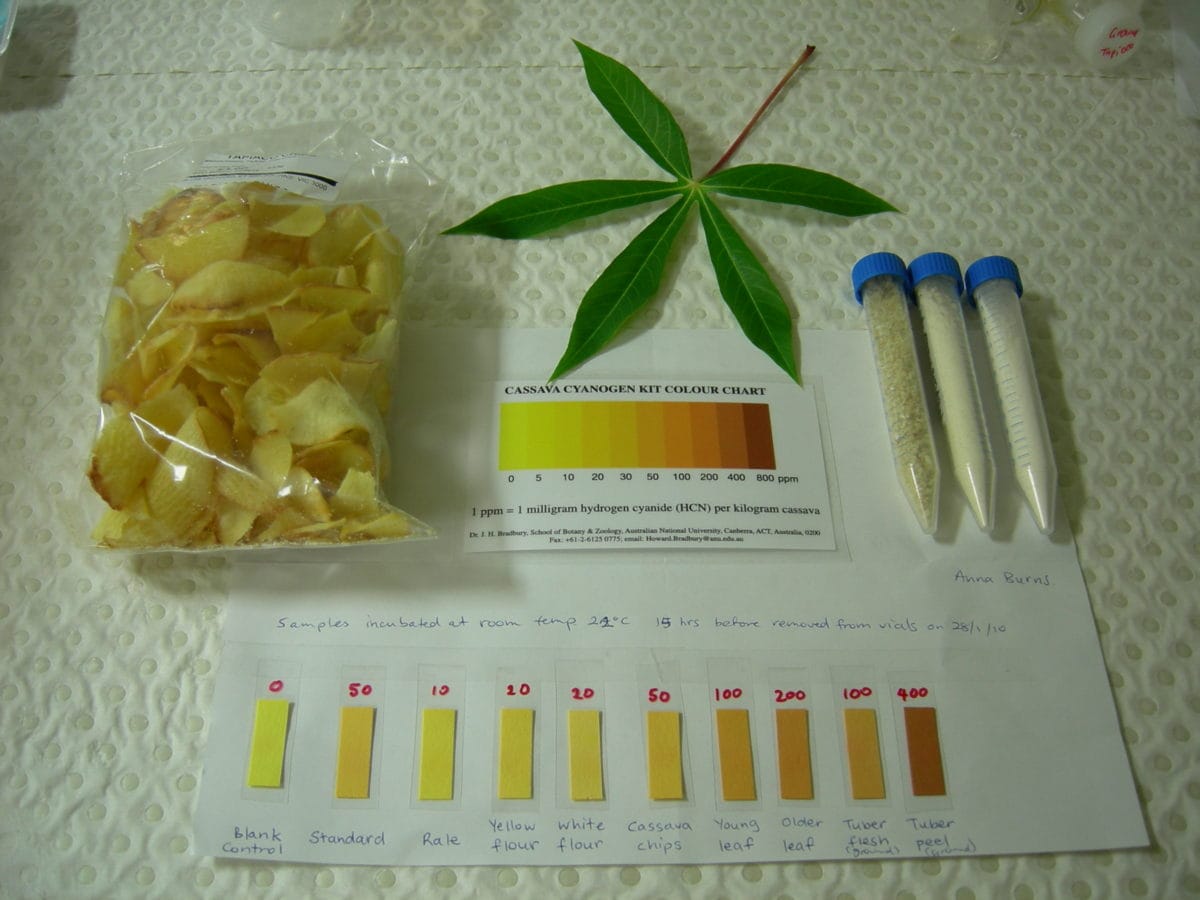


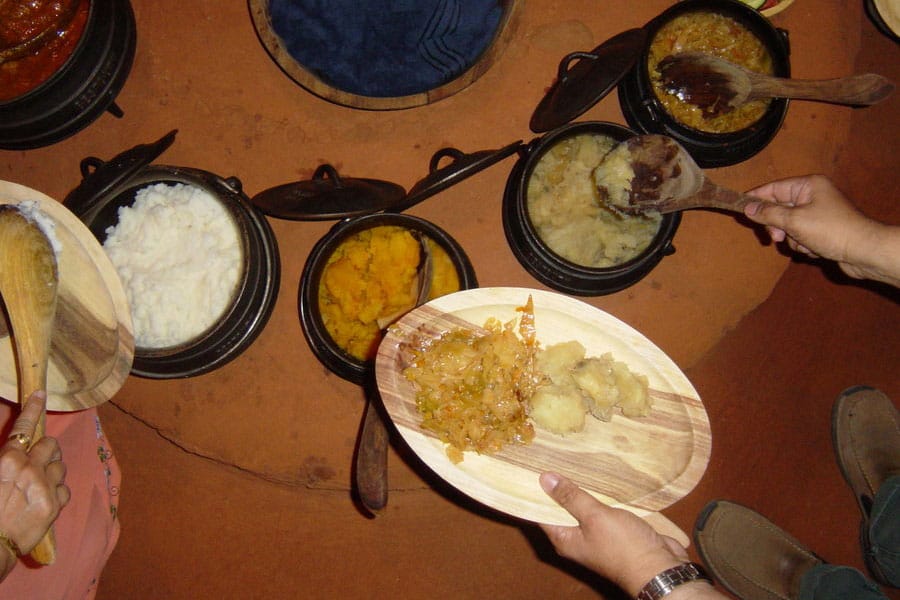
What are your cupboard staples? Rice, potatoes, bread? These are just a few of the foods we consider ‘staple’ worldwide. A major staple for African, Asian and Southern American communities is cassava. Cassava requires a lengthy production process in order for it to be safe to eat, due to the toxins inside the plants and tubers that are dangerous to humans. These toxins are cyanogenic glucosides, which release cyanide gas when tissues are crushed. The cyanide-containing compounds are found in high concentrations in the leaves and then are transported to tubers, where they are likely to act as a nitrogen source for roots as well as a pest deterrent.

Cassava thrives in tropical climates largely due to its tolerance for drought. But an increase in drought leads to an increase in cyanogenic glucoside production. Thus, in times of drought, numbers of people effected by the toxins rise dramatically. One of the main diseases caused by cyanide ingestion, that is particularly prevalent in Africa, is Konzo, a disease affecting motor neurones, causing irreversible paralysis (Banea 2012).
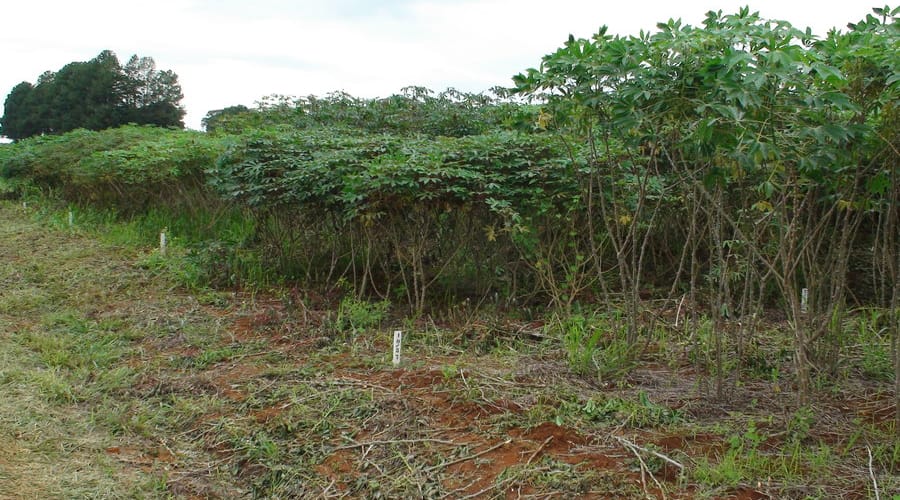
Recently, I went to a fascinating talk by Assoc. Prof. Ros Gleadow of Monash University, whose lab have researched the interaction between drought and CO2 levels on cyanide production in Cassava. They have found that when cassava is grown in artificial environments with a high CO2 concentration (equal to that expected to be in earth’s atmosphere by 2030), cyanide concentration in leaves increases relative to the amount of protein present, although on a per mass basis the concentration stays the same. This is bad because in order for animals (including humans) to break down cyanide, a healthy, protein-sufficient diet is required.
Increased CO2 also caused cassava tuber production to increase. The field study (FACE) which obtained these results contradicted an earlier chamber experiment that showed CO2 as having a negative effect (Rosenthal et al 2012). They are still working on why this difference occurred, but think it may have something to do with the presence of the right sort of soil microorganisms (AM). Despite this positive outcome, cyanide concentrations in the tubers remained the same in elevated CO2 concentrations compared to normal CO2 concentrations. This means we may not be looking forward to less toxic cassava in the future!
The Gleadow group have now moved onto developing crops using genetic mutations to reduce cyanide production in response to the conditions of our future climate. This could provide crops to the world’s population in several years’ time, when global warming has drastically changed our current crop profile.
References
J.P. Banea, G. Nahimana, C. Mandombi, J. Howard Bradbury, Ian C. Denton, N. Kuwa, Control of konzo in DRC using the wetting method on cassava flour. Food and Chemical Toxicology 50 (2012) 1517–1523 PMID: 22342647
D.M. Rosenthal R.A. Slattery, R.E. Millers, A.K. Grennan, T.R. Cavagnaros, C.M. Fauquet, R.M. Gleadows and D.R. Ort, Cassava about-FACE: Greater than expected yield stimulation of cassava (Manihot esculenta) by future CO2 levels. Global Change Biology 18 (2012) 2661–2675 DOI: 10.1111/j.1365-2486.2012.02726.x