


Why do species invade some places easier than others? Wang and colleagues look at the role of biodiversity in helping resist invasion by looking at fire ant numbers and nests across areas with varying tree diversity. They found that more tree types can suppress fire ant populations in complex ways. The research could help manage fire ant invasions in forests and other green spaces.
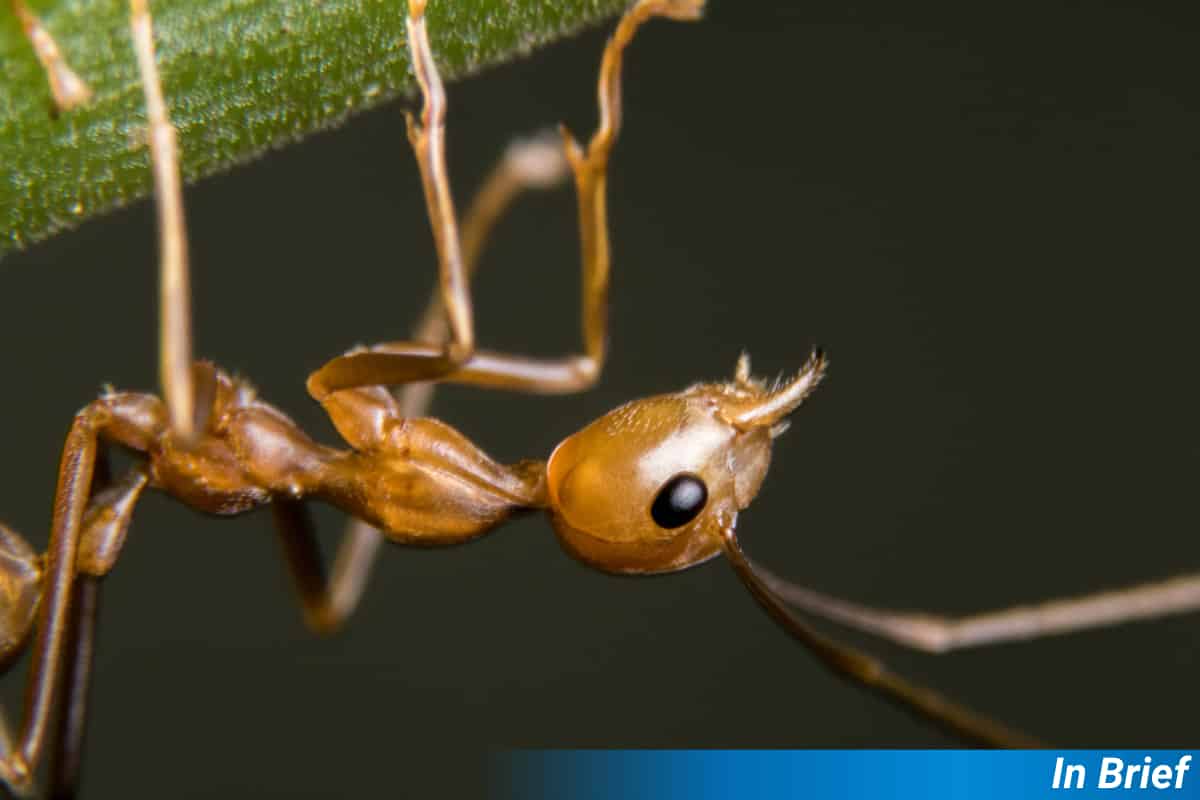
The ecologists found an odd result. Areas with more tree species had fewer fire ants overall, but more fire ant nests. The explanation might be that the diversity provided more food sources for fire ant nests. However, they also provided more habitat for other ant species, which helped keep fire ant numbers down.
Wang and colleagues tracked the ants in an experimental forest plantation in China with plots containing 1, 2, 4 or 8 tree species. Here they counted fire ants and their nests across these different plots. They also measured things like soil temperature and other insects present.
Fire ants are a damaging invasive species in many parts of the world and while previous research has looked at how plant diversity affects pest insects, less is known about fire ants specifically. Wang and colleagues found that high canopy cover was particularly helpful in fighting invasion as these can harbour fire ants natural predators.
Wang, P., Wu, D., Wang, Y., Shen, Z., Li, B., Shu, Z., & Chu, C. (2024). Tree species richness suppresses red imported fire ant invasion in a subtropical plantation forest. Journal of Applied Ecology. https://doi.org/10.1111/1365-2664.14786 ($)