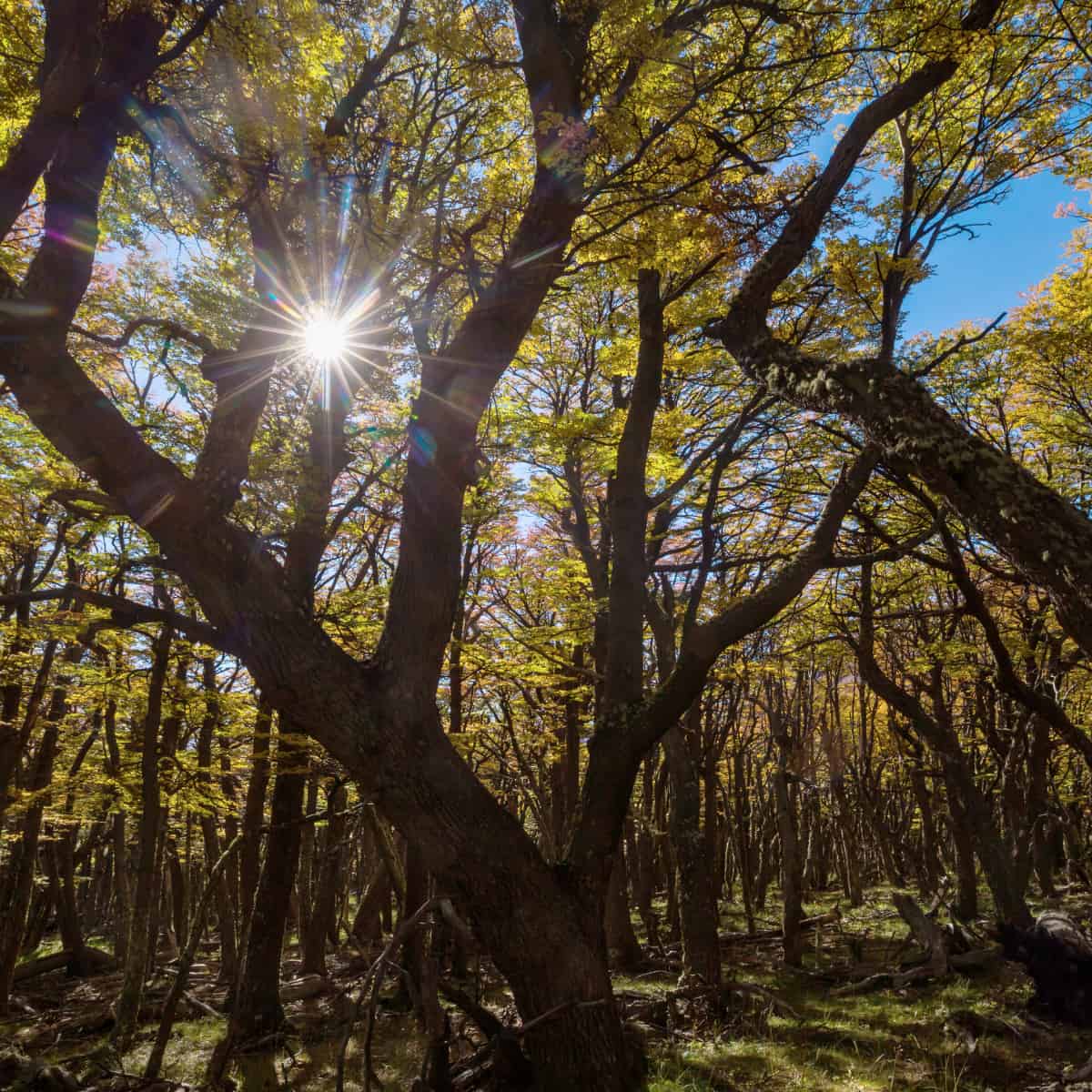
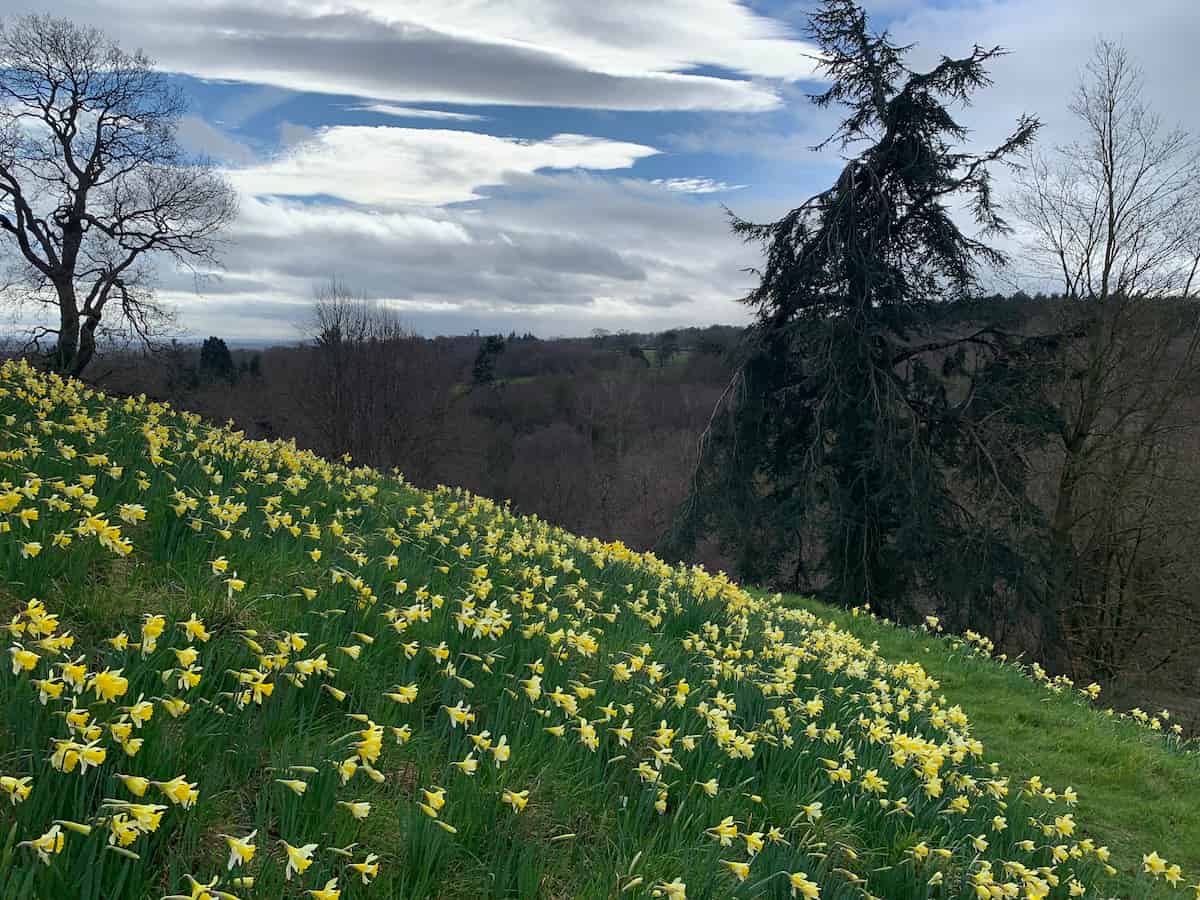
I've just filled in the Biodiful questionnaire on attitudes to forests. These things usually worry more than they should that I'm giving wrong answers. I know the questions say "Don't worry about giving wrong answers" but my colour vision is askew, so I worry I'm giving inappropriate responses. For this questionnaire though, one of the later questions is about colour vision, so I feel a bit better about this.
Next week we have an experiment here. What would happen if I didn't feel well enough to do this? I've done this every week, except for the Christmas weeks off since (a pause while I look this up...) June 2017. One of the advantages, for me, of the move to the new system is that other people can now take over the email list. I've been polishing the tools I use to format the newsletter and next week the plan is that Sarah Covshoff will compile and schedule the email. We'll also have our other editor Carlos Andrés Ordóñez Parra produce it soon.
I'll be using the time away to catch up on some overdue writing that I have to finish. So I'll be interested to see what's in the email of the papers and the news stories you’re sharing on Mastodon and Bluesky, and I'll find out at the same time as you, next week.
Alun (webmaster@botany.one)
On Botany One
Light of the Future
Lettuce grown in plant factories benefit from far-red light.
Rising From the Ashes with the Sunbirds
A study from South Africa reveals that plants that flower after fires are not taking a gamble but are relying on an unexpectedly resilient alliance with sunbirds.
Bianca Schindler: Vellozias and the Biodiversity Puzzle
Botany One interviews Bianca Schindler, a Brazilian botanist whose PhD research aims to document the diversity of the "canelas-de-ema" from Central Brazil and conserve them.
Climate Change Threatens Alpine Plants Before They Ever Get the Chance to Grow
New experiments in the Australian Alps reveal how warming, drought and fire quietly undermine plant survival.
Between Drought and Rain: How a Tropical Moss Teaches Us To Survive in an Increasingly Unstable Climate
A tiny tropical moss defies expectations by suffering more cell damage during the rainy season than the dry. Now scientists think they know why.
Just one puzzle this week, Sudoku Garden. I didn't want to put out a second puzzle as I haven't had the time to write the snippets about the plants. I could use AI to write them, but I'd rather not. I'll concede the haikus for Sudoku Garden are not great, but they are at least human.
There was also last week's Week in Botany, with butterfly eyes in the tropics, seeds of the arctic, shifting time to watch blooms, travelling in time to see authentic flora, and more.
News & Views
Good academic writing means sitting with a discomfort that never entirely goes away. It’s not a discomfort that comes from having nothing to say. Most of us have more than enough ideas crowding the page. Not that. This discomfort is something more unsettling.
 patter
Dr Pirita Paajanen, senior scientist, will soon be moving on from JIC to set up her own research group at the University of Helsinki. In this blog she reflects on the support she has received from the institute to help her get to the next step in her career, and the transformative impact that the Leaders Plus fellowship programme has had on her, both professionally and personally.
 John Innes Centre
Celebrating the leadership and contribution of women across the ecological community.
 British Ecological Society
Retractions correct the scientific record, but they have stigma attached to them. Some in the research community want that to change.
 Nature
The feature, which Grammarly shut down Wednesday, presented editing suggestions as if they came from established authors and academics—without their consent.
 WIRED
WIRED
Do you (or have you ever) worked with natural history collections? Are you trans or non-binary? If you said "yes" to both of those, @rin-krichilsky.bsky.social and I want to hear from you! Please consider filling out our survey and please share with others!
 Google Docs
Scientific society dedicated to the collection and dissemination of the best availble technical and practical information relating to all aspects of potato production, biology and utilization.
 Potato Association of the Americas
Thousands of giant sequoia seedlings sprouted after a fire swept a grove in the Sierra in 2021. Will they replace the behemoths that died or become extinct?
 Los Angeles Times
Wild scarlet monkeyflowers in California survived a historic drought by relying on a rapid evolution, marking the first time the process has been observed in the wild.
 CNN
CNN
Burnout, grief and mental health struggles are taking a toll on the researchers and advocates who dedicate their lives to conservation.
 Mongabay
How to assess your trees’ health after a long winter.
 The Weather Network
This Week in Botany
5 Years Ago: A new high-throughput method for building large phylogenies from herbarium samples
10 Years Ago: Within-species responses to water deficit vary more with traits than provenance
15 Years Ago: Cone age and longevity of Banksia seeds
Scientific Papers
“Plant-fungal symbioses are widespread, but bacterial rhizobia only form nodulating relationships with legume plants. Qiao et al. found an actin-nucleating protein, SYFO2, which is part of the formin protein family and is involved in both types of symbiotic relationships.”
 Science (March 2026)
“To understand the molecular and developmental impacts of rising temperatures, plant science has relied heavily on the model organism Arabidopsis thaliana. Despite decades of research, its development under fully natural conditions remains poorly understood, and only ∼30% of genes have experimental functional annotations, largely because many functions are subtle or manifest only in specific laboratory or ecological contexts. Here, we address this gap with a landscape transcriptomic approach that integrates intensive phenotyping and transcriptomic profiling of naturally occurring plants in their native habitats.”
 bioRxiv (March 2026)
“The maize (Zea mays subsp. mays L.) inflorescence (ear), with its elongated stigma and style structures (silks), has a conspicuous spatial heterogeneity, with longer silks at the base of the ear than at the apex. To evaluate the hypothesis that alleles with reduced pollen fitness influence the spatial distribution of progeny genotypes along the ear, we developed an updated phenotyping platform that maps fluorescently marked mutant (Ds-GFP) kernel phenotypes on the ear via an implementation of the Faster R-CNN machine vision model (EarVision.v2) and a statistical pipeline that evaluates the relationship between kernel position and transmission ratio (EarScape).”
 The Plant Journal (March 2026)
“Plants acclimate to mechanical stimuli such as touch and wind via thigmomorphogenesis, a suite of developmental responses that alter their growth and architecture. However, the early signaling mechanisms translating mechanoperception into long-term morphological changes remain incompletely understood. We investigated the role of the rapidly touch-induced transcription factor RRTF1 (REDOX RESPONSIVE TRANSCRIPTION FACTOR 1) in these processes.”
bioRxiv (March 2026)
“Here, we explore repeated incidences of hybrid seed inviability in a rising model: the Mimulus guttatus species complex. Using an extensive, range-wide crossing survey, we discover patterns of hybrid seed inviability within the widespread M. guttatus that are better described by geography than phylogeny.”
 Current Biology (March 2026)
Camille Puginier, Nicholas J. Talbot
“Increasing evidence suggests that lichens are not just a partnership between one fungus and one alga or cyanobacterium but may contain multiple interacting microorganisms. A recent study reveals the presence of a ubiquitous black fungus in a group of lichens, including their reproductive structures, suggesting it may be a previously unknown symbiont.”
Current Biology (March 2026)
Tamar V. Av-Shalom, Yan Lai, Racquel A. Singh, Dora Yuping Wang, Reid Gohmann, David Mackey et al.
“Plants restrict pathogen entry into the leaf upon non-self recognition-driven closure of their stomata. Pseudomonas syringae counters this stomatal immunity by deploying a range of toxins and effectors. Here, we show that stomatal immunity in Arabidopsis thaliana is reinforced upon recognition of the ubiquitous P. syringae type III effector AvrE1 by the resistance protein CAR1.”
bioRxiv (March 2026)
“Cross-kingdom RNA interference is an emerging concept in plant–pathogen interactions. Here we provide evidence that cross-kingdom RNA interference also occurs in a beneficial plant symbiosis called arbuscular mycorrhiza.”
 Nature Plants (March 2026)
“Developmental gene function is often conserved over deep time, but cis-regulatory sequence conservation is difficult to identify. Rapid sequence turnover, paleopolyploidy, structural variation, and limited phylogenomic sampling have impeded conserved non-coding sequence (CNS) discovery. Using Conservatory, an algorithm that leverages microsynteny and iterative alignments to map CNS-gene associations over evolution, we uncovered ~2.3 million CNSs, including over 3,000 predating angiosperms, from 284 plant species spanning 300 million years of diversification.”
Science (March 2026)
“We assembled a family-wide morphological dataset, including 17 categorical and eight continuous characters, for 134 living and 14 fossil Solanaceae taxa, as well as sequence data for the extant taxa. We implemented a Bayesian total-evidence dating analysis in RevBayes using a time-homogeneous and a time-heterogeneous fossilized birth–death model and models of character evolution for each type of data.”
 Annals of Botany (March 2026)
Alec S. Baird, Michael T. Raissig
“This review summarizes our current understanding of leaf vein and leaf epidermal development, describes the morphological and physiological characteristics of grass leaves, and highlights those related to water transport pathways and gas exchange. We conclude that an integrative anatomical and physiological framework linking water transport supply and demand must be considered for developmental research and novel crop design.”
Annual Review of Plant Biology (March 2026)
In AoBC Publications
Careers
We are seeking a highly motivated individual who will lead research and teaching activity in fundamental and/or translational plant science, contributing to and enhancing our research strengths in crop science, plant genetics, plant development, plant pathology, plant symbioses or plant-soil interactions within the School of Biology.

University of Leeds
An exciting opportunity has arisen for a Plant Breeder to join our breeding team within R&D at Elsoms Seeds Ltd. Your role will involve “unlocking the power of plants”, developing new elite breeding lines and commercial varieties in our own IP crops, such as squash, parsnip & sprouting broccoli. You will be initiate and be involved with key research projects. You will be responsible for identifying, sourcing, and developing commercially relevant traits, working closely with all sections of the R&D team.
Elsoms Seeds
The Research Fellow will have responsibility for the analysis of samples taken from an ongoing speed-breeding experiment (managed by Dr Abigail Johnson, Niab-EMR). Using RNA-seq and pan-genomic analysis they will identify common gene networks underpinning responses to speed-breeding conditions across these three species; identify underlying genetic variation in candidate flowering genes in their respective genomes (in collaboration with Prof Richard Buggs, Kew RBG) and identify genetic loci within diverse Ash populations responsible for their being more or less responsive to speed breeding conditions. In addition to bioinformatic analysis the Research Fellow will ideally contribute in the wet-lab preparation of samples for next-generation sequencing.
University of Birmingham
We are looking for a highly motivated postdoctoral scientist who is collaborative and excited to work as part of an interdisciplinary and diverse team, has excellent oral and written communication skills, strong organizational and time-management skills, and is eager to develop novel ideas and approaches to investigate research questions in the field of plant-fungal symbioses.
University of Cambridge
You will join an interdisciplinary project delivered through a collaboration between the Institute of Sound and Vibration Research, the School of Biological Sciences, and Mechanical Engineering at the University of Southampton. The project addresses fundamental questions about how plants generate and respond to sound and what role sound may play in stress responses, below-ground processes and pollination. The research combines controlled experiments, advanced measurement and multiphysics modelling, and will generate open datasets and workflows to catalyse the emerging field of plant acoustics.
University of Southampton
Concept work on The Shuttleworth Botanic Garden (SBG) in the Isle of Man started in 2011. While still in its infancy, the garden is now entering another exciting period of development and has recently become a member of Botanic Gardens Conservation International. The SBG seeks a dynamic leader who is driven by passion, expertise in plants and the importance of botanic gardens. An inquisitive mind, attention to detail and the ability to innovate will allow you to succeed in this role and help to develop the project and colleagues.

Shuttleworth Botanic Garden
The central topic of this thesis is the question of how plant cells decode and interpret the auxin input and what are the mechanisms that execute the contrasting auxin responses. In particular, the focus will lie on the ultra rapid auxin response and what role it plays in the development and morphogenesis of plants. Finally, the thesis will address how the rapid auxin response impacts plant fitness its and ability to respond to environmental challenges.

Czech Academy of Sciences
We are seeking a highly motivated and skilled academic to contribute to research and teaching in plant ecology, conservation, and biodiversity science within the School of Natural Sciences. Research may focus on areas such as biology and community ecology, biodiversity patterns, and ecosystem functioning.

Macquarie University